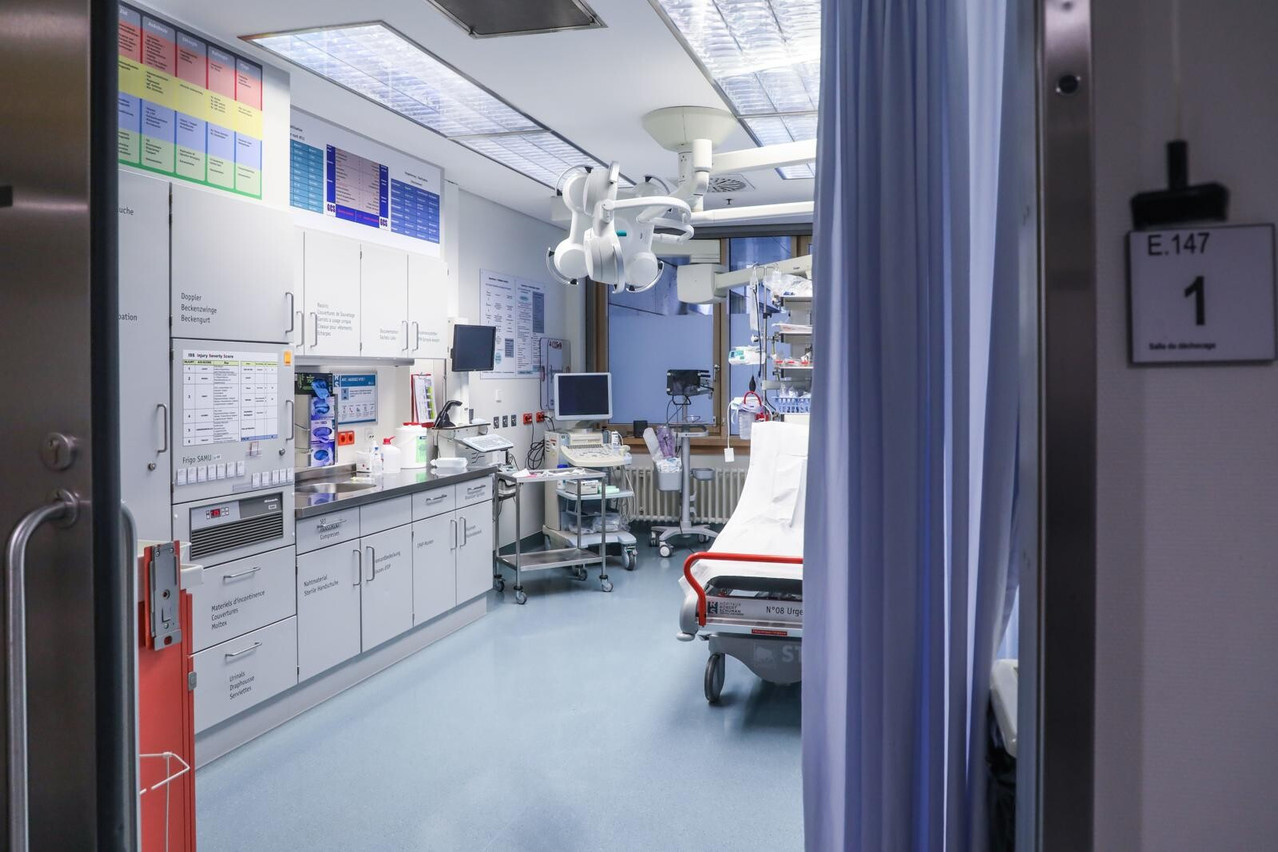
The coalition agreement placed great emphasis on the need to expand the provision of outpatient care. “The government will strive to realise the full potential of outpatient care and significantly increase its role within the healthcare system. It is committed to ensuring that patients benefit from medical advances across the country. The advantages of decentralised care are clear: patients will have shorter journeys and waiting times will be reduced. Furthermore, hospitals will be relieved of some of their burden and will be able to focus on their core mission, namely the management of serious emergencies and complex conditions,” the agreement stated. Two and a half years later, the government unveiled its reform aimed at promoting the shift towards outpatient care in the healthcare system.
Bill 8760 aims to improve local access to and the efficiency of hospital care in order to address a number of issues described as major. The first is improving patients’ day-to-day lives. By decentralising care, the aim is to shorten journeys for patients and significantly reduce waiting times. Waiting times remain one of the main points of criticism of the healthcare system.
The tools of transformation
To achieve these objectives, the bill introduces structural, regulatory and financial measures.
The creation of “outpatient care facilities” (SAS in French) is the key innovation in the bill. These SASs, run by medical associations or companies, will be authorised to provide certain types of care. They will be able to operate in specific fields, such as dialysis, oncology and minor surgical procedures in ophthalmology, dermatology and urology, as well as abdominal and proctological surgery.
Far from being deregulated, these new structures are subject to a system of prior ministerial authorisation. To operate, an SAS must submit a business plan and a compliance dossier demonstrating that it meets rigorous standards in terms of equipment, organisation and human resources. To ensure continuity of care, every outpatient facility must enter into an agreement with a hospital. This partnership will set out the procedures for transferring patients where necessary and guarantee access to hospital technical facilities.
The bill includes a strong financial incentive scheme: the state will be able to cover 80% of investment costs (for movable or immovable property) or contribute towards the rental costs of these facilities. Furthermore, the flat-rate funding system will be extended to these new entities to cover their operating costs.
Beyond outpatient care, the reform establishes new specialist networks to improve the management of complex conditions requiring a multidisciplinary approach, such as long Covid, endometriosis, menopause-related risks and neurodevelopmental disorders in young people. Furthermore, each hospital will now be required to appoint an infectious disease specialist dedicated to infection prevention and control. The annual cost of recruiting an infectious disease specialist is estimated at €350,000 in the financial statement.
Regional equity
In order to avoid potential regional imbalances arising from a concentration of outpatient services in certain parts of the country, and with a view to ensuring that medical advances benefit the whole country, the government has put in place several planning and decentralisation mechanisms. The first is the integration of future new outpatient care facilities into the national healthcare map – the central instrument of hospital planning. In theory, this move will enable the authorities to determine the distribution and capacity of services according to the actual needs of the population, “thus ensuring the optimal allocation of resources across the whole country”.
The bill also provides for an increase in the maximum number of sites authorised per hospital centre from three to four. This measure is explicitly intended to enable hospitals to provide outpatient services outside their main sites, through the construction of new facilities or the conversion of existing ones. These branches will remain extensions of the hospital centres, unlike the new SASs, which will be managed by private doctors.
The National Health Observatory will also be responsible for updating, every two years, a comprehensive inventory of services and their usage, including waiting times by region, which will enable healthcare provision to be adjusted where the need is greatest.