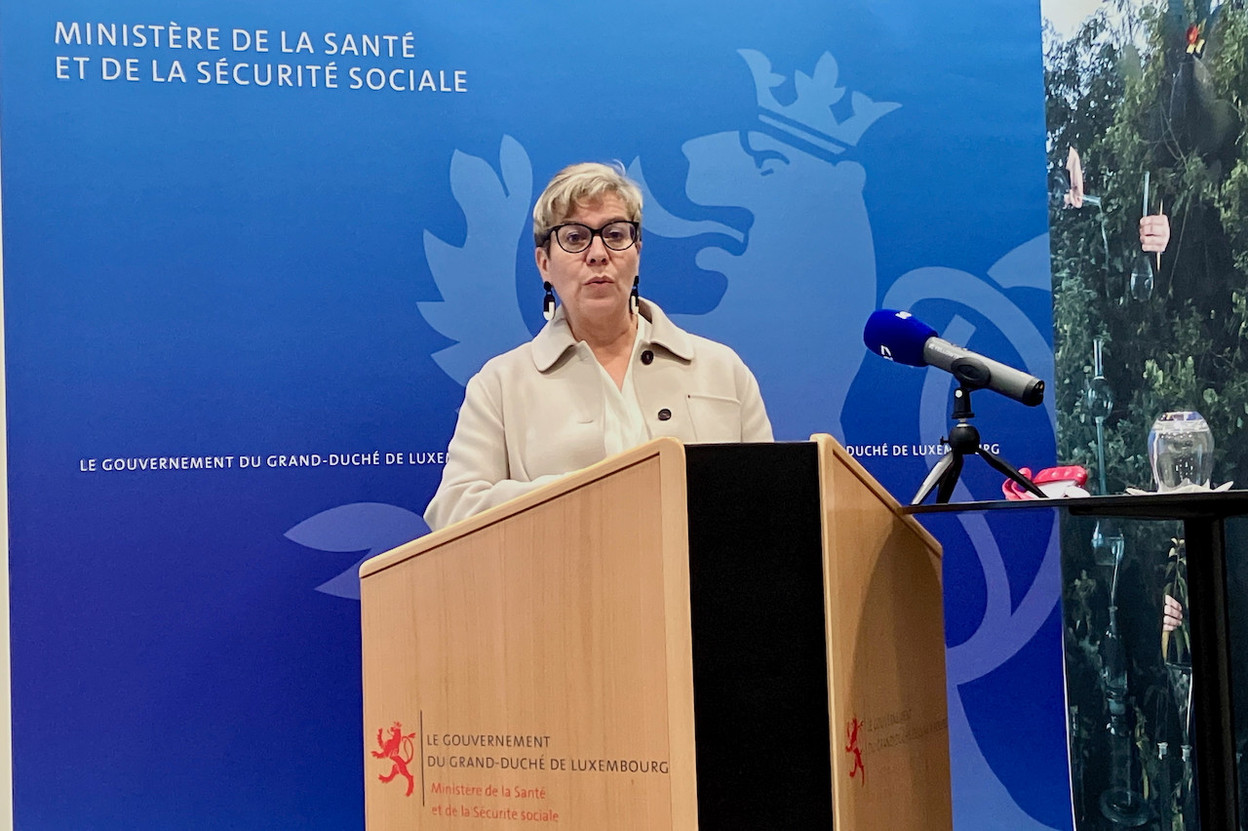
The first year of life remains by far the period during which children receive the most hospital care, according to a report published on Monday 15 December by the national health observatory, in collaboration with the government’s health management group — which complements the 2023 report , entitled in Luxembourgish and French as "Eng gesond Zukunft: un rapport sur la santé de l'enfant au Luxembourg”.
In 2022, infants accounted for a total of 2,126 stays, or 34.5% of all paediatric hospitalisations, as well as 14,280 hospital days (42.8%). All of this with a peak in the first seven days of life, up to 27 times higher than that observed between 29 days and one year of age. It should be noted that over 90% of these stays are inpatient, meaning that they include at least one overnight stay.
Adolescence constitutes the other major wave of hospital attendance. In 2022, 13-18 year olds accounted for 3,082 stays, corresponding to 27.4% of hospital admissions, for 10,743 days, or 32.2% of the total. The Robert Schuman Hospitals (HRS) accounted for 31.2% of stays by 15-18 year olds and 64.9% of days, while the Centre hospitalier de Luxembourg (CHL) strengthened its position as a hub for paediatric care.
The CHL-KannerKlinik accounts for almost two-thirds of inpatient stays (66.5%) and more than half of day hospitalisations (51.7%). This central role is accentuated when patients are younger: infants under one year of age account for 81.5% of inpatient stays. This distribution reflects the effect of the 2018 Hospital Act and the gradual centralisation of specialist care.
Reasons change with age
Paediatric activity varies greatly depending on the season, fluctuating between 60 and 115.8 beds occupied on average at midnight between 2018 and 2022, while new-born babies will require around 30 beds on a stable basis.
In November 2022, the pressure peaked with a national occupancy rate of 93.4% for 0-18 year olds, and even exceeded 100% at the CHL and HRS for children aged 0-12. This phenomenon is largely linked to winter respiratory infections. And although we are now in 2025, it is still regrettable that the data stop at 2022, preventing an assessment of recent changes in this pressure.
The reasons for hospitalisation change with age. For the under-1s, 44.7% of inpatient stays are due to respiratory conditions, more than six out of ten of which are linked to the respiratory syncytial virus (RSV). For 0-12 year olds, these conditions still account for 30.3% of inpatient stays, while ENT procedures are the main reason for day hospitalisation, even though outpatient surgery, with 70.7% of procedures, is still less widely used than elsewhere in Europe.
Among adolescents, musculoskeletal conditions and mental disorders dominate, accounting for 22.2% and 16.7% of inpatient stays respectively, while digestive conditions are the dominant outpatient condition, accounting for 16.8% of cases.
These findings reinforce the need to reduce avoidable hospitalisations, whether by preventing respiratory ailments through vaccination or by improving the management of chronic diseases such as asthma. They also argue in favour of adapting inpatient capacity and developing alternatives to inpatient hospitalisation, particularly in juvenile psychiatry, in order to meet constantly changing paediatric needs.