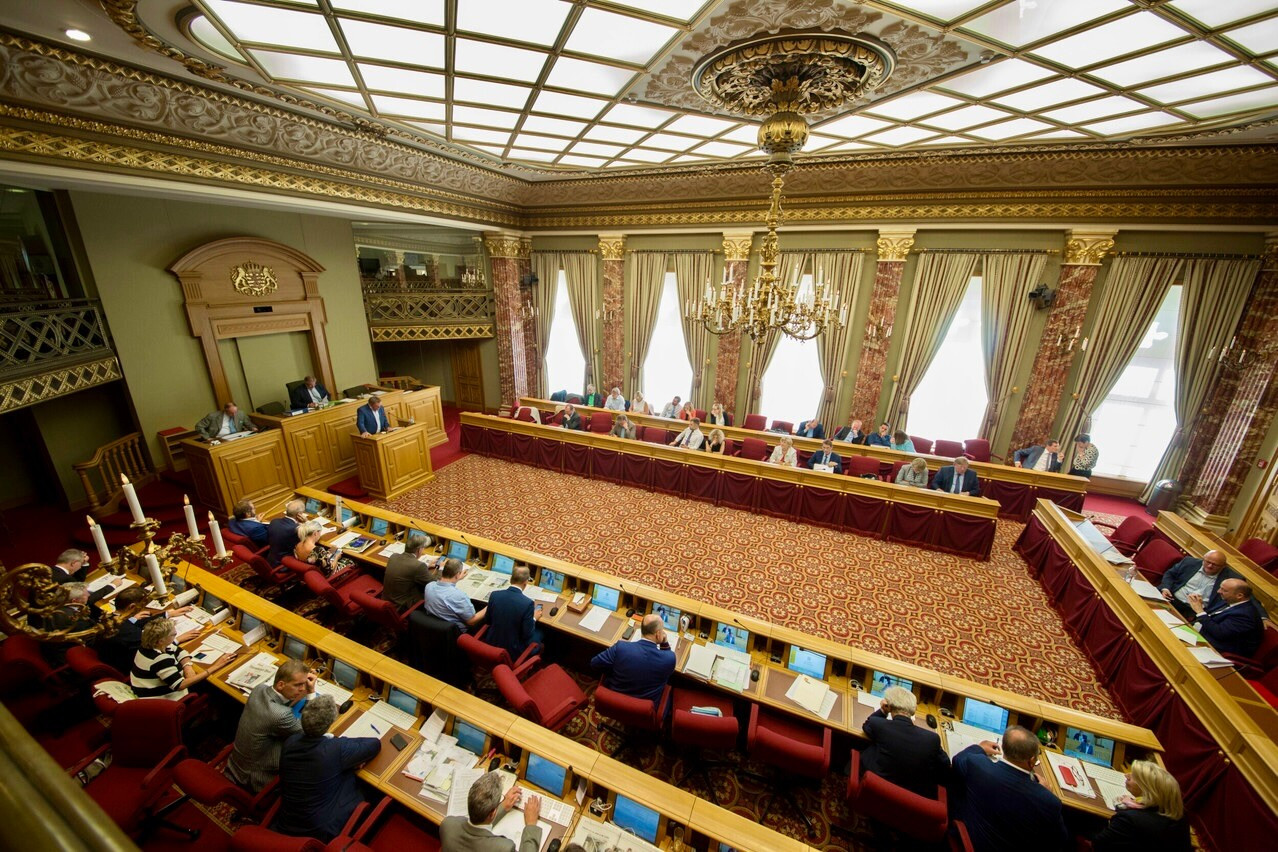
Banks would have to give customers at least 30 days' warning before reducing an agreed overdraft under legislation approved by parliament on Tuesday 17 November. They would also have to offer 12 monthly instalments to repay the affected borrowing before enforcement proceedings, with interest still payable.
The legislation transposes the EU's revised 2023 consumer-credit directive into Luxembourg law, with the new rules scheduled to apply from 20 November 2026. MPs approved the bill by 59 votes to none, with no abstentions. The overhaul responds to a market in which loans and deferred payments can increasingly be arranged in just a few clicks.
“The package arrives straight away. The bill comes a little later, but it comes,” CSV MP Stéphanie Weydert told parliament. Speaking for her party after presenting the committee report, she described the attraction of buying online and postponing payment, warning that several small instalments could become a larger financial burden.
“We need an innovative credit market, but we also need a credit market that does not leave people on their own,” Consumer Protection Minister Martine Hansen said.
The legislation is scheduled to take effect on Friday 20 November, subject to completion of the remaining legal formalities. Its 25 principal consumer-facing provisions include new rights, extensions of existing protections and requirements applying only to particular forms of credit.
When the bank cuts your limit
1. A bank would have to give customers at least 30 days' notice before reducing or cancelling an agreed overdraft facility. The warning would have to arrive before the change took effect. A similar requirement would apply when a lender reduced or withdrew permission to exceed an account limit, but not to every form of bank-account termination.
2. Customers affected by an overdraft reduction or cancellation would be offered 12 equal monthly instalments to repay the amount already drawn and affected by the change. The lender would have to make the offer before beginning enforcement proceedings. There could be no additional charge for spreading the repayments, although interest would continue at the applicable overdraft rate and customers could repay sooner.
3. Repeatedly exceeding an account limit would trigger an obligation to offer advice where available and refer customers free of charge to debt-counselling services. The measure is intended for recurring overruns rather than every isolated incident. It is designed to help people address financial difficulties before they escalate.
4. Customers with agreed overdrafts would receive information about their borrowing at least once a month. This strengthens existing requirements for regular statements and notifications of changes to interest rates or charges. Where lenders operate websites or mobile applications, relevant information would also have to be provided through those channels as required by the legislation.
The price of paying later
5. Consumer-credit protection would extend to loans below €200, while the ordinary upper threshold would increase from €75,000 to €100,000. Certain qualifying residential-renovation loans could exceed the upper limit. Some disclosure obligations would nevertheless remain lighter for very small loans, interest-free credit without charges and short-term loans involving negligible fees.
6. Certain buy-now-pay-later arrangements involving third-party financing would come within the consumer-credit regime, even where no interest was charged. Direct payment delays offered by retailers could remain exempt under defined conditions, generally including repayment within 50 days without interest. Stricter conditions would apply to certain larger online suppliers, including a 14-day repayment limit.
For the Luxembourg consumer association (ULC), these exemptions raise questions about whether customers will receive enough information when borrowing appears cheap or convenient.
“We believe it is essential to maintain strong protection against forms of credit which, because they seem readily accessible and involve no additional costs, can give the impression of presenting no financial risk,” ULC lawyer and public-affairs officer Chelsea Borboux told Paperjam in a written response received before the vote.
The association criticised Luxembourg's decision to use exemptions allowing reduced disclosure requirements for certain interest-free loans. Borboux said the September parliamentary amendments had not substantively answered its concerns.
7. Lenders would be prohibited from granting credit without a prior request or explicit agreement from the consumer. Consent could not be presumed through pre-ticked boxes or default options, including for associated services. Customers would have to make a clear, informed and voluntary choice.
8. Credit advertisements would have to warn prominently that borrowing money costs money. Restrictions would also cover claims suggesting that credit improves someone's financial situation or replaces savings, advertising that makes discounts conditional on taking out credit, and promotion of certain grace periods exceeding three months. These restrictions concern advertising practices rather than every underlying commercial arrangement.
ADR MP Michel Lemaire supported the reform but questioned the administrative burden on smaller providers, particularly businesses offering deferred payment alongside their principal activity.
“If we want to make responsible policy, we must also look at what this means for those on the other side of the table – lenders and credit intermediaries,” he told parliament. Lemaire relayed the Chamber of Trades' concern that some requirements could be disproportionate for businesses offering interest-free payment delays.
Before signing a loan
9. The most important pre-contractual information would have to appear prominently on the first page of a standard form, or across its first two pages where necessary. This would include the amount borrowed, duration, annual percentage rate of charge, total repayable amount, instalments and consequences of late payment. Other mandatory disclosures would still follow elsewhere in the documentation.
10. Borrowers receiving pre-contractual information less than a day before becoming bound by a loan agreement or binding offer would receive an additional reminder of their withdrawal rights. The lender would have to send it between one and seven days after that commitment. The ordinary 14-day withdrawal right already exists; this provision adds a safeguard for customers given little time to consider the information.
11. Lenders would have to provide free explanations enabling customers to assess whether a loan suited their needs and financial circumstances. These would cover its principal features, financial consequences, late-payment risks and conditions for cancelling associated services. Customers would also have to be informed when a personalised offer was based on automated processing of their personal data.
Weydert framed the information requirements around questions borrowers should be able to answer before signing.
“How much will I pay in total? How long will I be committed? And what happens if I cannot pay an instalment, or can only pay it later?”
When a past illness affects a future loan
A separate part of the reform addresses people who have recovered from serious illness but encounter difficulties obtaining insurance needed for a loan. Health Minister Martine Deprez described how higher premiums, exclusions or refusals could obstruct plans to buy a home or finance another project.
“A serious illness must not define a person for the rest of their life,” she told MPs.
12. Former cancer patients would gain a statutory right not to disclose their illness when applying for qualifying credit-linked insurance. More than five years must have passed since completion of the treatment protocol without a relapse, the combined insurance coverage must not exceed €100,000 and the policy must end before the applicant's 70th birthday. Where those conditions are met, insurers could not use the earlier cancer diagnosis when deciding whether to provide cover or calculating the premium.
13. For certain property loans, the relevant insurance coverage ceiling would be €1 million. This concerns death cover associated with purchasing a principal residence or premises for professional use, subject to the treatment and age conditions. Second homes and buy-to-let properties would not qualify for this particular protection.
Luxembourg already has a voluntary right-to-be-forgotten arrangement with insurers, concluded in 2019 and applied from 2020. It provides qualifying protections for people with certain medical histories, particularly in mortgage-related insurance. The legislation would place those safeguards on a statutory footing, shorten the general cancer waiting period and extend protection to qualifying consumer loans.
“With this law, the principle becomes binding and legally protected,” Deprez said.
14. Special insurance arrangements would also cover certain cancers, hepatitis C and people living with HIV. Depending on the medical condition, applicants could qualify for insurance without a surcharge or exclusion, or with a premium surcharge subject to a statutory ceiling of 150%. Some would still have to declare their medical history. The precise medical criteria and waiting periods depend on a separate implementing regulation whose final publication has not yet been confirmed.
The government presented the shorter waiting periods as a response to medical progress. Deprez argued that improved treatments and prognoses should have practical consequences for people who had recovered from serious illness.
LSAP MP Ben Streff welcomed the new statutory protections but urged an assessment of their practical effects.
“We must see in the coming years whether those affected can actually obtain credit insurance more easily,” he said.
15. Borrowers would be able to choose qualifying loan insurance from an insurer other than the one recommended by their lender. Banks would have to accept equivalent coverage without changing the credit terms. Customers would receive at least three days to compare insurance offers unless they explicitly requested an earlier conclusion, while tied sales would generally be prohibited subject to defined exceptions.
Who decides whether you can borrow?
16. Lenders would face more detailed obligations to examine borrowers' capacity to repay. They could consider relevant income, expenditure, debts, assets and financial commitments, proportionately to the amount and risks involved. Credit could be granted only if the assessment indicated that the borrower was likely to meet the contractual obligations; joint applications would be assessed on combined repayment capacity.
“The lender must seriously examine whether the consumer can actually repay the credit,” Weydert told parliament. The duty to assess creditworthiness already exists, but the reform would strengthen the required checks.
In her response to Paperjam, Borboux argued that a national database of consumer loans would help lenders identify borrowers' existing commitments. The ULC considers such a register useful for preventing overindebtedness, but the legislation does not introduce one.
17. Social-media information could not be used as an external source for assessing creditworthiness. The reform would also restrict the use of specified sensitive personal data in lending assessments and the handling of relevant information obtained through credit databases. This would be a targeted safeguard for creditworthiness checks, not a general ban on every use of publicly available information.
18. Borrowers whose creditworthiness had been assessed through automated processing would gain a specific right to human intervention. They could request an explanation of the assessment, present their own position and seek reconsideration of both the assessment and the lending decision. A review would not guarantee loan approval.
DP MP Gusty Graas illustrated the value of dealing with a person rather than relying solely on automated systems. Voicing a hypothetical customer's request, he said: “I want a human point of contact.”
19. Banks could not subsequently cancel a signed loan or change its terms to the borrower's disadvantage solely because they had assessed the customer's financial circumstances incorrectly. The safeguard would not apply where the borrower had knowingly concealed or falsified relevant information.
When repayments become difficult
20. Lenders would have to apply reasonable renegotiation measures where appropriate before beginning enforcement proceedings. These could involve refinancing or changing repayment conditions. Borrowers would not gain an automatic right to a payment holiday, lower instalments or debt cancellation, and lenders would not generally have to make repeated offers without justification.
21. Credit providers would need procedures to identify financial difficulties earlier and direct affected customers towards accessible debt-counselling services. The legislation would also restrict incentives for staff responsible for assessing creditworthiness: their remuneration could not depend on the number or proportion of applications approved.
22. Providers describing credit advice as independent would have to meet specific conditions. Customers would be told whether recommendations were based on the lender's own products or a wider selection, what fees applied and how the advice reflected their circumstances. The independent label would be governed by requirements concerning product coverage and remuneration, including defined exceptions.
Streff argued that lending rules needed to preserve the benefits of borrowing without allowing manageable repayments to become a financial trap.
“A loan should give people the opportunity to carry out a project, not become the starting point of financial difficulties,” he told parliament.
Where protection has limits
23. The existing 14-day withdrawal right would gain additional protections when mandatory contractual information was missing. In certain cases, withdrawal would remain possible until 12 months and 14 days after the agreement was concluded. That limit would not apply if the customer had not been properly informed of the withdrawal right itself; a longer full-refund return period for goods could also extend withdrawal from an associated credit agreement.
24. A judge could deprive a lender of some or all contractual interest for breaching consumer-credit obligations. This would be a judicial sanction rather than an automatic right to stop paying interest. Lenders would also be prohibited from imposing excessively high total credit costs, although the legislation would not establish a general numerical ceiling on interest rates or annual percentage rates of charge.
Borboux welcomed the additional judicial sanction. She said that, although the provision might appear purely technical, it should encourage greater respect for consumers' rights by strengthening the consequences of breaches.
The absence of a general interest-rate ceiling nevertheless drew criticism in parliament. Déi Lénk MP Gary Diderich argued that Luxembourg could have made fuller use of the EU directive's options to protect borrowers.
“It is an improvement, which is why we support it. But it does not solve the problem of overindebtedness,” he said.
25. Consumers legally resident in the European Union would be protected against discrimination in access to credit on grounds including nationality and place of residence. Lenders could still apply different conditions where objectively justified. The protection would not guarantee that an applicant received a loan, since legitimate lending requirements and affordability checks would continue to apply.
What happens to existing loans?
The reform would not automatically rewrite every existing credit contract. Agreements already in force on 20 November would generally remain subject to the previous rules until their expiry, although specified provisions would apply to ongoing open-ended agreements.
There is an important distinction for existing customers. The agreed-overdraft provisions, including the notice and repayment arrangements, would extend to relevant open-ended agreements already in force. The corresponding new provisions on permitted account overruns are not included in the same transitional exception.
For customers whose agreed overdraft is reduced after the relevant provisions take effect, the protection would therefore mean advance warning and a structured repayment option, rather than an immediate demand for the entire affected balance. It would not eliminate the debt or the interest payable on it.