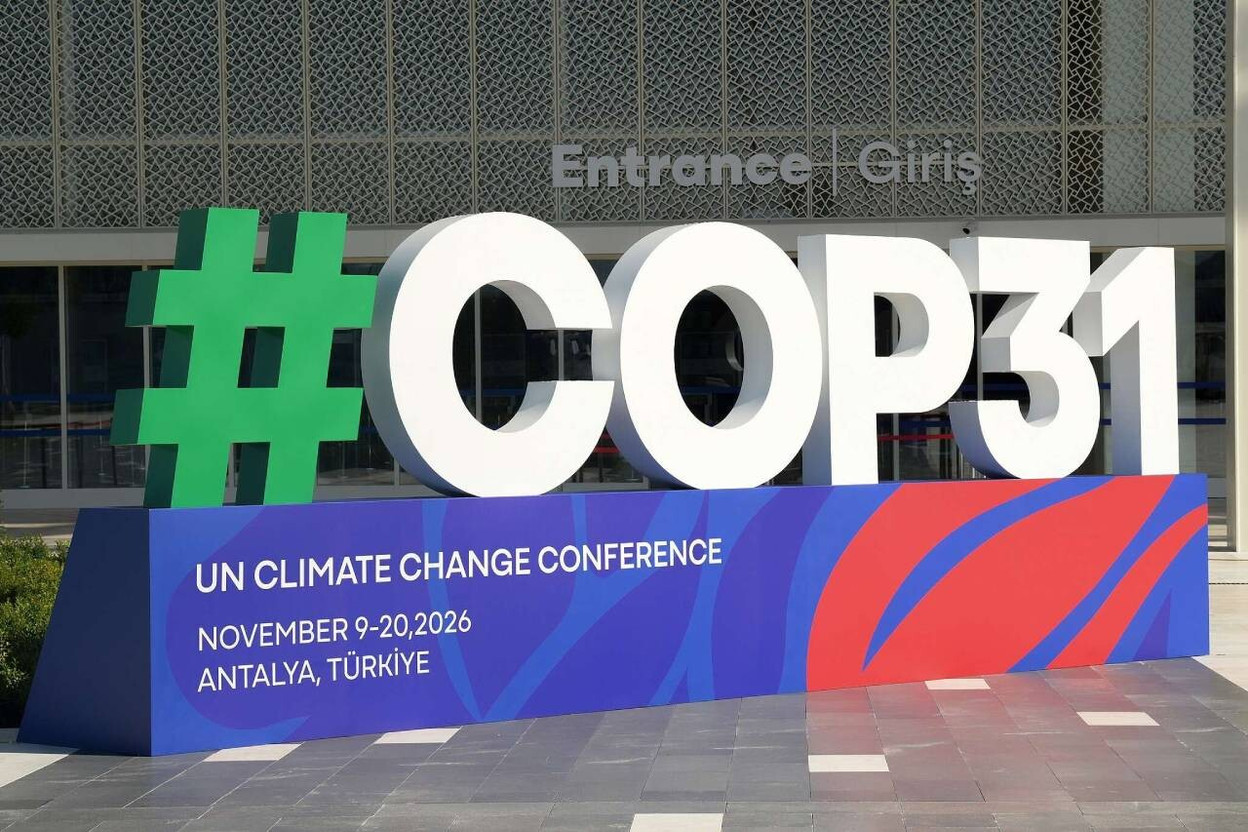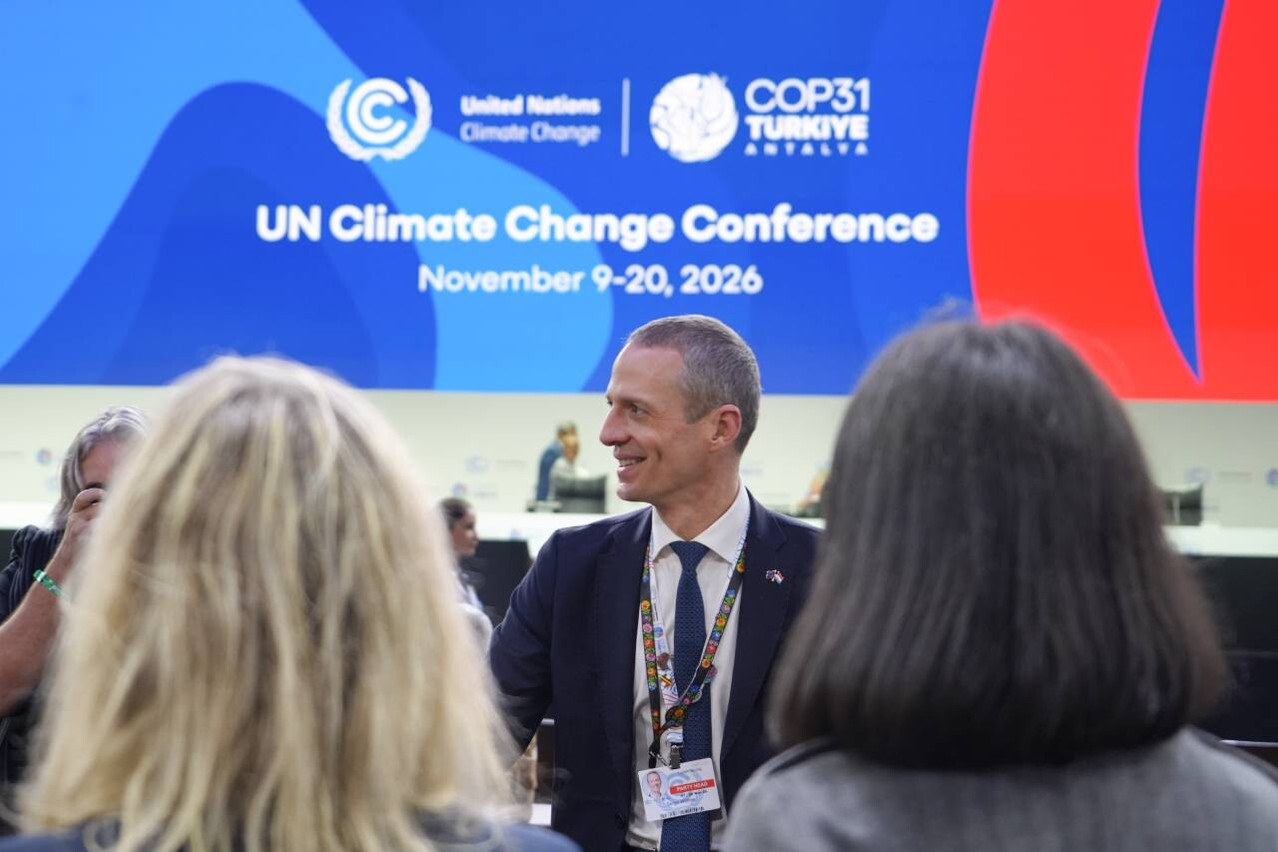
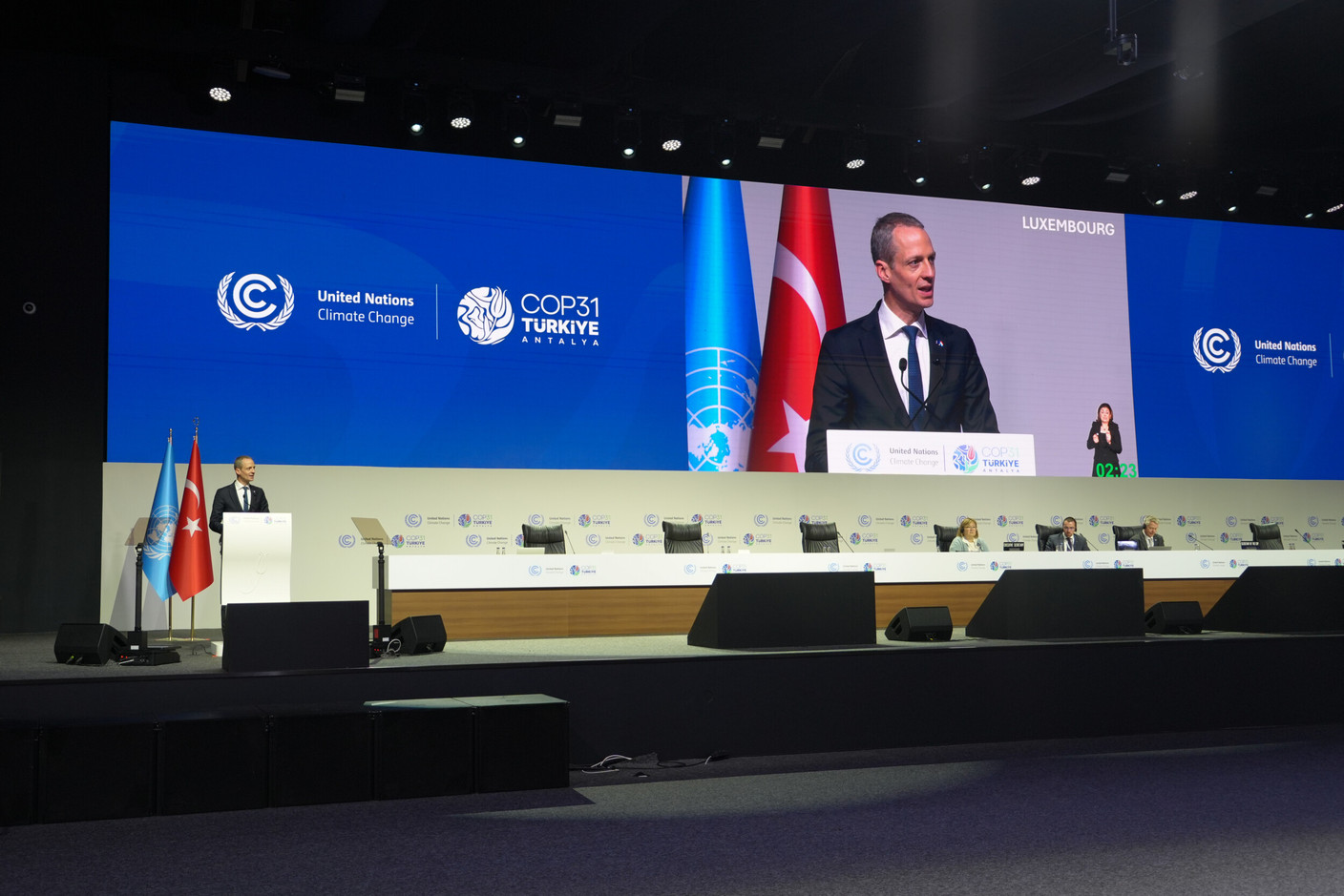
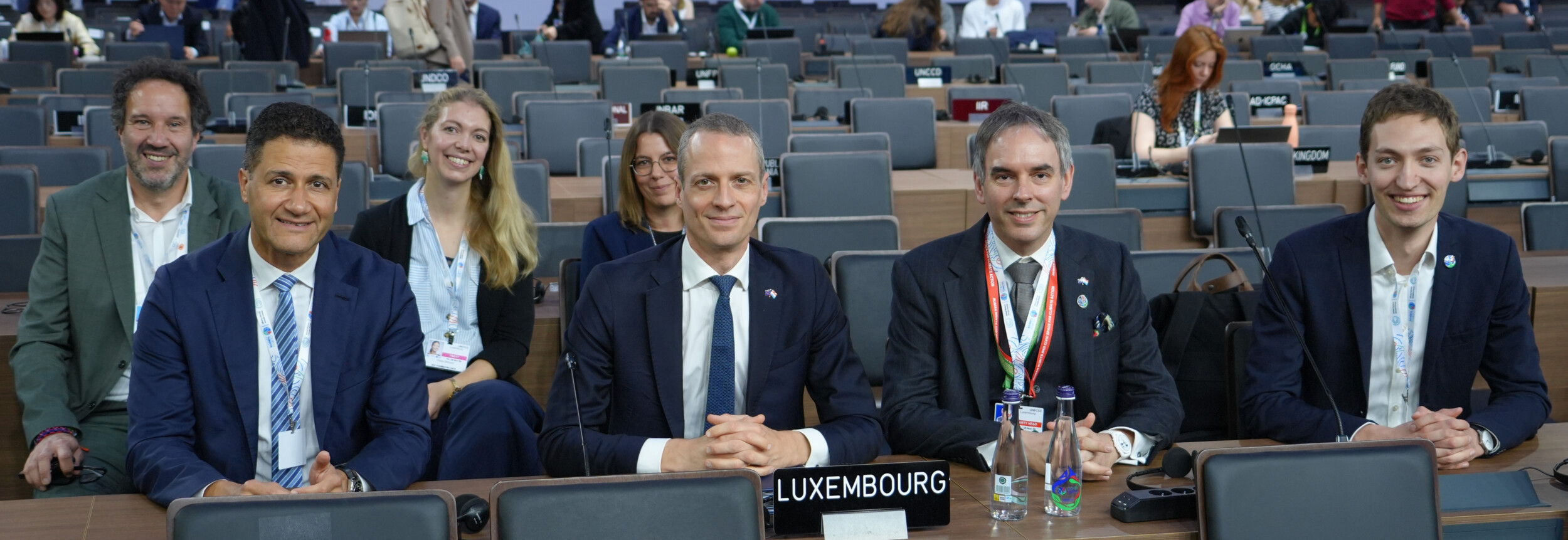
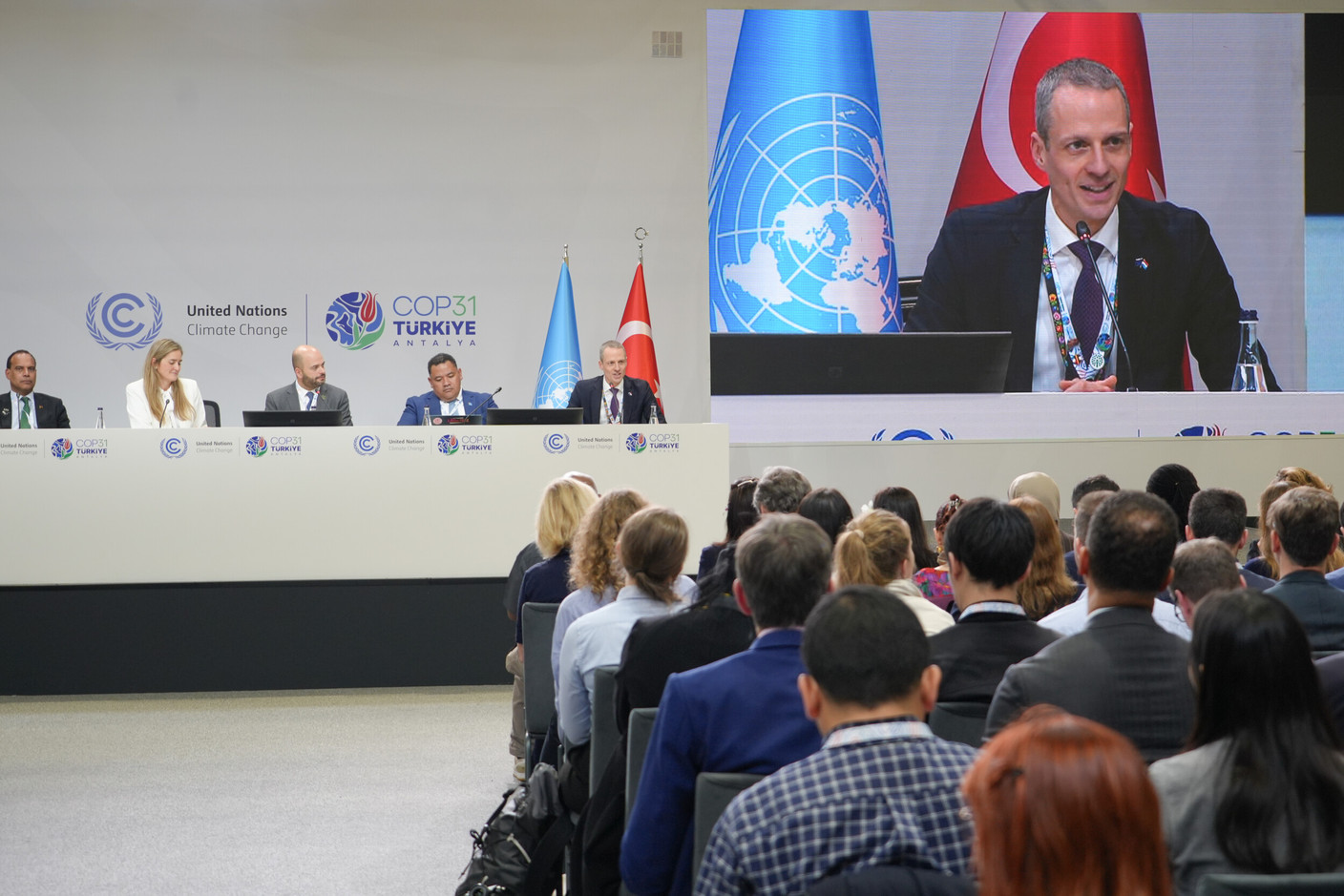
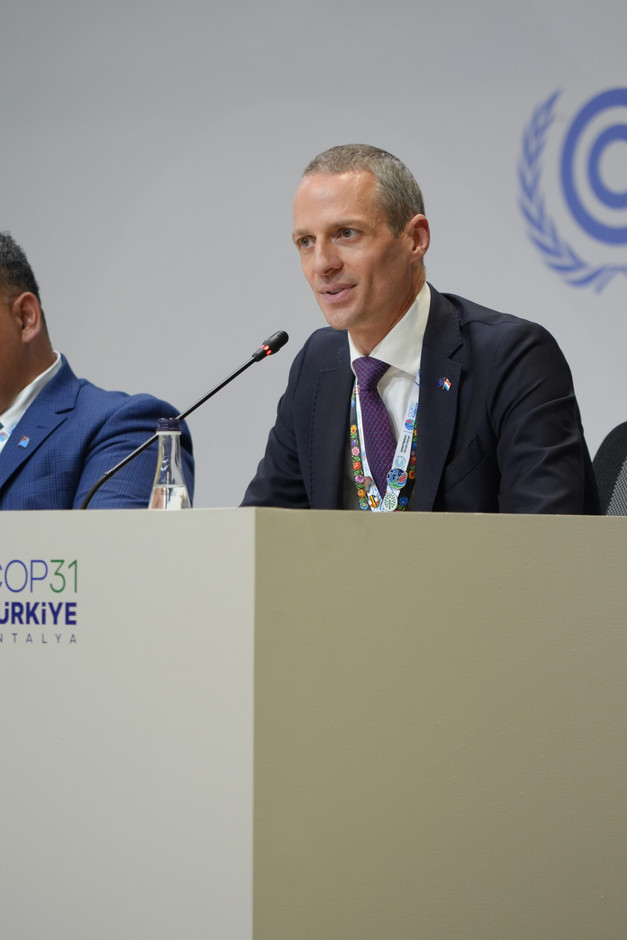
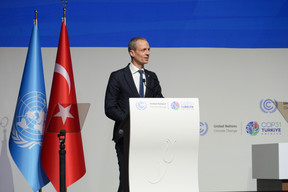
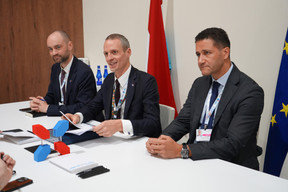
COP31 enters its scheduled final day of negotiations in Antalya, Türkiye, this Friday, 20 November. Minister for the Environment, Climate and Biodiversity 
The minister outlines Luxembourg’s commitments, including the preparation of a national roadmap for transitioning away from fossil fuels ahead of the next conference on the subject in Tuvalu in July 2027. He also discusses international climate finance, attracting private investment and the country’s adaptation to global warming. Negotiations were still ongoing at the time of this interview.
What were Luxembourg’s priorities going into COP31? On which issues have you made progress, and which ones remain deadlocked?
Serge Wilmes. – “Luxembourg is seen, not just at COP conferences but more generally, as a country that can be trusted. A partner that also inspires confidence because we deliver on our promises.
We are seen as a country that has climate ambitions but also puts them into practice.

We are seen as a country that has climate ambitions but also puts them into practice. People can objectively see that our emissions are falling, that we have plans to adapt to climate change and that we provide financial assistance and support to our citizens. Internationally, we also increased our climate finance budget back in 2024. This strengthens our position in the negotiations.
Our expectations and our position are those of the European Union, since it leads the negotiations. Ministers nevertheless have roles to play. I have also had a role in discussions on reducing CO₂ emissions.
Luxembourg and the European Union’s main expectation is to make progress on reducing greenhouse gas emissions, particularly CO₂ but also methane. We also need to accelerate the deployment of renewable energy to limit global warming to 1.5°C by the end of the century.
That is why the final decision must include a reference to transitioning away from fossil fuels. A planned and gradual transition, of course, but a transition away nonetheless.
Every tenth of a degree matters.

We need to cut emissions further. We will probably exceed 1.5°C: the United Nations Environment Programme report published a few weeks ago warns us of this. We will have to limit any further increase. Every tenth of a degree matters.
The other priority is science. We always draw on the IPCC’s work. It can independently and objectively assess the available climate change data and studies. It provides the basis on which we can then make political decisions.
These are therefore two major priorities for Luxembourg and the European Union: references to the gradual transition away from fossil fuels and to the IPCC’s reports.
What commitments on fossil fuels are you advocating in the final agreement? Is Luxembourg also prepared to set a timetable for transitioning away from them, with specific milestones?
In Belém, we had already expressed our disappointment at the lack of a reference to transitioning away from fossil fuels in the final text. The Brazilian presidency then proposed a compromise of sorts: publishing one roadmap on transitioning away from fossil fuels and another on deforestation. These roadmaps were presented in early November.
This is outside the formal negotiating process, but it was a way of keeping that ambition alive and giving countries guidance on how to proceed.
There is also another initiative launched by the Netherlands and Colombia. We supported it at the Belém COP, alongside our Dutch friends, among others.
An initial conference took place in Santa Marta, Colombia, this year. We were represented there and committed to drawing up our own roadmap for transitioning away from fossil fuels. I reiterated that commitment here in Antalya. We are committed to publishing it before the initiative’s second conference, which will take place in Tuvalu next July.
This roadmap will complement our integrated national energy and climate plan, the NECP. It will primarily be a strategic document that we may position above the NECP, but which will obviously draw on its elements.
The NECP is based on the climate law. Decarbonisation means moving away from sources that emit CO₂, particularly fossil fuels. That is why the NECP includes measures to electrify transport, cars, industry and buildings. This already amounts to a transition away from fossil fuels.
In this roadmap, we will place greater emphasis on fossil fuels, particularly oil, petroleum products and gas, since we use very little coal. We will explain how we are already moving away from them and how we intend to continue in the years ahead.
At the same time, we are also drawing up a new draft NECP for 2040. The overarching goal is to achieve climate neutrality by 2050. After 2030, the next milestone is therefore 2040.
Is Luxembourg performing well when it comes to transitioning away from fossil fuels?
We will achieve our 55% reduction target by 2030.

I can see that emissions are falling. This is documented, notably by Statec, which tracks their evolution. We are following the trajectory set by the climate law, year after year. We presented the first provisional assessment for 2025 during the summer. Emissions are falling and we are below the annual emissions budget. We will achieve our 55% reduction target by 2030. That is what we are required to do.
In the meetings I have here and the feedback I receive, our counterparts appreciate being able to trust the Luxembourg government, its commitments and its ambition. These are not just words: they are backed by action. They see this through the various initiatives and collaborative projects with the most vulnerable countries.
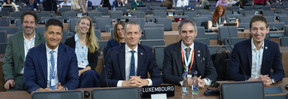
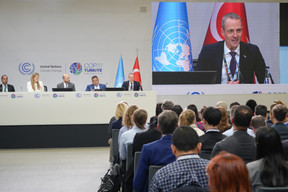
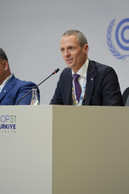
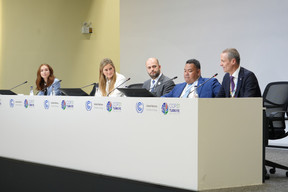
Luxembourg presented a €320m budget for international climate finance for 2026–2030. Have you announced additional funding during this COP? What has this budget financed so far?
The €320m budget was reiterated this year, but it had already been agreed and approved by the Government Council in November 2024, before the COP in Baku, Azerbaijan.
The previous funding period was coming to an end. I therefore proposed an increase to the Government Council, which was approved.
Once we had that approval, we began reworking the strategy, because an investment strategy is needed. It aims to focus on six regions around the world, centred on coherent ecosystems: for example, some of the highly vulnerable Pacific islands, but also parts of West Africa, including Cabo Verde.
Just because we provide them with money does not mean we know better than they do what they need.

We want to target our projects more closely with partners in the countries concerned, whom we treat as equals. Just because we provide them with money does not mean we know better than they do what they need. We work with people on the ground so they can guide us.
They may need early warning systems to alert people when a storm or another natural event is approaching and could devastate the coast. We also support programmes to restore coastlines and vegetation.
One example is the CREWS initiative, which Luxembourg co-finances alongside Germany, Canada, France and the United Kingdom, among others. Together, we fund early warning systems to protect people in vulnerable countries.
Another project we continue to fund is the Global Shield against Climate Risks, with Germany and the World Bank. The aim is to improve vulnerable countries’ financial protection, for example through insurance, to avert, minimise and address loss and damage caused by climate change.
These are two concrete examples financed with public funds. There are also other blended finance mechanisms combining public funding and private capital. Even with €320m, we cannot do everything with public money alone.
More private capital will be needed to finance the transition and adaptation, particularly in the most vulnerable countries.

Increasing public funding is a good thing, but we also face certain limits. More private capital will be needed to finance the transition and adaptation, particularly in the most vulnerable countries.
You are advocating for greater mobilisation of private capital, in particular through the partnership with the EIB. Could you give a specific example?
This financing platform with the EIB is one of our flagship projects. The principle is that Luxembourg makes a contribution and the EIB makes its own contribution too.
Together, we can reduce investment risks and create a leverage effect. Private investors hesitate to finance certain climate mitigation or adaptation projects because there are risks they are reluctant to take.
It is up to governments to take on the initial risks and bear them.

It is up to governments to take on the initial risks and bear them. We then attract the private capital we need. Through this platform, we have succeeded in mobilising substantial private funding.
We can send you the figures on the leverage effect and examples of specific projects. I do not know every project or all the figures by heart.
After this summer’s heatwaves and drought, what do you think needs to change most urgently in Luxembourg? What will actually be in place by next summer?
This government did not wait until this summer to act. As soon as we took office, we began reworking the NECP, for example. We also developed and revised the national climate change adaptation strategy.
We prepared a social climate plan and revised and extended financial assistance for home energy renovations, heat pumps, solar panels and home batteries.
There is also the electric car scheme, with an extension until 2030, simpler procedures and upfront funding. The main subsidies will be available through upfront funding from 1 January.
The social car leasing scheme is also scheduled to begin on 1 January 2027. The law still needs to be passed in December. Targeted assistance will enable eligible households to lease an electric car at affordable monthly rates.
It is not just the government that has to do this: municipalities, businesses and citizens do too.

On adaptation, we need to implement the strategy. It is not just the government that has to do this: municipalities, businesses and citizens do too. A lot is already happening on the ground. Initiatives are in place, but more will be needed.
This summer may have opened the eyes of some citizens, politicians or businesses, but not the government’s. We have been working on this and we continue to do so. For next summer, we need to keep implementing these measures.
We also consulted the stakeholders concerned to accelerate river restoration projects. This is an important way of tackling the effects of climate change and drought.
We also presented an agreement on forests and hunting to support the natural regeneration of our forests. That is why game populations will need to be managed. I will table a bill, probably by the end of the year, to implement the agreement by amending the hunting law.
This obviously does not absolve me of my responsibility as minister, nor municipalities of theirs.

Since this autumn, we have also introduced seasonal updates on the condition of rivers and forests: what assistance is available, what can be done and what can each of us do? This obviously does not absolve me of my responsibility as minister, nor municipalities of theirs.
When you return to Luxembourg, what decisions will you advocate within the government?
What I will do now, alongside my European colleagues, is continue to push for a reference to transitioning away from fossil fuels in the final decision. I have also been mandated by the European Union to lead negotiations on emissions reductions. This is a crucial issue.
We have committed to advocating this transition and maintaining our goal of limiting warming to 1.5°C, guided by science. It is very important to us that this reference appears in the text.
We will do everything we can to secure these elements in the final decision and reach a consensus. There are still lengthy negotiations ahead before we return home and defend these positions to our fellow citizens.