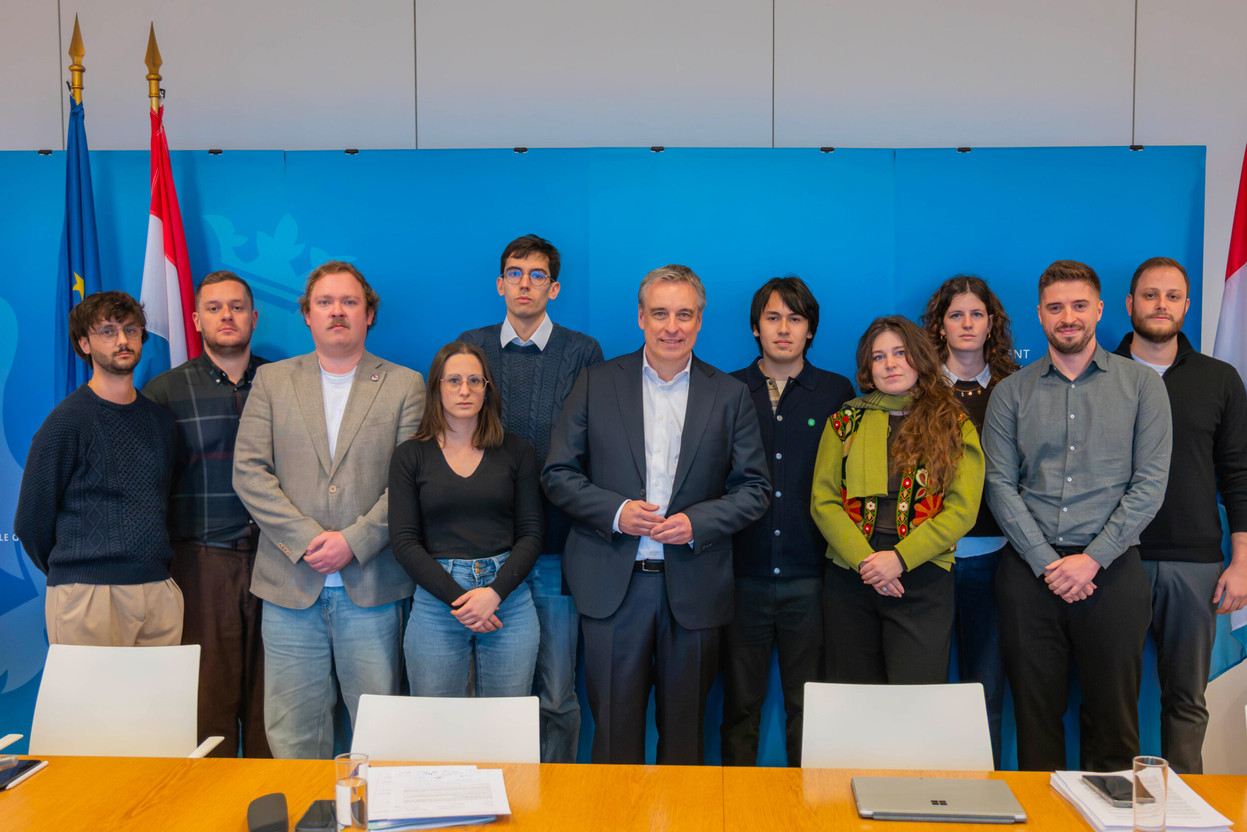
The meeting on 10 November with the minister for Housing, 

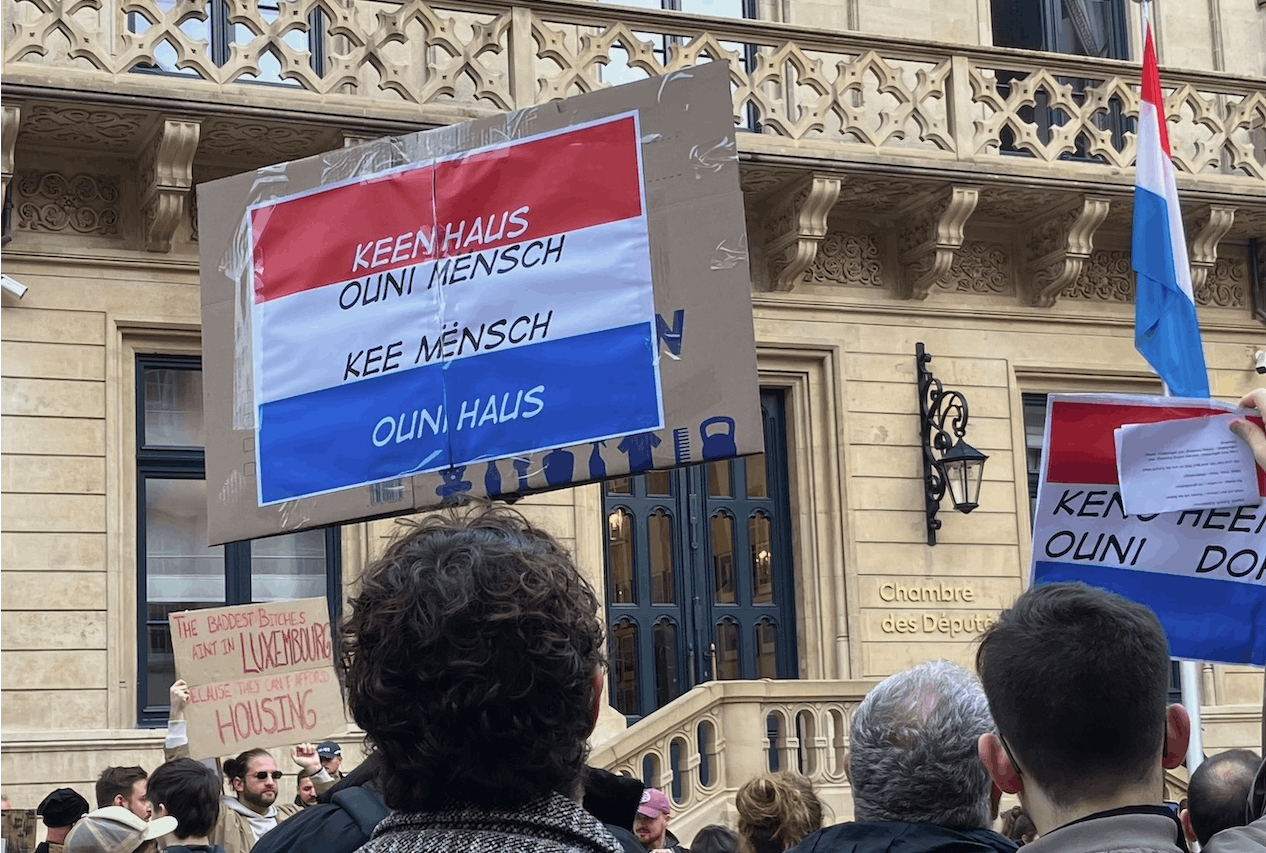
The collective housing crisis has already organised two events. The first took place on the very day when the Deputy Prime minister and minister for Foreign Affairs, 
Government inaction
The organisers’ aim was to draw attention to the difficulties young people face in living in Luxembourg, given that property prices are beyond their means. In the wake of this, the collective was received on 10 November by the minister for Housing, Claude Meisch. However, the meeting failed to convince the collective of the government’s willingness to take action. After the meeting, the collective lamented that the discussion had been limited to measures and investments that had already been announced and, above all, the delay between government announcements and the first tangible results.
Convinced that Luc Frieden is best placed to speed things up, the collective called for a further demonstration on 13 November. The demonstration attracted a larger crowd – around 850 people – and, above all, brought together 21 civil society organisations. That is eight more than on 27 October.
We’re a long way from the protests of June 2025 on the issue of pension reform, but momentum seems to be building, forcing the Prime minister to take back control.
Build more and speed up the planning permission process
The Prime minister has therefore agreed in principle to a meeting, without specifying the date or the agenda. Speaking on air, he defended the government’s current coordination and expressed the view that a national commission bringing together the relevant ministers under his authority – as called for by the group – would achieve little.
He reviewed the government’s efforts to increase the housing supply. He reported that €600m had been invested in affordable housing over the first two years and that more than 1,300 homes were currently under construction by public developers. The government also aims to encourage private investment and shorten approval times.
The Prime minister specifically mentioned work on national building regulations and the simplification of administrative and environmental procedures. He is also counting on local authorities to make more land available. On the tax front, Luc Frieden confirmed that the tax on vacant properties was included in the coalition agreement and would be introduced. Its implementation will require a register drawn up in conjunction with local authorities and specific criteria for defining what constitutes a vacant property. The government also intends to speed up work on the tax on undeveloped building land, which would first require a reform of property tax.