You may be the beneficiary of a life insurance policy without realising it. A relative may have named you as the beneficiary, but you have moved house or lost contact with the insurer. When the payout is due, the company may be unable to contact you if the beneficiary cannot be traced despite their efforts; the policy is then considered unclaimed.
At the end of 2025, Luxembourg insurers had 3,634 unclaimed policies or policyholders, totalling €92.6m. These sums remain set aside until the beneficiaries are traced. After six years without a claim, the funds are transferred to the Deposit Fund. They remain recoverable but are no longer included in the insurers’ statistics.
Whilst the figure of €92.6m may seem impressive, it is in fact very small in the context of the Luxembourg market. Compared with the €262.5bn in technical provisions for life insurance, it represents just 0.035%. In other words, out of every €1,000 set aside, barely 35 cents relates to unclaimed policies. “That’s very little,” emphasises 
This low proportion can be explained in particular by the relative youth of the market: few contracts have yet reached the stage where no one is coming forward. Added to this is the wealth profile of a section of the client base. When several hundred thousand euros are at stake, the policy is unlikely to be forgotten. As Yves Baustert puts it, “the customer won’t forget it, but neither will the insurer”.
Apart from its low figure, the number of unclaimed cases also appears to be falling. Between 2024 and 2025, the number of policies or policyholders recorded fell from 8,105 to 3,634, a drop of 55%. However, this improvement is largely statistical: Yves Baustert explains that certain cases had been incorrectly recorded. Following correction, the CAA considers the 2025 data to be ‘fairly consistent’ and they will now serve as the basis for measuring the actual trend in this phenomenon.
Check before handing in
Insurers do not simply record these policies in their accounts. Before any transfer is made to the Escrow Fund, they must attempt to trace the beneficiaries. At Foyer Vie, 2% of the benefits due following a death or on maturity cannot be paid out immediately. However, “the vast majority” are eventually settled, says Laurent Petitcolas, Director of Operations at Foyer Assurances.
The group writes to the last known addresses, checks email addresses and telephone numbers, and then contacts its agents. If this is not enough, it may call upon a specialist, particularly one based abroad.
The basic procedures are the same regardless of the amount involved. Any additional measures then depend on the specific case and must remain proportionate to the sums at stake. “You can’t spend €2,000 to track down the beneficiary of €1,000,” says Yves Baustert, who says he is satisfied with the efforts observed during the CAA’s inspections of insurers.
Checked in, not lost
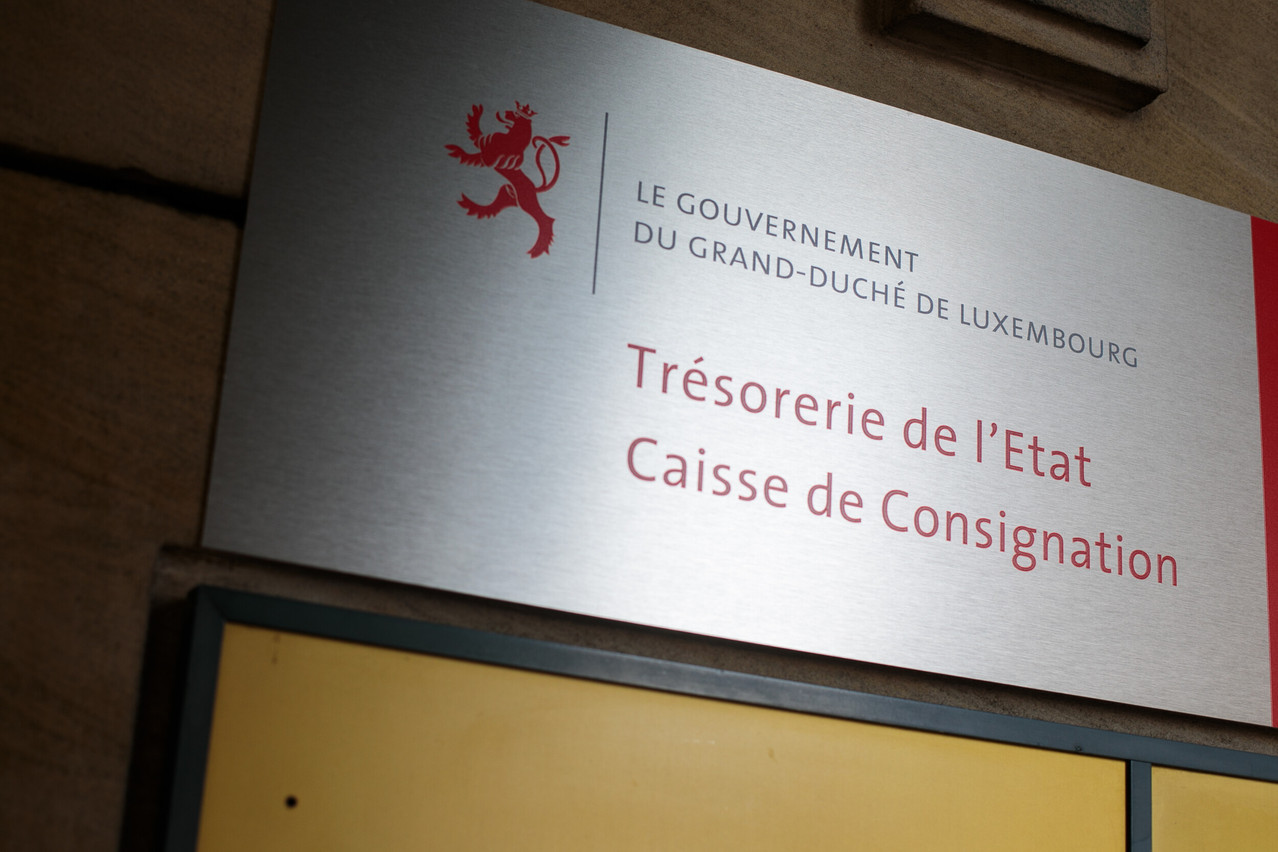
When searches prove unsuccessful, the money is transferred to a new custodian. After six years of inactivity, the insurer must pay the equivalent of the unclaimed benefit to the Escrow Fund. The insurer is then released from its obligation, but the beneficiary retains their entitlement to the capital.
The amounts deposited totalled €208,543 in 2023, €3.87m in 2024, and then €1.52m in 2025. However, this decline does not mean that fewer contracts were transferred. On the contrary, the Fund accepted 598 deposits in 2025, nearly three times the 202 recorded a year earlier. The reason the total amount has fallen despite this increase is that the sums transferred are much smaller: around €19,200 per case in 2024, compared with €2,540 in 2025.
Once the transfer has been made, the search is discontinued. The Fund does not contact beneficiaries: anyone who believes they are entitled to funds must consult the State Treasury’s register or Guichet.lu, and then apply for their return. They must prove their identity and entitlement, provide proof of residence and the details of a bank account within the European Union. The Fund has three months to respond to a request for information and six months to decide on a refund. In practice, a complete application is processed ‘within one day to one or two weeks’. Since 2023, five beneficiaries of unclaimed life insurance policies have thus recovered a total of €76,313.09.
However, you must claim the funds in good time: thirty years after the start of the period of inactivity, provided the funds have been held in the account for at least five years, the sums revert to the State. Hence the importance of making it easier to identify the beneficiaries. Laurent Petitcolas recommends keeping your contact details up to date and drawing up a specific clause, including the name, date of birth and address of the designated beneficiaries. A change of address, marriage, divorce or the death of a beneficiary should also be taken as an opportunity to review the clause.
Finally, the clause may be filed with a notary, provided that the notary’s contact details are included in the contract. This solution enables you to keep your wishes up to date and, if you hold several life insurance policies, to centralise the designation of beneficiaries.
This article was written for the supplement Insurance from the November 2026 issue of Paperjam magazine, published on 14 October. The content is produced exclusively for the magazine. It is published on the website to contribute to Paperjam’s comprehensive archive. Click on this link to subscribe to the magazine.
Is your company a member of the Paperjam Club? You can take out a subscription in your own name. Please let us know via club@paperjam.lu.