Luxembourg patients, doctors and pharmacies remain directly exposed to Europe’s medicine-shortage problem, EU auditors told MPs on Monday, with the European Court of Auditors warning that the bloc’s safeguards are still too fragmented to reliably prevent shortages of critical medicines.
“The current framework for dealing with critical shortages of medicines is incomplete,” 
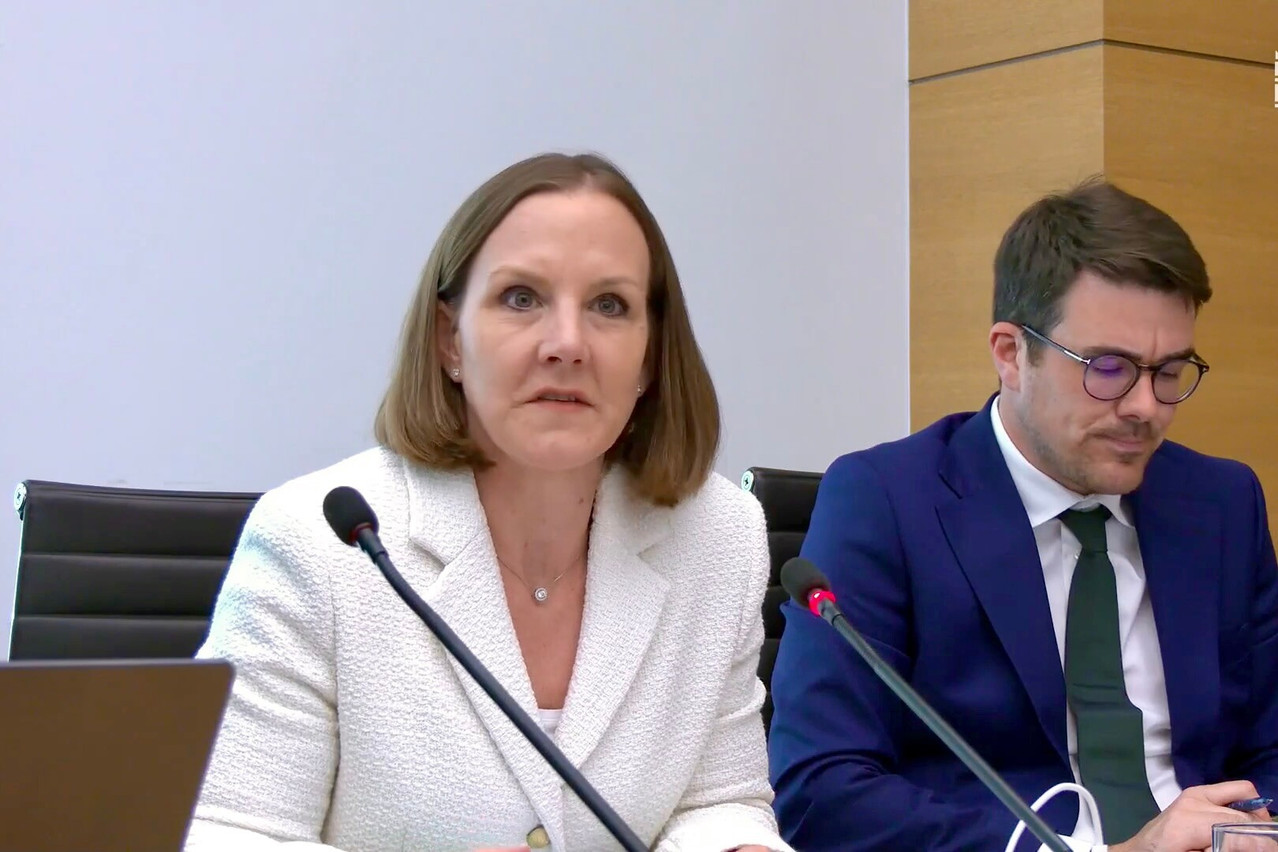
Elvinger was presenting a 2025 special report on whether the European Commission and the European Medicines Agency had acted effectively to ensure the availability of medicines considered essential and difficult to replace.
The warning matters directly for Luxembourg because medicines supply depends on a European chain in which shortages do not stop at national borders. Smaller markets are especially exposed when production is concentrated, distribution is fragmented and companies have limited incentives to serve every country equally.
Incomplete safeguards
The court found that EU action had helped, especially through EMA coordination, but had not yet produced a sufficiently robust system. Elvinger said the EMA’s formal mandate, granted in 2022, remained focused on health crises, leaving it too dependent outside emergencies on incomplete and voluntary information.
“One of the main problems is access to data,” she said. “In practice, the European Medicines Agency often has to rely on voluntary data.”
The court also pointed to late or missing reports from industry. Companies are supposed to warn regulators at least two months before a shortage, but the auditors said this does not always happen.
“The reporting obligation does not work as intended,” Elvinger said. “Industry must report shortages of a medicine at least two months in advance to the competent regulator, but that often does not happen.”
The EMA’s European Shortages Monitoring Platform is intended to improve reporting on medicine availability, supply and demand across the EU and the European Economic Area. But the auditors warned that it can only work if member states and companies provide complete and consistent data.
Fragile supply
The hearing came as the EU is moving forward with its Critical Medicines Act, proposed in March 2025 to strengthen supply chains, support manufacturing and reduce dependency on single suppliers and third countries.

“If one wants to make progress, there are two very large levers where one has to start now,” Schockmel said. “One is centralised authorisation procedures, and the other is production within the European Union itself.”
Marc-Oliver Heidkamp, an attaché in the private office of the European Court of Auditors’ German member, said price pressure had helped create the fragility now visible in shortages. Lower costs had encouraged production to move abroad, processes to become leaner and global supply chains to become more vulnerable to shocks.
Resilience costs
“This is partly intended,” Heidkamp said. “Money is lacking in the health sector everywhere, but the downside is that disruptions in supply chains and production can occur.”
Heidkamp said public purchasing would have to take supply security more seriously, but warned that resilience would not come for free.
“We must be ready, as societies, to spend more money on at least the most critical medicines,” he said. “In return, we buy security of supply.”
Small-market risk

“If competences are transferred to the European level, they should be competences that bring added value to every health system,” Di Bartolomeo said. “It is not a question of challenging the competence of individual countries in health and social policy.”
Di Bartolomeo said Luxembourg was not operating as an entirely isolated market, pointing to its pharmaceutical link with Belgium. But he added that Luxembourg remained small compared with larger players, and that the balance of power with pharmaceutical companies could not be solved country by country.
“One can only assert oneself against the pharmaceutical industry if one acts together,” he said. “We have had the experience that, when the other side acts individually, one country is taken advantage of more and another less.”
Market barriers
The auditors also said the EU internal market does not yet work smoothly enough to move medicines where they are needed during shortages. Differences in authorisations, packaging, names, labelling and prices can make cross-border redistribution slower and more expensive.
“Medicines that are authorised at EU level are therefore not always available everywhere in the EU,” Elvinger said. “Differences in packaging, names and labelling also create additional barriers in the internal market.”
Some member states also introduce export restrictions during shortages to protect domestic supply. Elvinger said the impulse was understandable, but could worsen shortages elsewhere and weaken the EU internal market.
Brittle markets

Matthias Blaas, head of task for the ECA audit, said there was no single medicines market. Patented medicines often involve monopolies or oligopolies, while generics can be economically efficient but fragile because low prices encourage concentrated production.
“The market works efficiently, but it does not price in things such as global risks and geopolitical risks,” Blaas said. “Nor does it price in different environmental standards or different labour-protection standards.”
The hearing left MPs with a practical trade-off rather than a simple fix. Europe can improve warning systems, reinforce the EMA’s role, coordinate stockpiling, rethink procurement and support production closer to home, but those measures require political choices and money.
“The EU has taken an important step,” Elvinger said. “But the system is still fragmented, it relies too much on incomplete information and fragile global supply chains.”