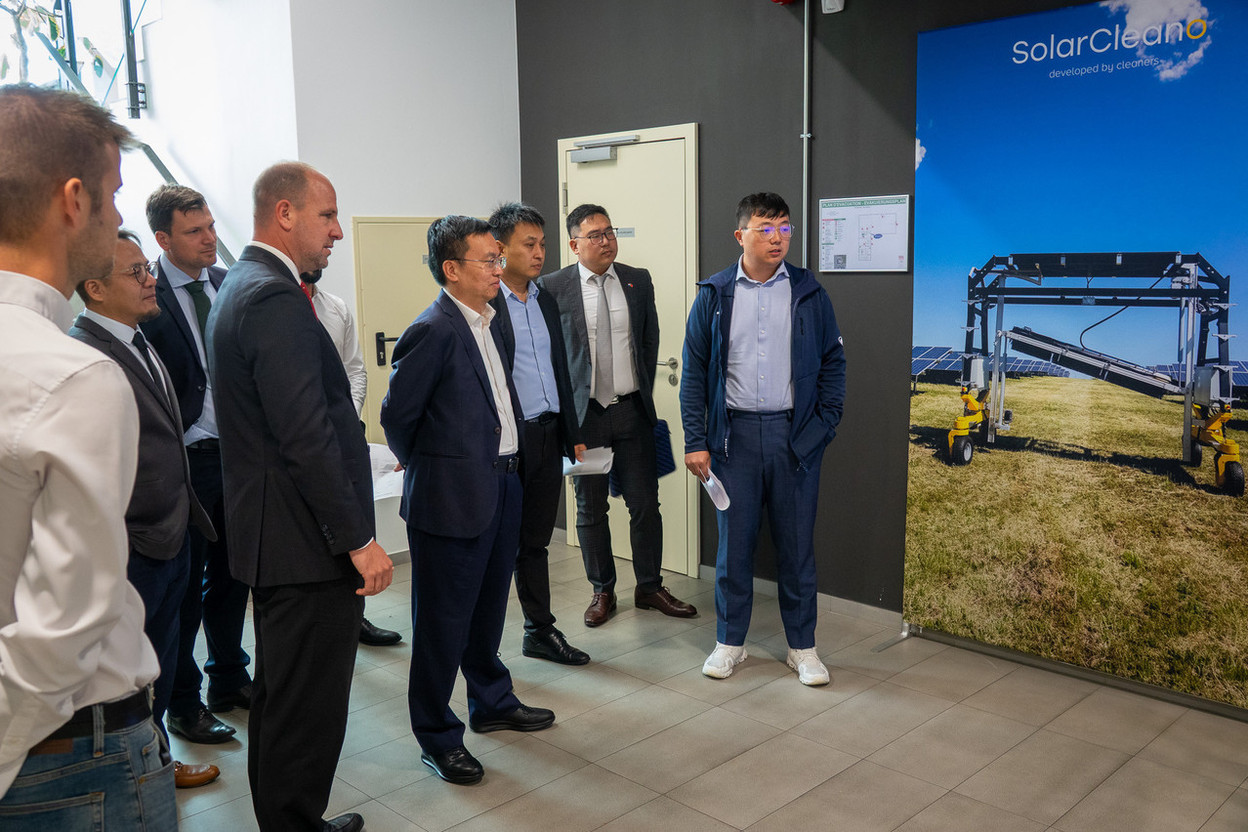

The anecdote brought a smile to the faces of the hundred or so participants gathered on Thursday evening by the China-Luxembourg Chamber of Commerce, amidst some twenty Chinese vehicles in the Autéra Group’s new showroom in Strassen (bringing the total number of Chinese car manufacturers selling their models in Luxembourg to more than 20, alongside Forthing, Baic, Foton, Dongfeng and Voyah). Above all, it sums up the problem that these manufacturers still need to resolve. Even one of their best ambassadors remains loyal to a German brand. Hua Ning promises, however, that his next car will be electric. He hopes it will have been developed jointly by Chinese and European manufacturers, he added.
Twice as many cars in a year
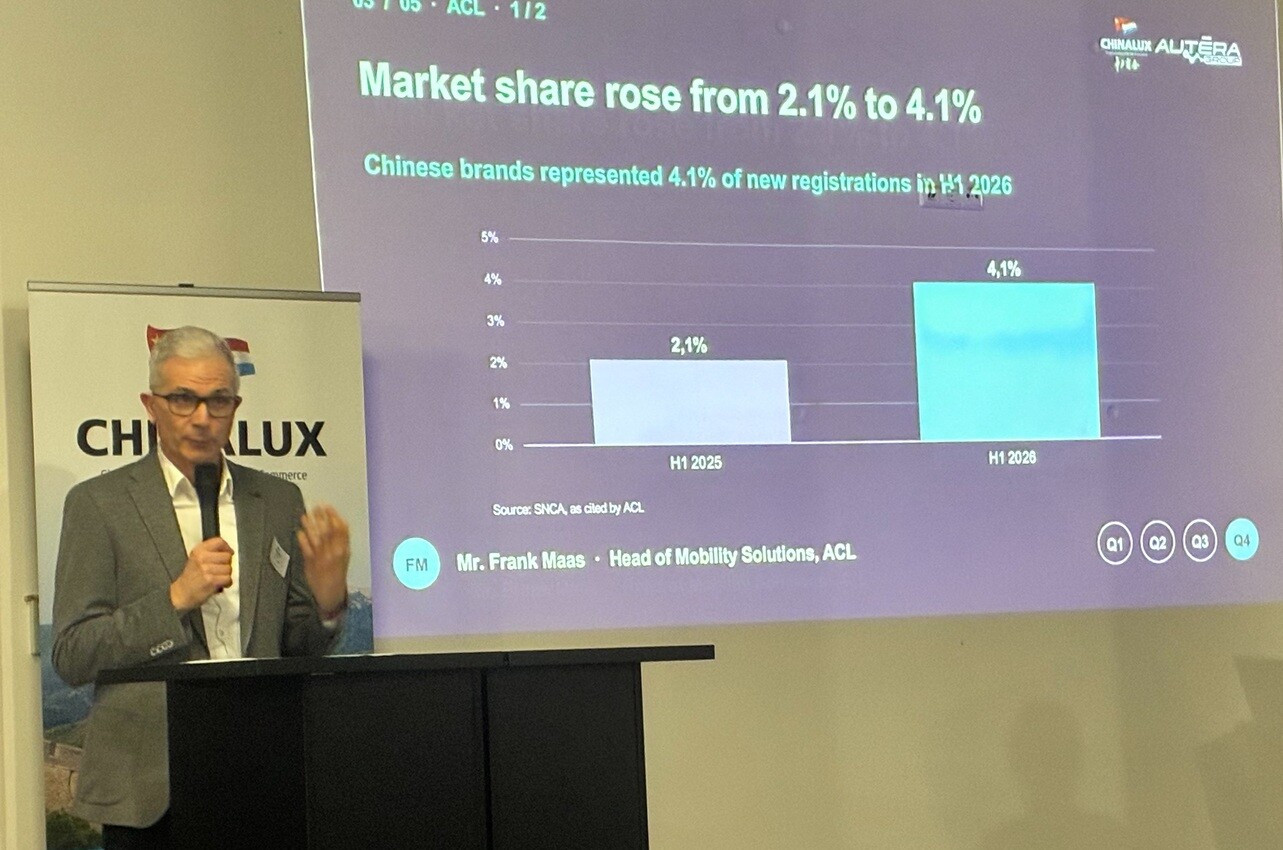
The Chinese breakthrough has begun. In the first half of 2026, 1,052 cars from Chinese manufacturers were newly registered in the country. There were just 517 in the first six months of 2025. Their market share has thus risen from 2.1% to 4.1% in one year, according to calculations by the Automobile Club of Luxembourg (ACL) based on data from the National Motor Vehicle Registration Authority (SNCA).
Growth is rapid. However, it is starting from a very low base. Chinese brands still have a smaller presence in Luxembourg than in the European Union (EU) as a whole. Whilst Frank Maas, head of mobility solutions and ACL Classic, expects them to gain further ground over the next five years, he rules out any suggestion that this will happen automatically.
The Luxembourg market remains dominated by European car manufacturers. German brands have a strong presence there. The prevalence of company cars and leasing further reinforces this advantage.
Price alone is not enough
Chinese car manufacturers can no longer be dismissed as mere producers of cheap cars. Frank Maas acknowledges their technological expertise in batteries and software. They are also able to develop new models quickly, offering a wide range of features at competitive prices.
Trust isn’t built overnight

This advance does not resolve the issue of trust. In Luxembourg, a car must retain a sufficiently predictable value to be of interest to leasing companies. It must also be possible to maintain and repair it over a number of years.
“Trust isn’t built overnight,” summarised Frank Maas. It depends on the quality of after-sales service, the availability of spare parts, repair times, warranty cover and resale value. A brand that makes a good impression during a test drive may still fall short on these criteria.
Marie-Alix Barth, marketing coordinator at Autéra, rightly observes that perceptions change when customers see the cars for themselves. They can then judge the finish, the technology, the features and the comfort for themselves. However, the experience of the vehicle is only the first step. “Having a good product is not enough,” she emphasised. The manufacturer must be able to rely on a local network, dedicated services and a lasting relationship with the buyer.
This is where part of China’s lag lies. European manufacturers have long-established networks. The market is more familiar with the reliability of their models, their maintenance costs and their resale value. New entrants still need to build up this track record.
Beijing proposes manufacturing in Europe
Since October 2024, the EU has been imposing countervailing duties on electric cars imported from China. These stand at 17% for BYD, 18.8% for Geely and 35.3% for Saic Motor, the owner of MG. These levies are in addition to the standard 10% customs duty.
Hua Ning disputes this response and presents industrial expansion in Europe as a preferable solution to trade restrictions. The diplomat points out that European groups have been manufacturing in China for a long time. Chinese manufacturers could follow the reverse path by manufacturing their vehicles on the European continent. Some have already opted for existing factories or launched their own projects.
This integration goes beyond mere assembly. Chinese cars make use of European components, expertise and designers. Conversely, European groups are now setting up research centres in China that are capable of developing new models more quickly.
The ambassador is, therefore, advocating not so much the replacement of European cars with Chinese ones as closer industrial ties. This interpretation naturally serves Beijing’s interests. It also ties in with the growing number of alliances between the two industries.
A battle for the fleets
In Luxembourg, success will be measured less by motor shows than by the catalogues of leasing companies. Corporate fleets represent a key route into the market. They favour vehicles whose total cost and residual value can be calculated with sufficient hindsight.
Chinese car manufacturers already have the technology, models and pricing needed to compete. They still need to prove that a car bought today can be repaired quickly and resold at a fair price in three or four years’ time. Hua Ning’s BMW serves as a reminder of the scale of the challenge. To win over Luxembourg, Chinese brands will have to become as trustworthy as those in which their own ambassadors still place their confidence.