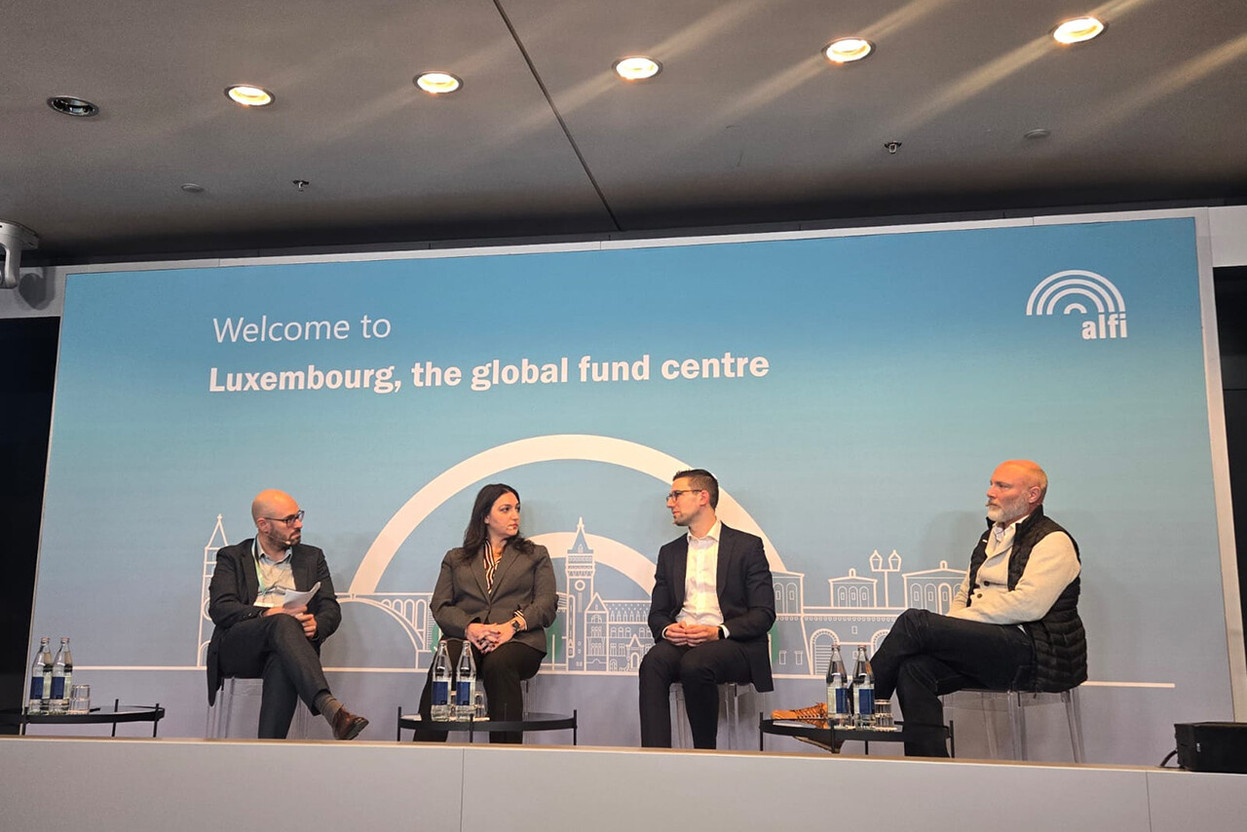
Private credit has become one of the fastest-growing segments of alternative investments. But as investment managers raise increasingly large funds, a new challenge is emerging: finding enough attractive lending opportunities without compromising on credit quality. For Kevin Petrovcik, client portfolio manager private markets at Invesco, the greatest concern is not necessarily an imminent wave of defaults. It is the pressure that growing pools of capital can place on investment discipline.
“Some of these funds that have been raised are in excess of $50bn or $60bn,” he explains. Yet the financing needs of individual middle-market companies can be considerably smaller, sometimes ranging from $30m to $100m.” If you have an $80bn fund, that’s a lot of capital that you need to deploy.” This imbalance between available capital and suitable lending opportunities is beginning to influence market behaviour.
According to Kevin Petrovcik, some direct lenders are expanding into the broadly syndicated loan market, while others are becoming more aggressive in the terms they are prepared to accept. “We’ve seen some transactions leave the broadly syndicated loan market and come into direct lending because the syndicated market wasn’t willing to give up on certain covenants or terms,” he says.
For investors, the question is whether fund managers can maintain the investment discipline that initially justified their allocation to private credit.
AI introduces a new credit risk
The rapid development of artificial intelligence (AI) has also changed how investors assess certain borrowers, particularly software companies. Earlier this year, concerns about AI potentially disrupting established software business models triggered volatility across credit markets. “We saw private markets overall react to the uncertainty surrounding software companies and how the introduction of AI could cannibalise their businesses,” Kevin Petrovcik explains.
We’re still overweight in the European market.

These concerns also contributed to redemption requests at certain large investment vehicles, including evergreen funds and business development companies. Software businesses can be particularly vulnerable when they combine elevated leverage with uncertainty about future cash flows.
However, Kevin Petrovcik is careful not to interpret these developments as evidence of a fundamental deterioration across private credit. “I don’t think anything has fundamentally changed in the market. I just think the market’s perception has changed.” He remains confident in the underlying fundamentals of middle-market direct lending, while emphasising the importance of analysing individual borrowers and sector exposures.
The risks extend beyond artificial intelligence. Greater flexibility in loan documentation, including provisions allowing borrowers to defer cash interest payments, requires lenders to scrutinise contractual protections more closely. “It’s really a matter of making sure that your manager has the resources and the ability to appropriately review all documentation and protect investors on the downside,” he says.
Europe maintains its relative-value advantage
Against this backdrop, Europe continues to stand out in Invesco’s global credit allocation. The investment manager entered the year with a stronger overweight position in European credit relative to the United States. Although that overweight has since declined, the firm continues to favour Europe. “We’re still overweight in the European market,” Kevin Petrovcik confirms.
One reason is the difference in credit spreads and market composition. The European market has historically offered a premium, while the US credit universe has greater exposure to technology and software companies. Europe’s fragmented legal and insolvency frameworks also create opportunities for managers capable of navigating different jurisdictions.
“Collateral in Italy may be different from collateral in Germany, which may be different from collateral in Norway. It’s a function of the underlying insolvency regime within each country,” he explains. Nevertheless, he acknowledges that growing institutional demand could eventually increase competition in Europe and reduce some of these advantages.
Luxembourg needs to have quick turnaround times and continue developing new vehicles that will answer investor demand.
For investors, the ability to select experienced managers with strong credit analysis and access to transactions remains essential. “The last thing you want is a new manager that will buy a deal just for the sake of getting a deal.”
Luxembourg’s role in the next generation of credit funds
As private credit strategies evolve, Luxembourg remains an important jurisdiction for structuring investment vehicles. Kevin Petrovcik points to Invesco’s long-standing presence in the financial centre, including a Luxembourg-domiciled private credit fund that celebrated its twentieth anniversary in August.
The firm is now exploring additional evergreen structures designed to respond to changing investor expectations, particularly around liquidity and access to private credit. For Luxembourg, the challenge is to maintain a regulatory and operational environment capable of accommodating these developments.
“I think Luxembourg has been very flexible from that perspective,” Kevin Petrovcik says, referring to the ability to develop fund structures adapted to different investment strategies. But he also stresses the importance of responsiveness. “Luxembourg needs to have quick turnaround times and continue developing new vehicles that will answer investor demand.”
As institutional investors increasingly consider credit opportunities across traditional market boundaries, Kevin Petrovcik expects investment solutions to become more flexible, potentially combining several segments of the credit universe within a single strategy.
The underlying message is that the future of private credit will depend not simply on attracting more capital, but on deploying it selectively, maintaining appropriate protections and ensuring that investment structures remain aligned with the risks of the assets they hold.