In response to the Prime Minister 
There is one area where the Prime Minister does receive praise from the LCGB, and that is in relation to his comments on the health sector. The announcements regarding the absence of any move away from the national health scheme and the rejection of a two-tier healthcare system are hailed as “a strong signal”. The union explicitly welcomes this commitment to maintaining a healthcare system that is equitable and accessible to all. However, it wishes to remain cautious and is awaiting the formal signing of an agreement between doctors and the National Health Fund (CNS) to ensure that these commitments translate into tangible results for insured persons. This signing is seen as “the true test of the government’s determination to turn its words into lasting guarantees for patients”.
But on this point, the situation has reached an impasse. And will the government be willing to push this through by force? This is not on the agenda, as the Health Minister pointed out on 6 May during the last four-party meeting 
Doctors are becoming increasingly frustrated
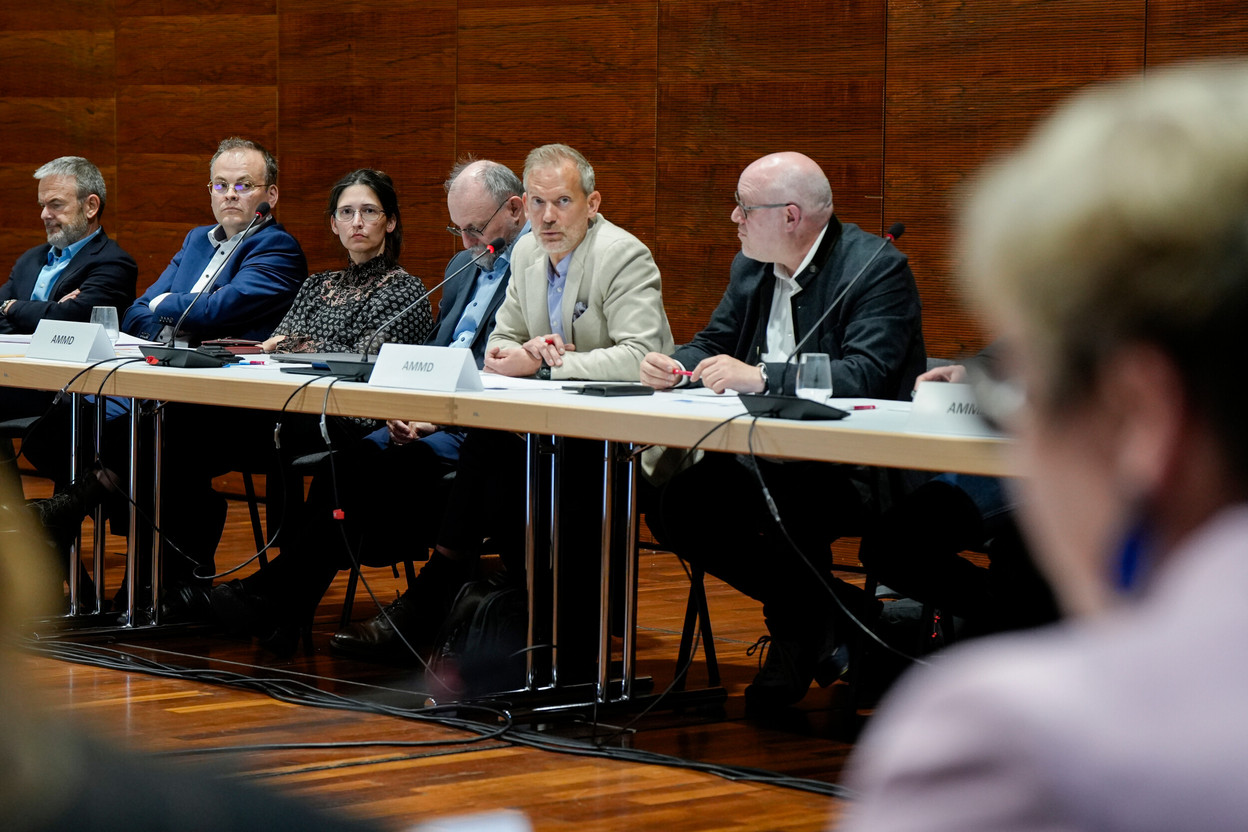
Their chairman, Chris Roller, has voiced his frustration at the health section of Luc Frieden’s speech. A section that seemed aimed more at the trade unions than at healthcare professionals.
Far from the expected bold announcements, the Prime Minister’s speech is seen as “merely a rehash of election promises made two and a half years ago, with no concrete measures to lift the system out of its current stagnation”. Rejection of a two-tier healthcare system? “This duality is already a reality for patients in Luxembourg,” says Chris Roller coldly. “The current system is characterised by unacceptable waiting times, which can reach 10 to 11 hours in A&E, as well as months’ wait for scans or minor procedures. This situation drives patients to adopt avoidance strategies: those with connections get appointments more quickly, whilst others no longer hesitate to seek treatment in Germany or France to receive care more promptly. It’s not fair,” laments the doctor, pointing out that this situation stems from the system’s failings and not from the wishes of practitioners. “Luc Frieden has announced his intention to reduce waiting times. I do wonder how he’ll manage that…”
And he sets the government and the unions against each other, describing their respective arguments as “dishonest” and “rhetoric that seeks to make doctors feel guilty by portraying them as motivated solely by money”.
The medical profession is also calling for action. “We believe it is urgent to move beyond empty rhetoric and listen to those on the front line in order to build a system that is more efficient, faster and truly patient-centred.”