Article updated at 3:20 p.m. to include the reaction from the Federation of Craftsmen.
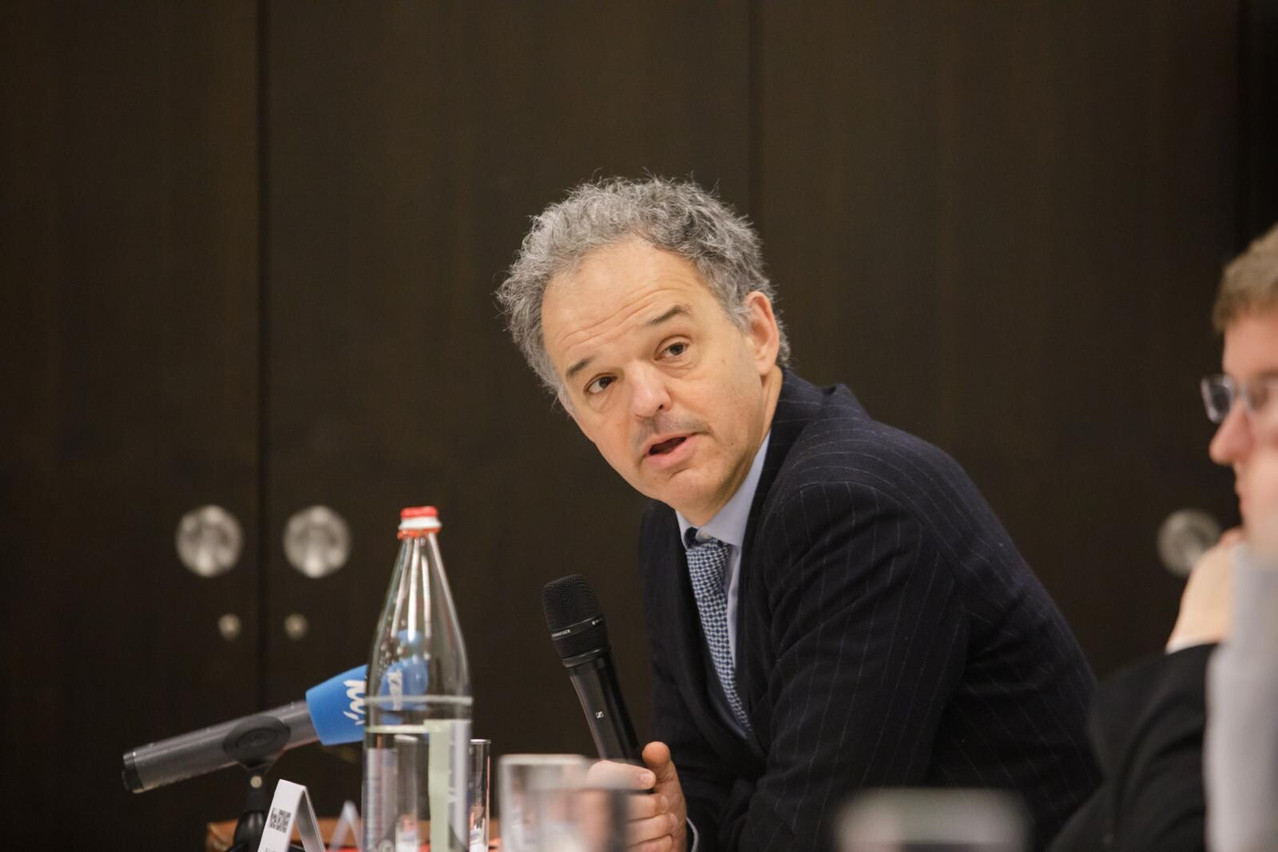
For the president of the Luxembourg Business Federation (UEL), 

Looking ahead to the tripartite talks, he believes that “it is essential to start from the same point if we are to hope for an agreement. If we have disagreements from the outset, it is difficult to achieve a tangible result.” Will the trade unions agree with these observations? The question remains open.
In the absence of any concrete announcements, Michel Reckinger believes that the Prime Minister “has left all options open, which is a good thing. It was essential not to make any announcements that might jeopardise the tripartite agreement. He has managed to avoid the pitfalls he could have fallen into.”
The UEL is preparing its arguments for the tripartite energy meetings on 2 and 3 June. “Our priority is to reduce inflation so that we can delay future price indexations as much as possible, ideally for more than 12 months. We are also working on what we can do if we are unable to postpone these indexations by more than 12 months. These two points are crucial for the competitiveness of businesses.”
These proposals will therefore be unveiled in early June. “Proposals which, I assume, will be put forward by the Prime Minister and Statec in preparation for the subsequent meetings scheduled for 8-10 June.”
Fedil is handing out its commendations
With an eye also on the upcoming tripartite negotiations, Fedil echoes the Prime Minister’s call to prioritise dialogue and collective action in order to strengthen both household purchasing power and business competitiveness against a backdrop marked by the repercussions of the crisis in the Middle East and a scenario that looks set to be particularly challenging.
In the meantime, the Federation of Industrialists welcomes “a number of positive developments in its areas of expertise”. In particular, it welcomes “the government’s commitment to continuing the implementation of the 50 measures co-developed with industry and various stakeholders to accelerate the roll-out of renewable energy in Luxembourg”. It welcomes the support for photovoltaics and the €150m budget earmarked to limit the impact of grid costs. “A positive signal for businesses” that Fedil hopes will be sustained over the long term.
Industry representatives have also welcomed “announcements relating to strategic technologies, defence and the space sector, in particular the €150m fund dedicated to start-ups developing ‘dual-use’ technologies, the Defence Campus project in Dudelange, and the development of the Space Campus with satellite production and testing facilities”. There has also been a positive response to the strengthening of links between public research and businesses, and to the announced investments in artificial intelligence. Another positive point highlighted is the support for entrepreneurship through the streamlining of company formation procedures and increased financial support for SMEs, start-ups and the digital transition.
Tradespeople want action
The Federation of Craftsmen takes note of the speeches. Whilst it acknowledges and welcomes certain advances, it is awaiting “concrete responses to revive the economy”. It therefore welcomes the announcements regarding administrative simplification, the streamlining of building procedures, investment in housing, and certain measures to support the energy transition, which “move in a direction long championed by the craft sector”.
However, the federation regrets the lack of concrete announcements to revitalise the economy and ensure the viability of businesses. “Businesses are simultaneously facing high labour costs, a loss of competitiveness, an ever-increasing administrative burden and increasingly fragile profitability.”


