
The EU anti-racism action plan for the 2020-2025 period lays out a series of measures to step up action in specific areas, including healthcare in daily life, especially in the context of covid and existing health inequalities. In the report, the Commission also called on member states to adopt national action plans against racism and racial discrimination.
Luxembourg is now on the path to develop its first national action plan that will set the tone against all forms of racial discrimination. The results of a Luxembourg Institute of Science and Technology (Liser) survey to be released by mid-March is expected to clear up some vague areas and feed into the action plan.
In the context of the covid crisis, the modern healthcare industry has been under scrutiny by players calling for more equity. More recently, Nigerian medical student Chidiebere Ibe made headlines for his dark-skinned illustrations, a rare image in medical textbooks, which raised discussions on the implicit bias that may exist within healthcare and how this may disproportionately affect certain populations.
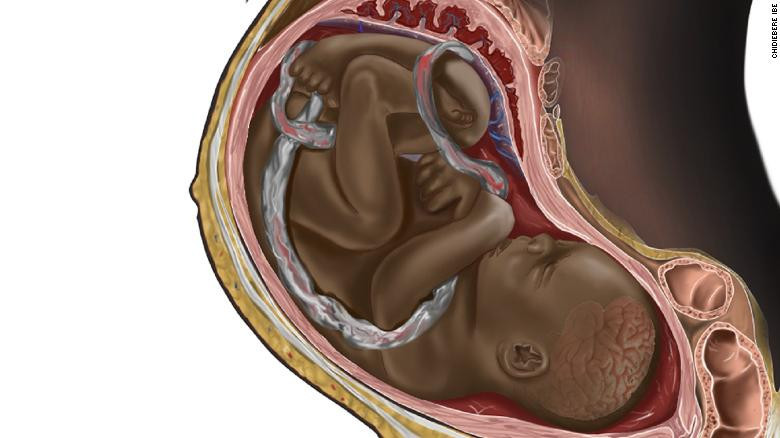
Medical Illustration of a black foetus by medical student and illustrator Chidiebere Ibe Chidiebere Ibe
A 2018 survey from Rutgers University and a 2021 study published by Neurology demonstrate that people of colour are more likely to be misdiagnosed. But within the context of Luxembourg, there is little evidence of a systematic discrimination in the healthcare system; however, data would help support anecdotal evidence from patients and shed more light on the problem in Luxembourg.
“It's not systematic, but it happens occasionally,” explains Antonia Ganeto, the spokesperson and president of afro-descendant network Finkapé. She recalls some discrimination testimonials from close contacts and prior interviews done by students that all attest to this.
Based on these testimonials, she further clarifies that within the healthcare system in Luxembourg, like in many parts of the world, discrimination against people and professionals of colour could occur, but an in-depth study is required to understand to what extent this exists in Luxembourg.
In the meantime, she suggests sensitisation efforts, an established code of deontology and, depending on the case, a detailed follow-up on incidents by team leads in the health system to further deter discriminatory practices suffered by people with a minority racial or ethnic background.
“I personally haven’t experienced discrimination while accessing healthcare in Luxembourg, but I wouldn’t be shocked if I hear of it,” says Alan [a pseudonym], who is of African descent and resides in Luxembourg, corroborated by another African resident.
Across the EU, the health sector seems to be the least impacted by racial discrimination as shown in the EU Agency for Fundamental Rights survey that identified 3% of respondents faced discrimination in healthcare within the EU compared to 44% when house hunting.
Nevertheless, this doesn’t address the need for representation and diversity in Luxembourg’s public health demographics, which extend beyond discrimination concerns. A 2021 Saint George University study notes better outcomes for both patients and physicians when there is adequate representation of “backgrounds, beliefs, ethnicities and perspectives”. The just-concluded Black History Month explored the theme of “black health and wellness”.