Do the recent attacks on smart fridges and the threats to critical infrastructure mark a turning point?

How can we anticipate threats that are not yet known?
“We also try to envisage the scenarios that might arise. We assess their impact and identify mitigation measures to reduce it. We are preparing for business continuity, because if something were to happen, we need to be able to get back on our feet as quickly as possible. This cycle never stops. The only way to respond to the evolving threat is to understand what might affect us and how. Of course, there are risks that we are aware of and can identify. Threats related to drones, for example, illustrate the need to regularly update our risk analyses. As soon as an incident occurs anywhere in the world, we must incorporate this data into our risk analysis and consider how to respond.
An electricity grid is characterised by its highly distributed nature: it comprises thousands of kilometres of cables, thousands of substations and transformers. This environment is also controlled by digital systems. We must therefore constantly assess how to deal with the various threats. Grid resilience is not just about cyber threats. It can also involve physical threats: cutting cables, attacking pylons or attempting to sabotage substations. The world is changing at an ever-faster pace, and so are the risks; we must therefore speed up the review cycle for our risk matrix. There is no such thing as zero risk, but ignoring risks is never an option.
How do you factor geopolitical risk into your analysis?
“The way in which threats are used is evolving; we have seen this recently with the bomb threats on aeroplanes. We are taking a sufficiently broad approach to keep as many issues on our radar as possible and to prepare for as many scenarios as we can. Our primary responsibility is to ensure the energy supply. The greatest risk, therefore, is not being able to fulfil this mission.
If we draw a parallel with the financial sector, we have, for example, seen a very large-scale cyber-attack against a major French bank (Crédit Mutuel – Ed.). In the financial sector, certain cyber incidents can lead to the temporary suspension of a service in order to protect systems and data. In the energy sector, we must take an additional constraint into account: maintaining the continuity of supply as far as possible, whilst managing the risks.
We must therefore ensure that our systems are sufficiently decoupled from risks, or that they can continue to operate under conditions that are as ideal as possible. This involves, in particular, segregating our various environments.
What does that mean?
“The energy transition presents us with an unprecedented challenge. Electricity generation is becoming increasingly decentralised, with solar panels and wind turbines. Electric cars and heat pumps are making the management of electricity networks more complex. To incorporate these new constraints into our energy distribution systems, we need to make the grids smarter. This involves processing data, improving forecasts and carefully managing future flexibility requirements. Our industrial systems will therefore need ever more computing power.
For many years, two industrial digital worlds coexisted without overlapping: IT and OT. IT is the world of management: the applications that process and track customer requests, manage stock or issue invoices. These are relatively centralised, administrative systems. OT is the digital aspect of the industrial and operational world: the sensors fitted to transformers and protective equipment, which enable the network to be controlled remotely.
As systems become increasingly complex and we need to anticipate what will happen, we have to calculate and aggregate far more data. IT and OT systems must therefore converge towards a common goal: making the network smarter, turning it into a smart grid. However, we must not remove the boundaries between these two worlds. OT must remain as protected and as far removed from the threat as possible.
The smarter systems become, the more vulnerabilities they can create. How can we deal with this ‘paradox’?
“In a company like Creos, we cannot pit security against innovation. We must design our systems whilst constantly bearing these two aspects in mind: innovating, but within a secure environment. The energy transition is gathering pace, and the needs for both production and consumption are very real. We need rapid and innovative solutions, but our primary responsibility remains to supply energy. Everything must therefore be implemented within a secure environment.
Talking about smart systems naturally leads to the topic of artificial intelligence. In the digital world, it offers numerous benefits, for example in decision-making and improving forecasts. We are faced here with a leadership challenge: how can we make the most of technology without losing sight of what is happening within our network, or the skills needed to respond if certain technologies fail?
That is what the resilience chain is all about. It is not just about cyber security: we must bear in mind that, whatever happens, we need to have a solution in place to keep the system running. As a last resort, there are more human-centred and manual solutions. This risk must also be taken into account. We must be extremely cautious in our use of digital algorithms in order to maintain operational resilience. More broadly speaking, the smarter our infrastructure becomes, the more we need people who are capable of understanding it.
How do you organise the convergence of IT and OT at Creos?
“There is a significant technological aspect, but we also need to align the ways in which we work, make decisions and manage operations. This is a very significant change for the teams’ culture. It’s about getting people with very different levels of experience to work together. Even though they’re all working on digital systems, the way these systems are managed is fundamentally different.
The rate at which vulnerabilities are discovered could outstrip the capacity to fix them.

Bringing systems together is a technical challenge; bringing cultures together is a leadership challenge. This will officially begin on 1 January 2027. The IT and OT departments have already been working more closely together on these issues for about a year and a half. But the real transformation will begin at the start of the year.
Of these two challenges, which is the most difficult?
“I often say that technology is never difficult: there are always solutions. It’s been fifteen or sixteen months since I joined Creos. We’re caught between two worlds: the digital world, which is evolving at an incredible pace, and the electricity grid, which is also evolving, but over years, even decades – so it takes much longer to lay cables, build pylons, obtain planning permission and take environmental constraints into account…
We must therefore manage our teams within these two timeframes: keeping pace with technological developments as quickly as possible, whilst recognising that the transmission of electricity via the grid operates on an entirely different timescale.
How has your perspective on the role of CIO changed since moving from the stock exchange to Creos?
“There are many differences. On the stock exchange, when the IT systems go down, trading comes to a halt: nothing can take place.
At Creos, if the IT systems go down, the electricity keeps running – thankfully. That puts a number of things into perspective. When you get to the OT side of things – the heart of the business – you find something more critical, but with a different legacy and a different way of operating. There’s a lot to learn. That’s also what I like about this challenge: discovering new things, new technological choices and technological developments.
In the industrial sector, life cycles vary. However, when a digital system is integrated into a transformer, the transformer is not replaced after three years. Digital systems must therefore be capable of supporting the long-term life cycle of the equipment to which they are connected.
As far as vulnerabilities are concerned, the number of reported vulnerabilities has skyrocketed. How should we interpret this?
“It all began in February 2026, when Anthropic, amongst others, unveiled artificial intelligence tools capable of uncovering vulnerabilities that traditional methods did not always detect. The results published since then show a significant acceleration in cybersecurity research capabilities. This represents a major opportunity for defenders, but also a new challenge: the pace at which vulnerabilities are discovered could outstrip our ability to fix them. However, in order to search for vulnerabilities, these tools may need access to particularly sensitive information on our systems. This raises another question: to whom do we entrust this information, where is it processed, under which jurisdiction, and what safeguards do we have regarding its use?
Artificial intelligence has therefore identified ten and fifty times more vulnerabilities than could previously be detected in a typical year. The remediation cycle (what we call patching, i.e. fixing these vulnerabilities) is speeding up. When a vulnerability that is highly critical to us is discovered, the priority becomes applying the patch to prevent it from being exploited. Fortunately, cybersecurity is not measured solely by the speed at which patches are applied; vulnerabilities may exist without being exploitable because they are not accessible. In the case of the attacks on fridges, the problem was not just the presence of vulnerabilities, but the fact that they were accessible via the internet. We must therefore fix the vulnerabilities, whilst considering security as a whole.
I’m not going to interpret this politically, but rather analyse it from a technological perspective. We’ve always had cyber-attacks, usually with a specific motive: activists wanted to get a message across, thieves wanted to line their pockets. In this case, I don’t understand why corporate fridges are being targeted.
The message, however, is clear: we must remain vigilant at all times. Everyone who manages IT or digital systems must remain vigilant.”
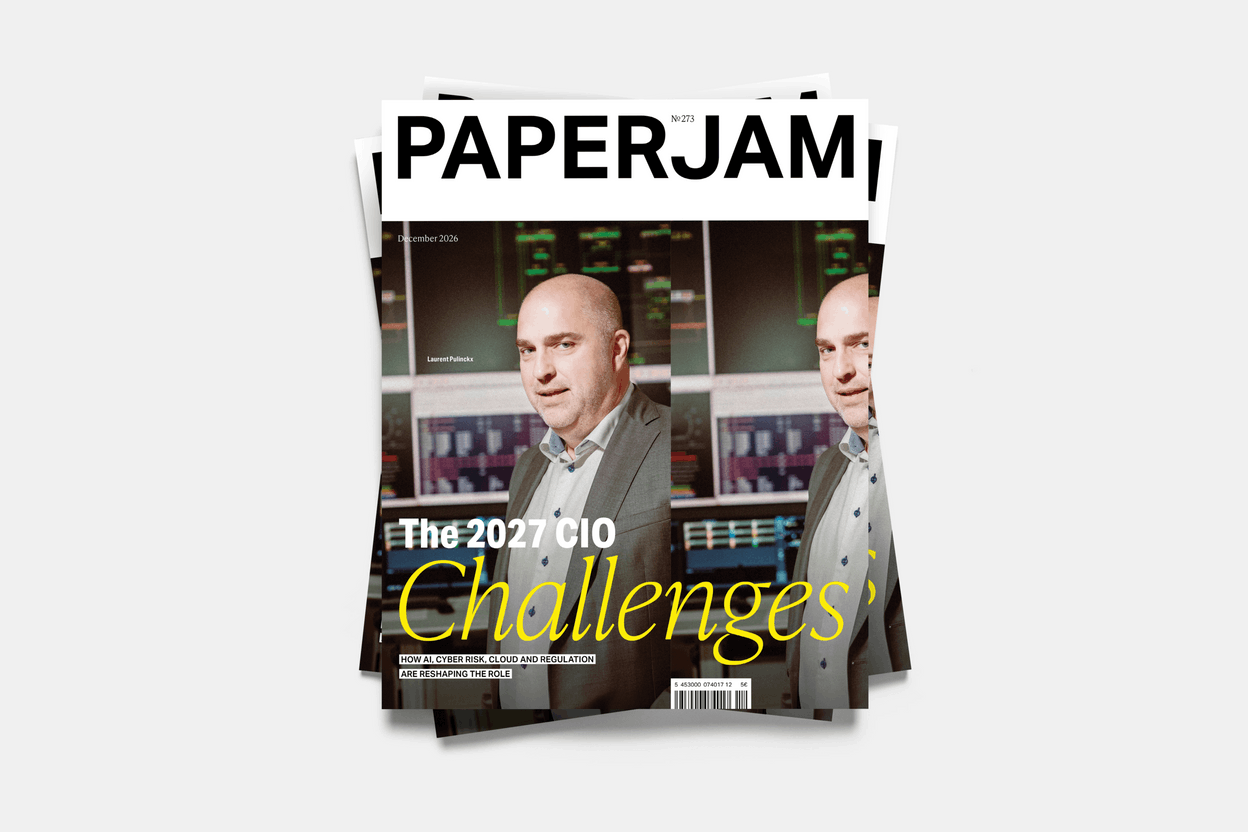
This article was written for the December 2026 issue of Paperjam magazine, published on 18 November. The content is produced exclusively for the magazine. It is published on the website to contribute to Paperjam’s comprehensive archive. Click on this link to subscribe to the magazine.
Is your company a member of the Paperjam Club? You can apply for a subscription in your name. Please let us know via club@paperjam.lu.