The issue could hardly be more sensitive for 
The dispute did not begin this summer. In October 2025, the AMMD had authorised its members to initiate proceedings to terminate the agreement with the CNS. This termination relates less to the content of the agreement – an administrative act designed to govern relations between doctors, dentists and the CNS – than to the very structure of the healthcare sector.
Behind this dispute lies a much broader question: what model of healthcare does Luxembourg wish to fund, and at what cost? In particular, doctors are calling for changes to the way procedures are remunerated that take greater account of inflation, their costs and evolving practices. The government, for its part, intends to maintain a contract-based system, keep healthcare expenditure under control and avoid a two-tier system. The divide between the two sides is widening. And this divide is set to grow as other sensitive issues come to the fore. These include the issue of the financial balance of the maternity health insurance scheme. This matter is due to be discussed at the four-party health committee meeting scheduled for 21 October.
The delicate art of controlling expenditure
The health insurance finances are on a slippery slope: 2026 will end with a deficit of around 126.5 million. Year on year, the deficits are growing, and if nothing is done, this will automatically result in an increase in contributions and the introduction of automatic cost-saving measures. This is a scenario that the government rejects, just as it rejects any reduction in reimbursement rates or even the removal of reimbursement for certain procedures, as well as any increase in contributions.
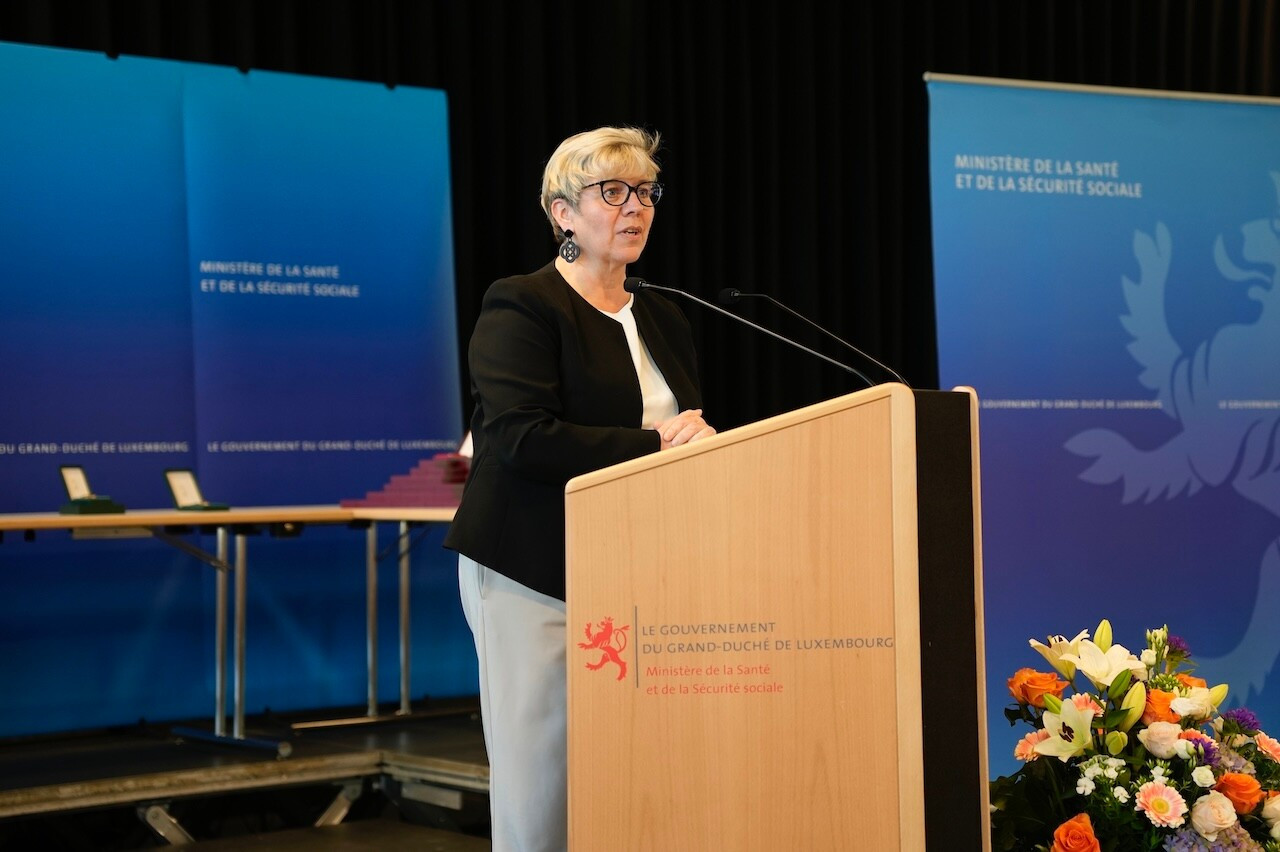
But then, how can the plan be rewritten? Several options have been put forward: the minister aims to achieve savings of 96 million euros by focusing on improving the system’s efficiency, on prevention, and on combating abuse and fraud. Other options are being explored by politicians, primarily better control over prescriptions and a possible removal of the cap on contributions. Martine Deprez has not ruled out this latter possibility, whilst refraining from confirming it. As for the Union of Luxembourg Enterprises (UEL), there is no question of increasing contributions. For the trade unions, the red line is the full maintenance of benefits. And caught in the middle are the doctors, who fear that an agreement will be reached at their expense. For these doctors, the revaluation of medical procedures is a prerequisite for the system’s attractiveness and quality.
Martine Deprez will also be responsible for overseeing the implementation of key reforms set out in the coalition agreement.
Rethinking medical practice
Reforms which, given the current climate, could give rise to further friction. This will be the case with Bill 8760 on the development of community care has not been universally welcomed. The bill, tabled by Martine Deprez on 8 June, aims to allow more medical procedures to be carried out outside hospitals. It is one of the key legislative priorities for the new parliamentary session and has already prompted responses from the Medical Council, the National Health Council (CNS), the Standing Committee for the Hospital Sector and the Higher Council for certain healthcare professions.
On paper, the shift towards outpatient care serves several objectives: bringing care closer to the patient, reducing reliance on large-scale hospital facilities, and adapting the system to medical developments. But it also has a direct impact on the organisation and funding of medical practice. This proposal is causing serious concerns amongst some MPs and healthcare professionals regarding the quality of oversight and the risks of excessive liberalisation of the healthcare system. Who will be able to practise where? In what settings? At what rates? Under what supervision? And how can we prevent the shift of care away from hospitals from ultimately leading to an increase in supply and expenditure? These are all questions likely to fuel the standoff between the Minister and doctors’ representatives.
Bills 8685 and 8686 are intended to provide a new framework for companies and associations of doctors, dentists and psychotherapists, and are currently going through the parliamentary process. Similarly, Bill 8629 reforms the framework for medical analysis laboratories and includes medical genetics in the list of services that a medical analysis laboratory may provide. Bill 8714 aims to modernise the legislation governing the practice and enhancement of certain healthcare professions. The bill specifically targets the nursing profession, described as a ‘fundamental pillar of the Luxembourg healthcare system’.
Finally, Bill 8491, which concerns the establishment of the Luxembourg Agency for Medicines and Health Products (ALMPS) still has several hurdles to overcome. The proposal has faced opposition from the General Confederation of the Civil Service (CGFP), forcing the government to amend its proposal so that ALMPS becomes a public body, governed by public law and therefore subject to civil service law. In substance, the bill aims to tackle supply chain difficulties and issues of health sovereignty.
Finally, let us mention the universal health cover scheme. This scheme is mentioned in the coalition agreement but has not yet been the subject of a draft bill. The LSAP has tabled a bill (parliamentary document 8744) as part of the fight against social exclusion.
Taken together, these issues reflect a desire to reorganise the system rather than simply increase its resources. This is probably where the real political challenge lies for Martine Deprez as the new academic year begins. The minister must not only ensure that legislation is passed. She will also have to convince professionals that the proposed changes will improve the system without undermining their working conditions.
Tomorrow: The welfare state and inclusion.