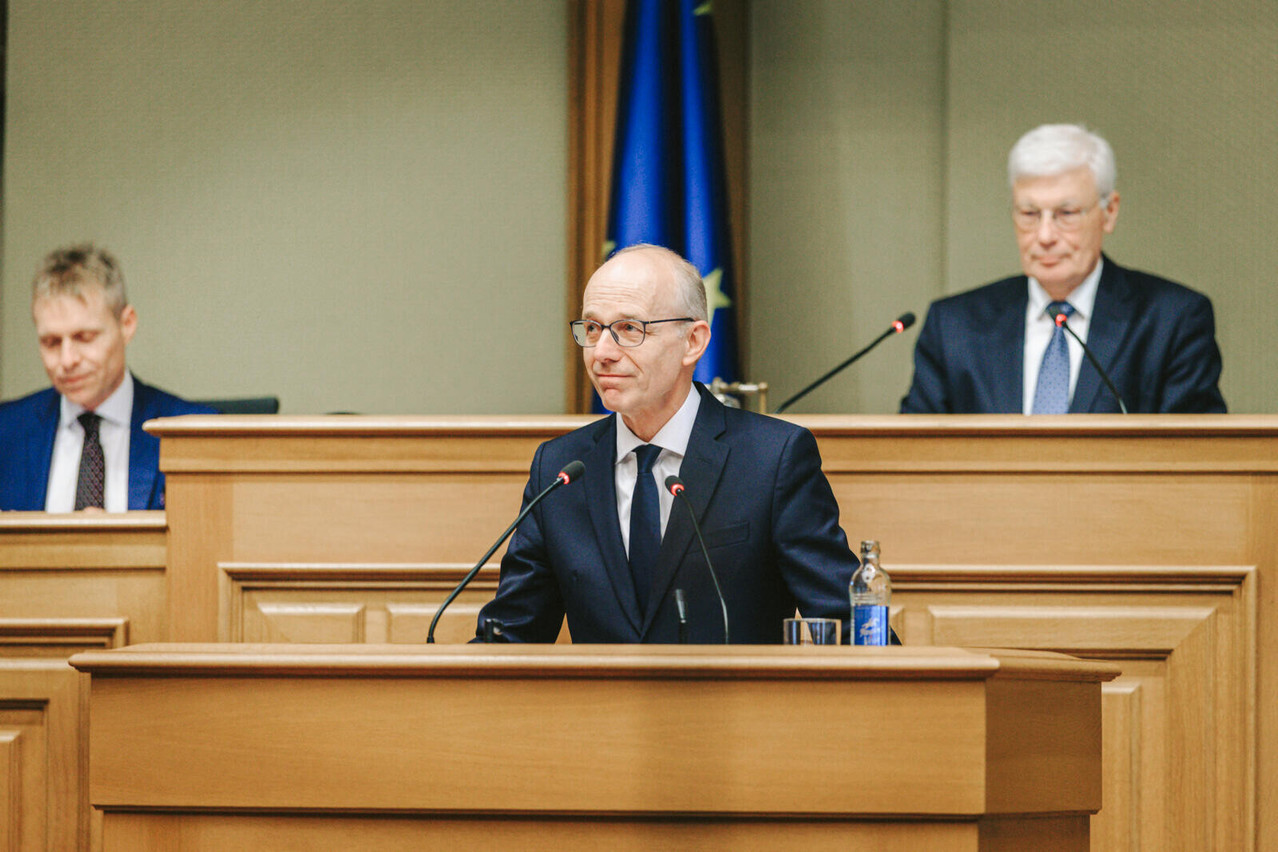
As the new academic year gets underway, Paperjam will be taking a look at the issues that will be making the headlines. There will be many of them, but five stand out in particular – five key areas that will put Luc Frieden’s (CSV) government to the test and show whether it can turn its commitments into results. The 2027 budget, social dialogue, health, social policy and housing all present the CSV-DP coalition with a less favourable reality than that at the start of the parliamentary term: room for manoeuvre is shrinking, conflicts of interest are intensifying and reforms are beginning to have their first consequences. It is this return to business under such constraints that this series aims to analyse.
Public finances under strain
First test: public finances. The 2027 budget is likely to be the key political event of the autumn for the minister for finance, 
Social dialogue is once again being put to the test
Second front: work. 
Social protection and social cohesion: a question of resources
Third topic: health. 
On the welfare state – our fourth key issue – the government appears intent on evolving Luxembourg’s model rather than calling it into question. The principle could be summarised as follows: protect, but target more effectively. Increases to the minimum social wage, child benefit, the cost-of-living allowance and housing benefits reflect a desire to focus public resources more closely on those households that need them most. This shift raises a key political question: how can we make social protection more effective without giving the impression that we are reducing solidarity?
Housing policy with its back against the wall
Finally, housing remains the area where promises clash most directly with reality. Emergency plans, building grants, support for home ownership, off-plan property purchases, and administrative simplification: since the start of the parliamentary term, measures have multiplied. Yet supply remains insufficient and several structural reforms are progressing slowly. The latest package presented in July, ‘Booster fir de Wunnengsbau’, has yet to be translated into legislation. At the same time, the reform of property taxation and the measures designed to tackle housing vacancies continue to face significant obstacles.
Turning points
Ultimately, these five reports tell the same story: that of a government reaching a pivotal moment in its term of office. Having made a series of announcements and embarked on several reforms, the coalition must now demonstrate that its model can work in the long term. The issue is no longer simply a question of what measures the government intends to take. It is a question of how it will fund them, how it will gain acceptance for them and, above all, what results they will produce.
This is particularly evident in the budget, where tax policy decisions and new spending are beginning to clash. In the social dialogue, where the art of compromise is being put to the test by interests that are becoming increasingly difficult to reconcile. In healthcare, where the transformation of the system is coming up against demands from doctors. In social policy, where the targeting of benefits is gradually reshaping the role of the state. And in housing, where the political urgency contrasts with the slow pace of new-builds and reforms.
The start of the 2026 academic year could therefore be less about major announcements and more about coming to terms with constraints. Whether budgetary, administrative, social or political constraints, the Frieden government will have to show that it is now capable of striking a balance.
The five instalments of this series scrutinise these issues, minister by minister and sector by sector, to assess the choices facing the government in the coming months – and the political risks involved. Tomorrow: the 2027 budget.