Global equity markets are defying conventional financial gravity, trading near record highs even as sovereign bond yields rise to levels not seen since before the 2008 financial crisis.
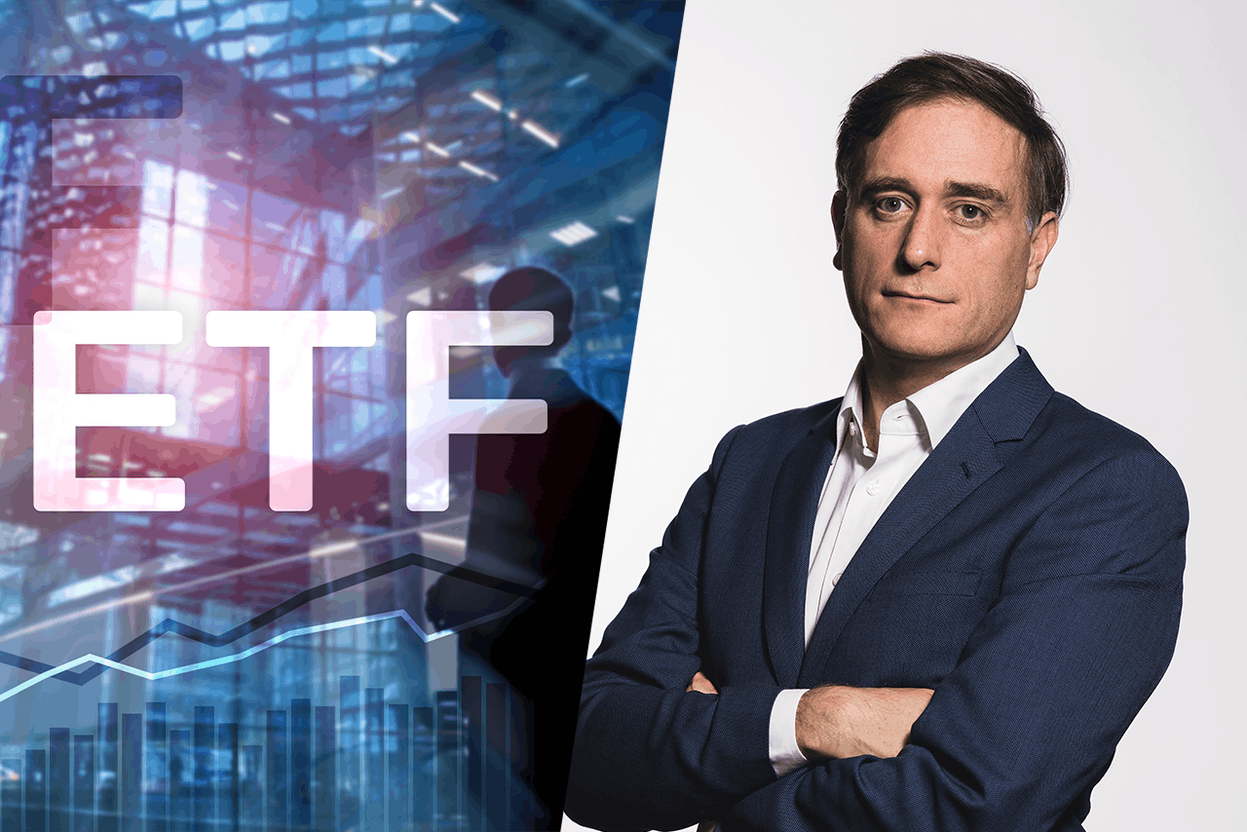
During a macroeconomic webcast on 3 September 2026, Laurent Chaudeurge, investment committee member at BDL Capital Management; Florian Ielpo, head of macro at Lombard Odier Investment Managers; and David Mellul (left), managing partner at Varenne Capital, debated whether this divergence signals a structural shift or a dangerous market trap.
While corporate earnings continue to reach record levels, mounting fiscal pressure and a projected $6trn artificial-intelligence spending boom threaten to disrupt global asset allocation. Asked to rate their appetite for risk assets on a scale from one to 10, Ielpo and Mellul chose eight, while Chaudeurge opted for five, exposing a deep divide over the path ahead.
The sovereign debt trap
Historically, rising yields have squeezed equity valuations. Today, sovereign yields in the US, France and the UK have returned to levels last seen between 2000 and 2007, yet these countries carry debt-to-GDP ratios two to 2.5 times higher than they did during that period, according to Chaudeurge.
He warned that markets were beginning to price in sovereign-solvency risks.
“Markets are concerned about the budget-deficit spiral: the more debt rises, the greater the financial burden becomes,” he said.
Chaudeurge estimated that, if the entire US debt stock were refinanced immediately at the prevailing 10-year Treasury yield, the deficit could approach 10% of GDP—putting it alongside those of Egypt, Botswana and Algeria, according to his calculation.
This surge in government borrowing creates a crowding-out effect, with sovereign issuers competing for capital against companies financing the AI revolution. Ielpo observed that some sovereign credit ratings were now comparable with those of high-quality corporate issuers.
Because some companies offer clear visibility into their three-year order books, investors are shifting from government bonds into corporate credit, adding upward pressure to sovereign yields, he said.
The $6trn artificial intelligence gamble
The AI surge lies at the heart of equity-market optimism, but the projected scale of investment is unprecedented. By 2030, five major hyperscalers—Amazon, Microsoft, Meta, Oracle and Alphabet—are expected to spend an estimated $6trn on data centres and related infrastructure, according to Chaudeurge.
For comparison, he put the inflation-adjusted cost of the telecoms fibre bubble of 2000 at between $600bn and $700bn.
Chaudeurge estimated that the companies would need to generate $3trn in revenue by 2030 to earn a 10% return on their investment. That would be about 70 times the current combined revenue of Anthropic and OpenAI, he said.
Ielpo offered a more cautious assessment, citing US Federal Reserve research estimating that AI could add only 0.2% to 0.3% to annual US productivity growth. That increase might merely offset demographic decline, he said, raising questions about whether hyperscalers could generate the returns implied by their investment plans.
Active stock picking in a machine-driven market
Despite these structural concerns, equity bulls argue that valuations are healthier than they appear. Earnings have grown so rapidly that average price-to-earnings multiples have contracted.
Mellul noted that 86% of S&P 500 companies had recently beaten consensus estimates, suggesting that the strength extended beyond technology into sectors including healthcare and industrials (see Chart).
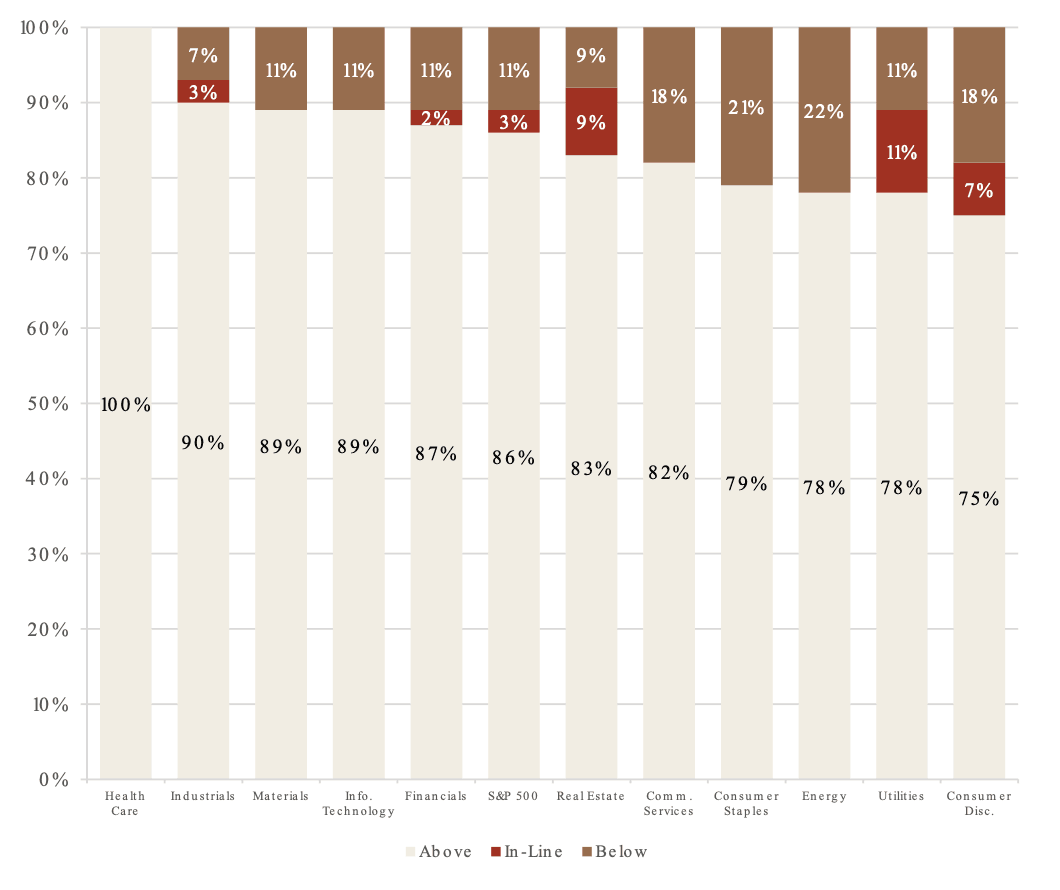
Chart: S&P 500: EPS results above, in line with or below expectations — Q2 2026 Sources : Rapport Factset Earnings Insight : July 31 , 2026
“Earnings bubbles do not exist,” Chaudeurge said.
Micron Technology, for example, traded at a forward price-to-earnings ratio of about five at the time of the webcast—an unusually low valuation relative to its historical growth.
Navigating this environment requires greater agility, Chaudeurge said, particularly because systematic and quantitative trading now accounts for more than 50% of daily market volume. These algorithmic flows can trigger large, rapid sector rotations, including a summer sell-off that cut the value of some major AI stocks by 25% in a single month.
The resulting volatility is forcing active managers to adjust their positioning.
BDL had reduced its net equity exposure to between 10% and 15%, shifting towards overlooked quality businesses in areas such as medical technology and beverages, Chaudeurge said. It was also investing in perceived “AI losers”—including software companies whose valuations had fallen to about 15 times earnings despite what the firm considered robust fundamentals.
Varenne, by contrast, remained fully invested, using a macroeconomic overlay and short positions to manage the turbulence. The contrast encapsulated the broader debate: strong earnings continued to support equities, but sovereign-debt pressures and uncertain returns on AI investment left little room for complacency.