
Emerging markets have remained resilient despite geopolitical conflict and extreme weather. But although growth is beginning to recover, sovereign spreads have tightened to their lowest levels in two decades, leaving investors with little margin for error.
A resilient rebound amid global storms
Despite Middle East tensions, emerging economies remain resilient. Growth has been supported by fuel subsidies, strong investment in Poland, Colombia and Vietnam, and an AI-driven export boom in Asia, according to Nikhil Sanghani, BMI’s global emerging-markets economist, during a webcast on 26 August 2026.
According to BMI, a Fitch Solutions company, emerging market (EM) growth is forecast to pick up to 4.5% in 2027, assuming a de-escalation of the US-Iran conflict that reopens the Strait of Hormuz and drives oil to an average of $70 per barrel. BMI assigns a 35% probability to further escalation, making renewed disruption a significant macroeconomic risk.
A genuine renaissance or an overpriced mirage
This macroeconomic cheer has not translated into cheap entry points in EM bonds. Regis Chatellier (top-right), head of EM sovereign strategy at Creditsights, warned that spreads are “still very, very tight.” Four consecutive years of tightening—the longest such run in more than two decades—have left sovereign spreads at their tightest levels in 20 years (see Chart 1).
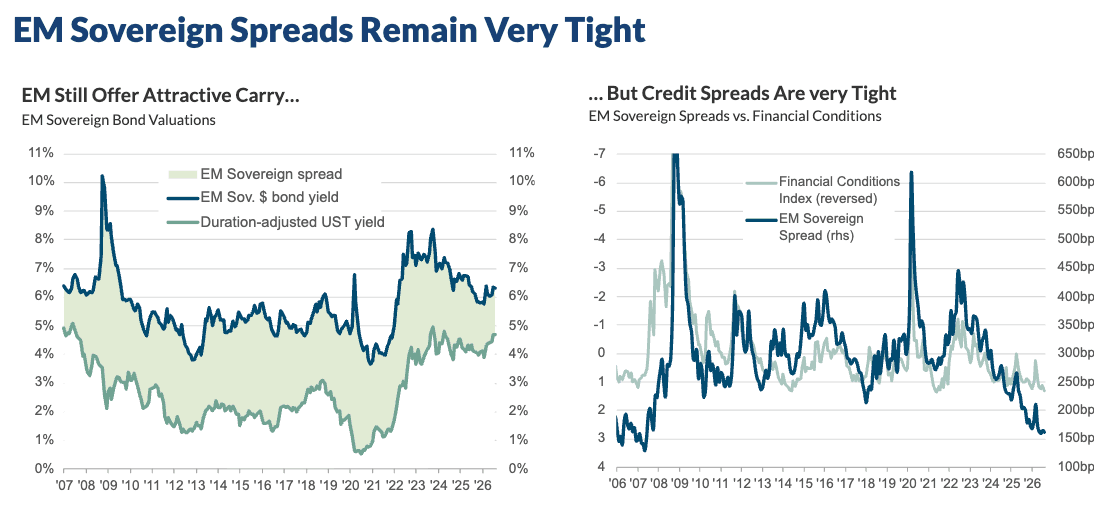
Chart 1: EM sovereign spreads remain very tight Source Fitch, Creditsights
“It is a bit disconnected from financial conditions,” Chatellier noted, adding that while EM fundamentals are decent, it was difficult to see much further upside from spread compression.
Selective plays in a high-priced universe
In this expensive environment, Chatellier advocates extreme selectivity. He still favours Latin America as a shield from Middle Eastern shipping disruptions, noting several continental producers including Brazil which produces as much oil as the UAE. Colombia stands out with wide spreads and fiscal consolidation that includes capping wage hikes (see Chart 2).
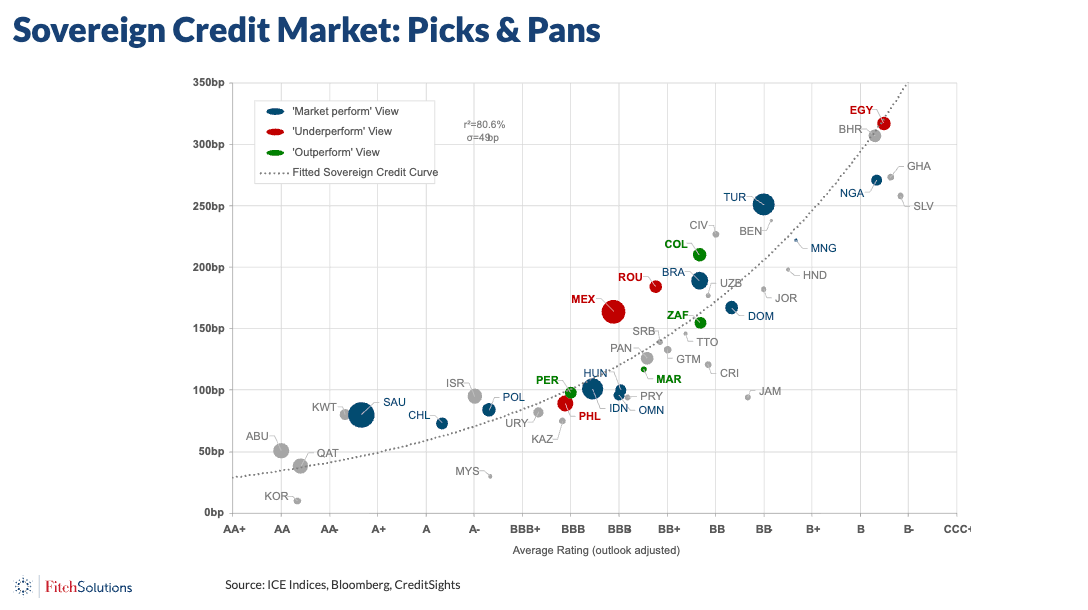
Chart 2: Sovereign credit market: picks & pans Source: ICE Indices, Bloomberg, CreditSights
Conversely, Creditsights downgraded Chile’s recommendation to “market neutral” due to slower fiscal progress and declining copper output. Despite wide credit spreads, Despite Mexico’s wide credit spreads, Chatellier remains defensive because state-owned oil company Pemex requires substantial government financial support.
Elections in Chile, Colombia, Peru, Ecuador and Bolivia have generated political uncertainty across the region. Brazil’s presidential election in October presents the next major test. Despite this political uncertainty, Chatellier said: “Latin America is still a good place to be [invested].”
Elsewhere, South Africa's positive fiscal path could prompt rating upgrades, and Morocco continues to strengthen its fundamentals. High-yield sovereigns such as Egypt remain supported by GCC investment, IMF financing and the government’s privatisation programme. However, Egypt’s weak fiscal position and tight valuation leave its bonds particularly vulnerable to repricing.
Chatellier warned that if credit markets reprice, “high-beta and high-yield sovereigns are going to be affected more.”
The euro-denominated diversification play
For relative value, Chatellier pointed to the growing euro-denominated sovereign bond market as an alternative to the US dollar. Many emerging nations, including Chile and Brazil, have issued in euros to diversify.
While most sovereign bonds trade at tighter spreads in euros than in dollars, several relative-value opportunities remain (see Chart 3). Romania’s long-dated euro bonds trade 40–70 basis points wider than its dollar curve, offering additional spread compensation for investors willing to accept the associated duration and currency risks, said Chatellier. Similarly, Colombia's 10-year euro benchmark and Brazil's euro curve trade roughly 20 basis points wider than their dollar equivalents, providing pockets of opportunity.
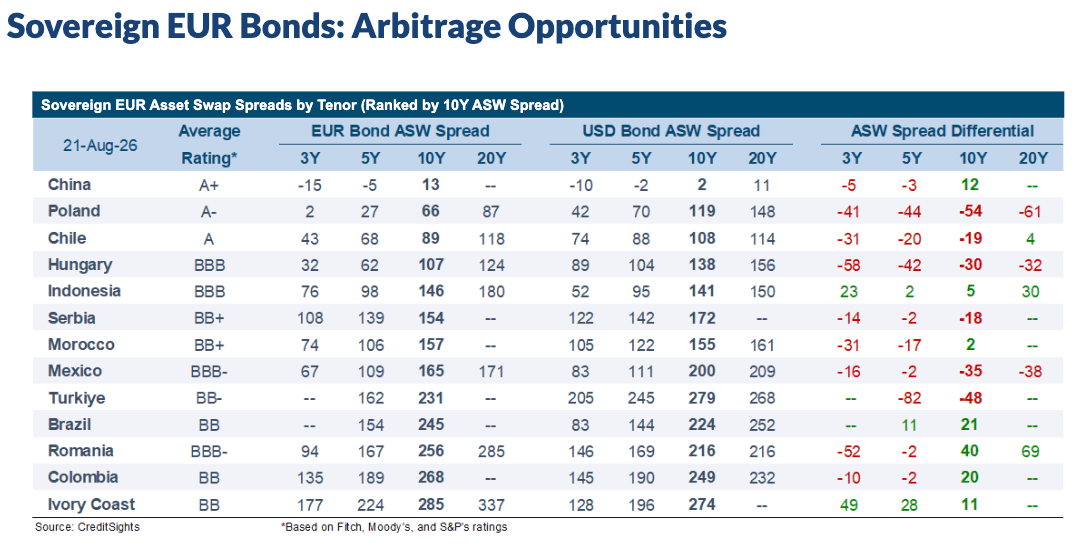
Chart 3: Sovereign EUR Bonds: Arbitrage opportunities Source Fitch, Creditsights
Navigating the risks of a fragile peace
While pockets of opportunity exist, the path ahead is fraught with risks. Beyond Middle Eastern tensions, EM economies must contend with a strengthening El Niño that threatens crop yields in vulnerable parts of Africa, Latin America and Asia, Sanghani said.
Romania’s large fiscal and current-account deficits, combined with fragmented politics, leave it vulnerable to capital outflows. By contrast, neighbouring Hungary has gained access to almost €16bn in EU funding, equivalent to roughly 7.8% of GDP, according to Anwita Basu (top-left), BMI’s head of Europe country risk. Turkey also faces substantial external financing needs and recurrent political influence over monetary policy.
With sovereign spreads near two-decade lows, Chatellier’s message is clear: investors should prioritise credit selection and structural resilience over headline yield.