As central bank balance sheets shrink and interest rates hover at levels unseen in a generation, the global financial landscape is undergoing a silent realignment. The relationship between equities and bonds is fracturing, forcing investors to ask whether the era of safe-haven government debt is drawing to a close.
From the US Treasury to the debt-laden capitals of Europe, policy choices designed to manage sovereign burdens are instead introducing new volatility. Navigating this terrain requires looking past surface optimism to examine structural cracks forming beneath the global monetary architecture.
Why 5% could become a breaking point
Historically, Historically, US equities often rose alongside Treasury yields when higher rates reflected stronger economic growth, said Vincent Juvyns, chief investment strategist at ING Belgium in an interview on 21 August 2026.
Yet, this correlation only holds up to a point. In Juvyns’s analysis, that relationship begins to break down when yields cross 5% and rate hikes become a headwind (see Chart 1). With heavy debt issuance from AI companies and a steady flow of small and mega-IPOs competing for capital, the stock market faces structural pressures.
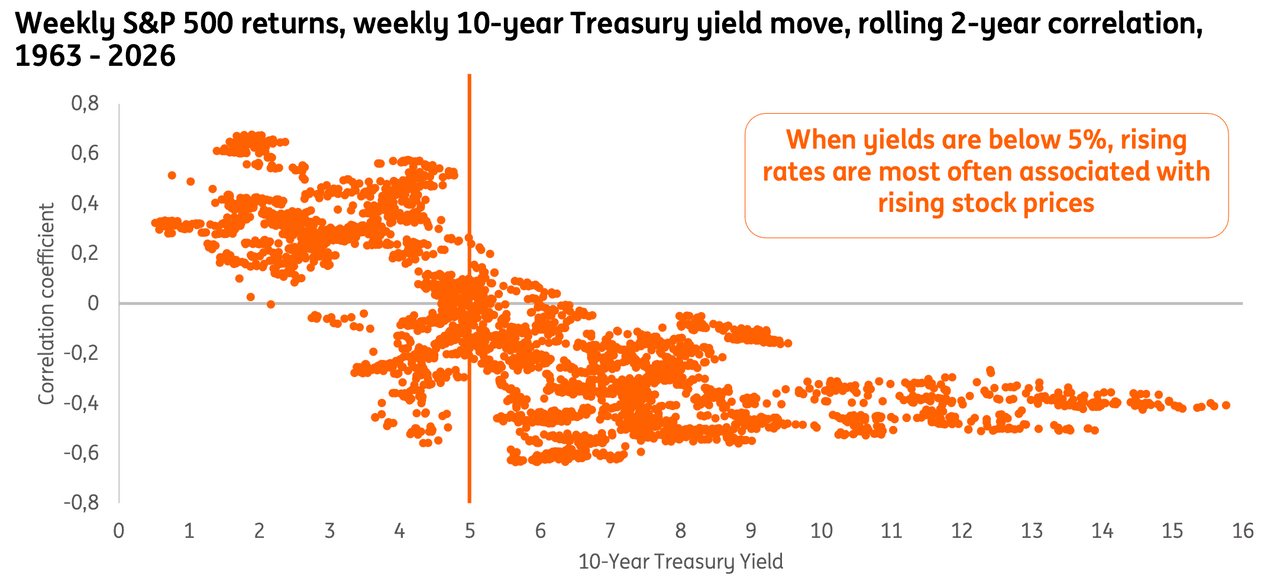
Chart 1: Correlation between weekly S&P 500 returns and Interest rateMovements Source ING Belgium
At nearly 5% on ten-year US Treasuries, sovereign debt becomes a powerful competitor, shrinking the equity risk premium to 1.7% (see Chart 2). Against expected equity returns of 6% to 8%, such yields reduce the relative appeal of stocks. This particularly penalises technology companies that rely on expensive debt to finance heavy capital expenditure, Juvyns argued.
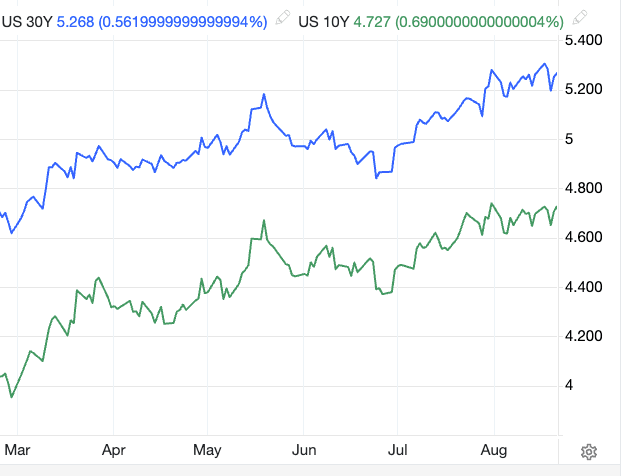
Chart 2: US Treasuries: 10 years vs 30 years (last 6 months) Source: Tradingeconomics.com
A risky Treasury experiment
Faced with these pressures, Juvyns noted that the US Treasury has proposed buying back long-term debt and refinancing it with short-term T-bills. This draws deep scepticism from investors. Rather than resolving the core issue, it merely swaps long-term debt for short-term liabilities.
With the US Federal Reserve shrinking its balance sheet—and slightly over half of its $4.5trn of Treasuries holdings set to mature within five years—it remains unclear who will buy this short-term debt given demand from foreign investors (see Chart 3). This intervention may flatten the yield curve, but swapping fixed-rate long-term debt for revolving short-term debt is a poor fiscal trade-off when running large deficits, Juvyns argued.
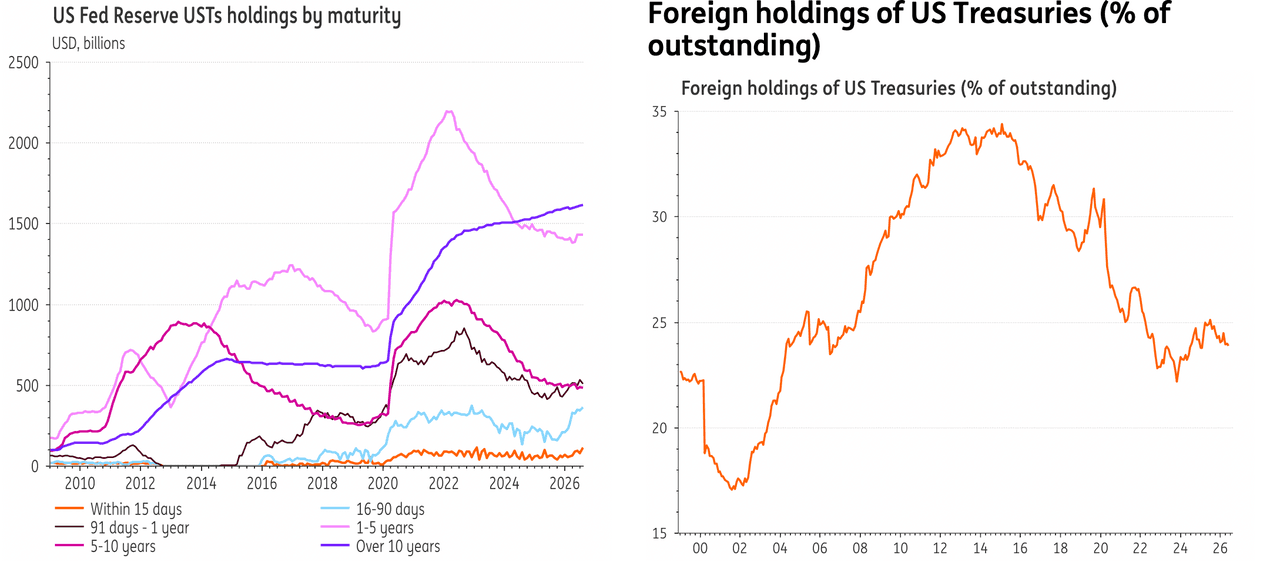
Chart 3: US bond/bill investors wanted Source: LSEG Datastream, ING Belgium, as of 12 August 2026 (left) and May 2026 (right)
Juvyns argued that such aggressive action weakened the dollar and signalled to anxious markets that something is wrong, Juvyns said. He noted that gold and other real assets have been net beneficiaries.
“I’m a fan of quantitative easing (QE),” said Juvyns. He noted that the Fed used balance-sheet expansion to push down longer-term interest rates over nearly two decades. As the Fed shrinks its balance sheet, upward pressure on rates may return, he argued.
He disputed the view that QE necessarily generates consumer-price inflation, arguing that its effects depend on the broader monetary and fiscal environment. He argued the Fed, not the Treasury, must “manage” the yield curve to handle market volatility sustainably
Widening cracks and the corporate paradox
While the US benefits from 2% growth potential and reserve status, Europe faces a fragile outlook, according to Juvyns. He estimates Europe’s structural growth potential at about 1%, complicating debt sustainability. Budget deficits in France and Belgium are expected to exceed 5% of GDP in 2026 and 2027, pushing spreads wider.
This has produced striking anomalies. In 2025, one AXA bond reportedly priced at a lower yield than a comparable French government bond. This paradox underscores a realisation that “the risk-free asset is riskier than we think.” As the European Central Bank reduces its balance sheet, rising long-term rates escalate the burden on highly indebted states, raising contagion threats (see Chart 4).
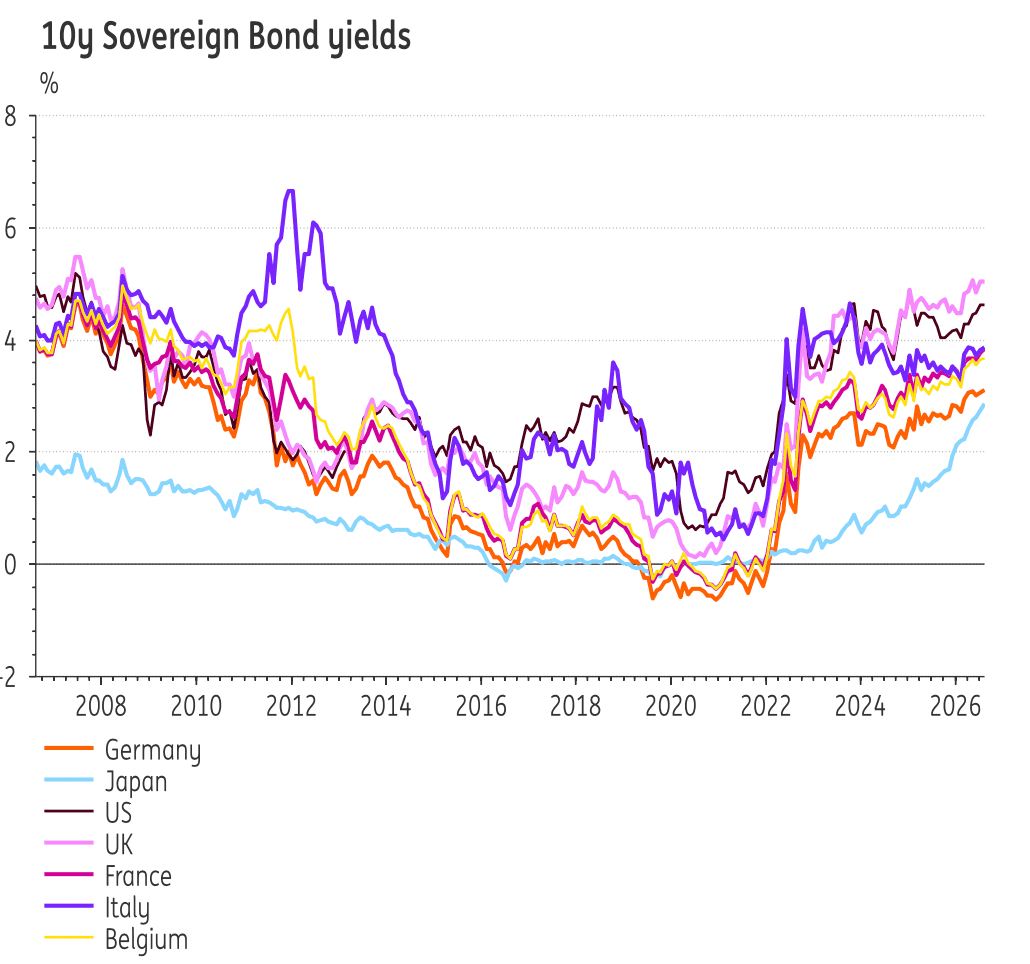
Chart 4: 10y sovereign bond yields Source: LSEG Datastream, ING Belgium, as of 14 August 2026
Positioning for a turbulent autumn
In this environment, Juvyns advocates a defensive allocation with limited interest-rate exposure. Sovereign bonds have delivered negative returns in 2026, while short-duration corporate credit has remained positive. He recommends underweighting European equities—which have lagged and, in his view, will continue to underperform the US, Japan and emerging markets—as well as sovereign debt.
Instead, he favours short-term corporate bonds while waiting to see whether central banks are forced to reassert control over increasingly volatile yield curves. The key risk this autumn is not simply that rates remain high, but that investors demand greater compensation from assets once treated as unquestionably safe.