“You can’t simply answer yes or no to the question of whether a heat pump is the best heating choice. Many parameters come into play. If you have a very large, poorly insulated building, it doesn’t make much sense. But on the other hand, the future of fossil fuels and their cost is uncertain: replacing a gas or oil boiler with an equivalent system is not necessarily the best bet either,” points out Christophe Brossette, HVAC project manager at Grethen, a heating and sanitation specialist in Sandweiler.
“I sometimes advise certain customers whose gas boiler is still working well to be patient, as electricity prices have risen sharply in recent months,” he adds. “We’re also seeing a reversal in the trend: after the huge surge in demand for heat pumps since 2022, following the start of the war in Ukraine, demand has eased off somewhat since the beginning of the year. We are starting to install more gas boilers again. These are now the two main competitors on the Luxembourg market.”
Electricity prices jumped by 43.9% in January 2025, following the partial lifting of the tariff shield, as the national statistics bureau Statec pointed out at the beginning of February. But all sources of energy for heating have seen increases: mains gas has risen by 36%, and heating oil by 28% compared with December 2024. According to data from the ministry of the economy, gas heating remains the most widespread in Luxembourg, with 64,820 boilers in service in 2024--a figure that has been declining for several years, however. Oil-fired systems follow (41,514), but are also on the decline.
Electric heating systems--a category that includes both conventional convectors and heat pumps, without any distinction being made--accounted for 23,207 installations, rising steadily since 2020. Their number has thus increased by 126.85% in four years.
A Klima Agency aid simulator
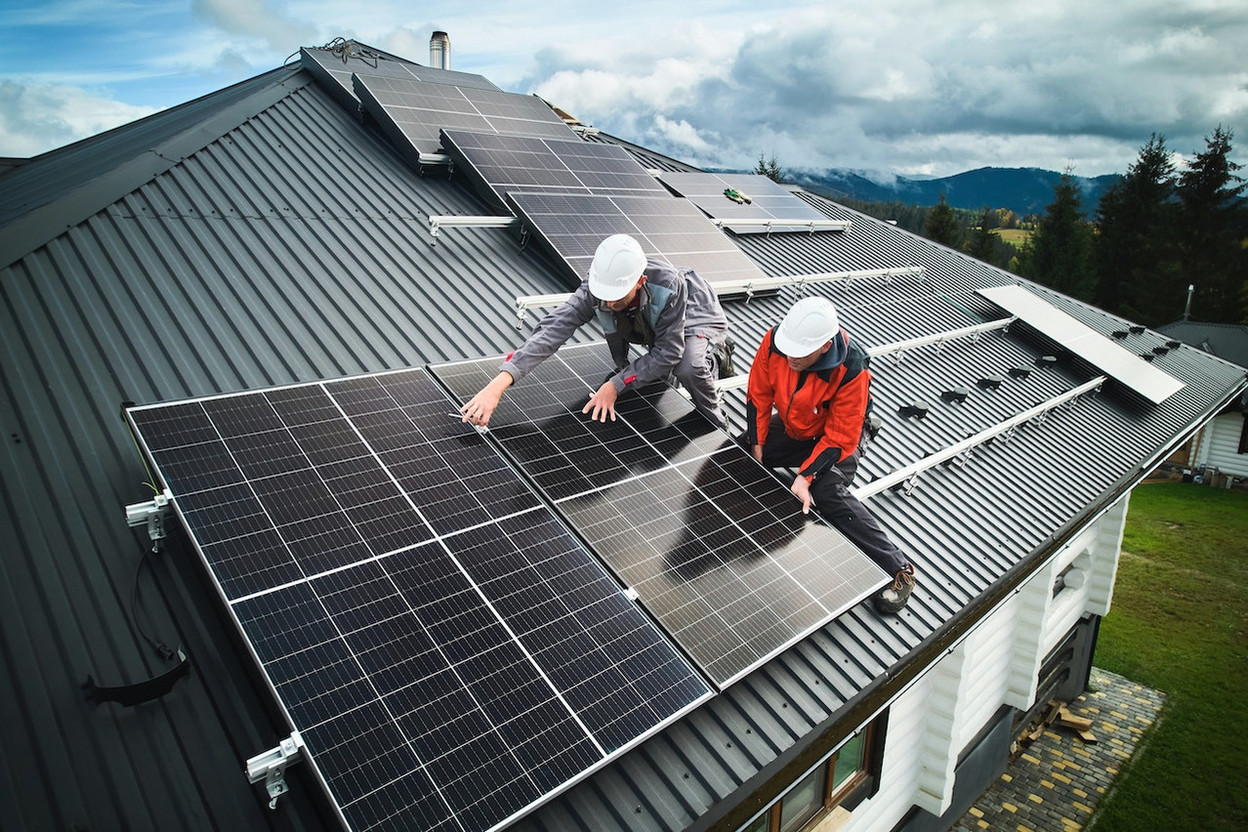
As with photovoltaic panels, state aid is available for the purchase of a heat pump under the “Klimabonus Wunnen” scheme. This can cover up to 50% of the investment costs of installing a heat pump. To this can be added the grants offered by most local authorities, “as well as the grants offered by electricity and natural gas suppliers as part of the energy efficiency obligation mechanism,” says the Ministry of the Economy, contacted by Paperjam. The Klima Agence aid simulator provides information on these three types of aid, which can be combined depending on the municipality in which you live.
Heating with wood or pellets can be cheaper, “but the maintenance costs are very high. If you’re not a handyman and don’t do the maintenance yourself, you risk losing out financially,” says Brossette.
The cost of a heat pump varies greatly depending on the type of system, the size and heat requirement of the building, and whether it is a new build or an existing building. In the latter case, adaptation work may be required, particularly on the heat distribution circuit (underfloor heating, radiators, etc.).
“You need to carefully consider the power required to heat the building. A gas-fired boiler can reach temperatures of around 80°C, whereas a heat pump is generally limited to 65°C. Depending on the existing radiators, you therefore need to check whether the heat pump will be able to provide enough power (in watts) to heat all the rooms efficiently,” he explains.
The price of a heat pump can vary between €5,000 and €50,000, which represents a substantial investment for a household. At present, private individuals have to pay these costs in advance. But “by the end of the year, the draft law providing for a pre-financing procedure for photovoltaic solar installations should come into force, which will make it possible to avoid this initial financial effort,” Georges Reding, advisor to the renewable energies department at the economy ministry’s directorate-general for energy, recently pointed out.
A financial gain ranging from €410 to €950
In December, the ministry of the economy produced a comparative table to illustrate the differences in costs, i.e., the financial advantage for an “energy transition” consumer with a heat pump compared with a “fossil fuel” consume who have gas/oil heating. The vehicle variable--whether the household has an electric car or a petrol/diesel car--is also added to the equation. Even with the end of the tariff shield, we can see that there is still a financial gain for households, ranging from €410 to €950 depending on the configuration.
“The cost-effectiveness of a heat pump in an existing building depends on a number of parameters: the size of the building, energy performance, heat requirements, level of flow temperature, type of heat distribution circuit, etc. All these factors are taken into account by the manufacturer. All these factors are taken into account by the installer or, where appropriate, by the energy advisor, in order to choose and size a heat pump that is suited to the building,” explains the ministry’s communications department. “Initial sizing--i.e., calculating the maximum heat load for heating the building and the power required for producing domestic hot water--as well as optimising the settings after installation, are crucial steps in ensuring the equipment is cost-effective.”
Ideally combined with photovoltaic panels
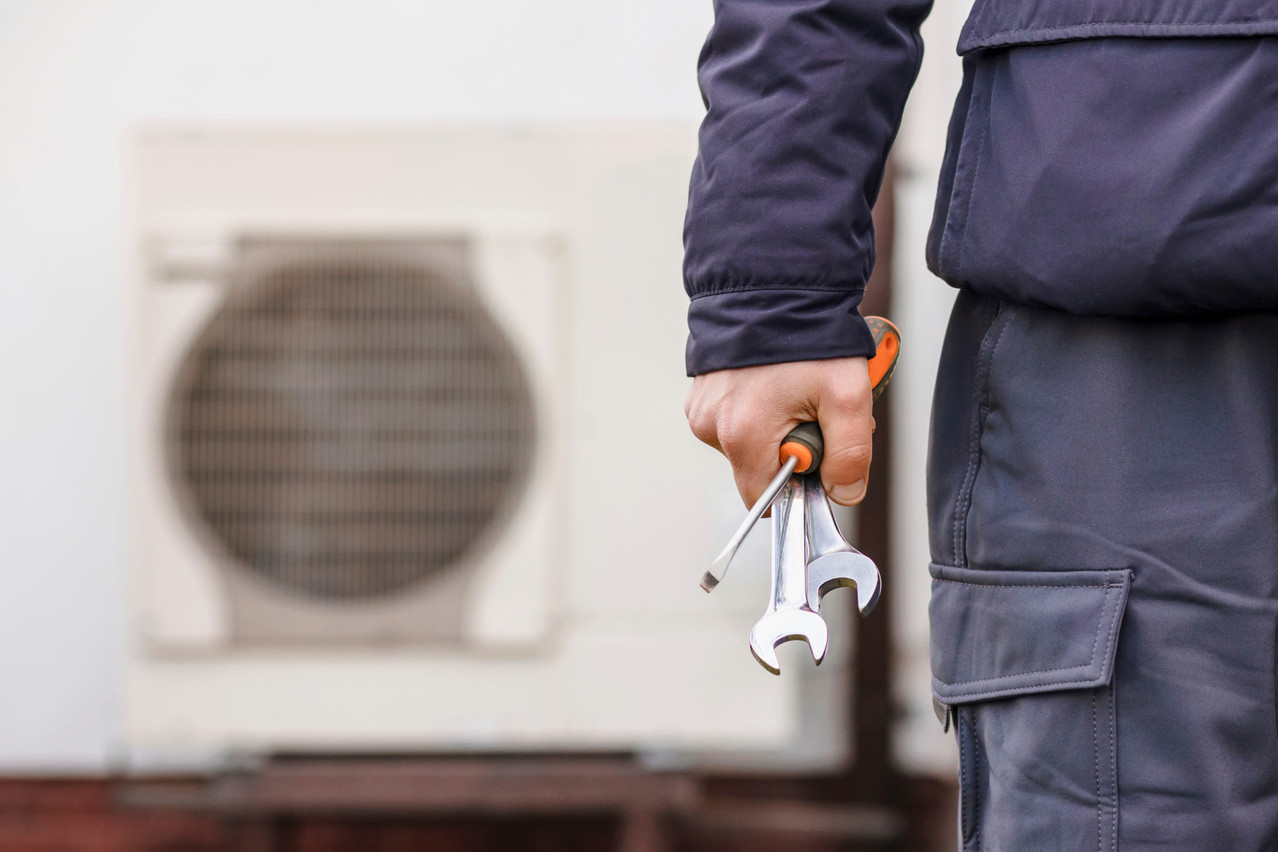
“It is essential to use competent installers who offer good advice. There’s no point in installing a heat pump that’s oversized in relation to the home’s actual requirements,” says Brossette. There are different technologies available, such as geothermal heat pumps and air-to-water heat pumps. “A heat pump captures the thermal energy present in the environment--in the ground for a geothermal heat pump, in the outside air for an air-water heat pump--and raises this temperature to supply the heating circuit,” explains the ministry.
“A geothermal heat pump is generally more efficient than an air-to-water heat pump, but it requires more work (horizontal collection or vertical drilling) and a higher investment to install,” the ministry continues. But a heat pump is still a very energy-efficient heating system. “It provides more heat than it consumes electricity, thanks to its coefficient of performance. Efficiency often reaches more than 300% for air-to-water heat pumps, and 400% or more for geothermal heat pumps.”
“As it runs on electricity, the best choice is to couple it with photovoltaic panels, to reduce dependence on grid electricity prices,” advises Brossette. “Combining a heat pump with a photovoltaic installation increases the rate of self-consumption of the electricity produced, which reduces reliance on the grid and therefore costs,” confirms the ministry.
This article was originally published in French.