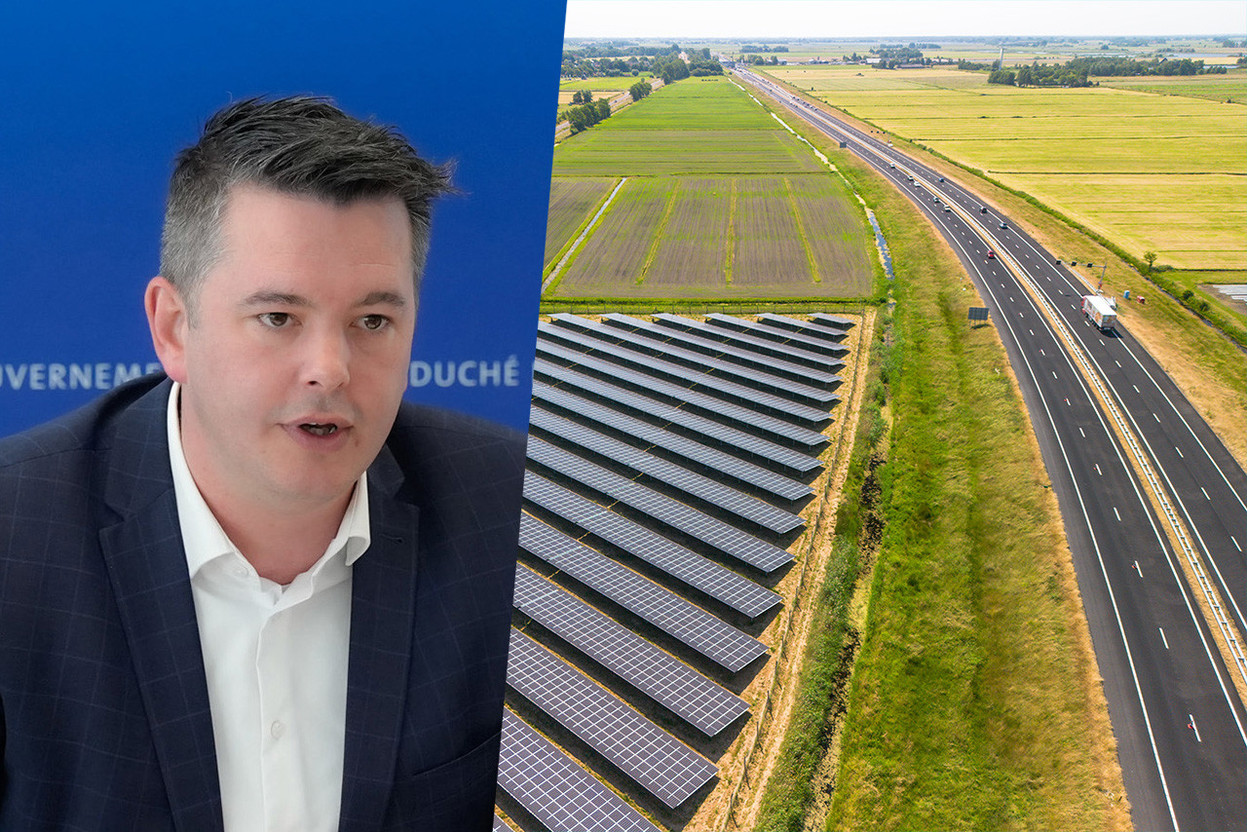
Is it still profitable to install photovoltaic panels? Several press agencies have recently reported that the yield from solar farms in Europe is falling to its lowest level ever. In Spain, for example, the capture rate--i.e. the return that solar panels generate in relation to the average electricity market price--was barely 7% in May, compared with 43% a year ago. In France, it is currently 13%. In other words, the lower this rate falls, the longer it will take to amortise the cost of the installation, which, combined with its lifespan, could jeopardise people’s desire to change over to solar.
What is the situation in the Luxembourg? “There is no precise data on the capture rate of solar installations in Luxembourg,” replies 
These findings are shared by Georges Reding, advisor to the Renewable Energies department within the economy ministry’s general directorate for energy. “Luxembourg is a rather special case,” says Reding. “We’re part of the German-Luxembourg region, so it’s a totally different price zone to a French or Spanish price zone. In principle, electricity is more expensive than in Luxembourg, and there are many more hours of full load for photovoltaics. In Luxembourg, we’re talking about 1,000 hours, compared with around 2,000 hours in Spain, which is twice as much electricity, and twice as much revenue. In fact, in 2024 Spain became the second country in Europe in terms of solar electricity production, with 59 terawatt hours (TWh), behind Germany and the seventh in the world.”
Various packages for individuals and businesses
Support also exists in Spain, via tax reductions, self-consumption bonuses or direct subsidies offered by certain autonomous communities. The website of solar panel manufacturer Bluetti explains that, for a 10 kWp installation, the amount could be around €500-€600 for each kWp (Kilowatt-crete, which describes the maximum power that solar panels can deliver under standard test conditions) of the solar panels and €500 for each kWh for the batteries. It should also be noted that, the larger the installations, the less bonus they could receive.
“In our German-Luxembourg region, the price of a solar megawatt necessarily varies according to the month, Reding continues. “For example, it was 11.51 cents per kilowatt-hour in January and fell to 3.04 cents per kilowatt-hour in April. At weekends or on sunny days, prices are negative. On a sunny day, around midday, prices turn negative because we are at the peak of sunshine, while in the morning and evening, when there is a lot of demand, prices are quite high. In Luxembourg, each consumer has a fixed price when they buy electricity throughout the day, while businesses have a different profile.”
50% of the amount covered
“Changing your consumption pattern and consuming more of your own electricity are of course more profitable than feeding the electricity produced by your photovoltaic panels into the grid. But you have to realise that in any case the profitability of an installation is always good in Luxembourg because the government gives substantial subsidies, which many other countries don’t have.”
Under the Klimabonus scheme, a subsidy of 50% of the cost of installing photovoltaic panels in self-consumption mode is in fact possible, with a ceiling of €1,250 per kWp. Some local authorities also provide subsidies or flat-rate aid, and, explains Reding, “in some cases the subsidies have covered up to 90% of the total investment.”
Actually, private individuals have to pay the cost of installing photovoltaic panels in advance. “It can take up to a year to receive the aid. But by the end of the year, the bill introducing a pre-financing procedure for solar photovoltaic installations should come into force, which will avoid the need to advance the costs, which are still substantial.”
Nearly 8,000 applications in 2024
Applications are increasing year on year, as shown by the latest figures published in a parliamentary response on 6 June. In 2024, 7,871 applications were submitted, including 5,072 for photovoltaic solar energy, 2,110 for heat pumps and 689 for renovation. In 2023, the number of applications was 4,453, including 2,443 for photovoltaics, 1,283 for heat pumps and 727 for renovation. In 2022 it was just 1,883. In two years, then, the number of applications for Klimabonus grants rose by 318%. As for the subsidies paid out, the environment minister 
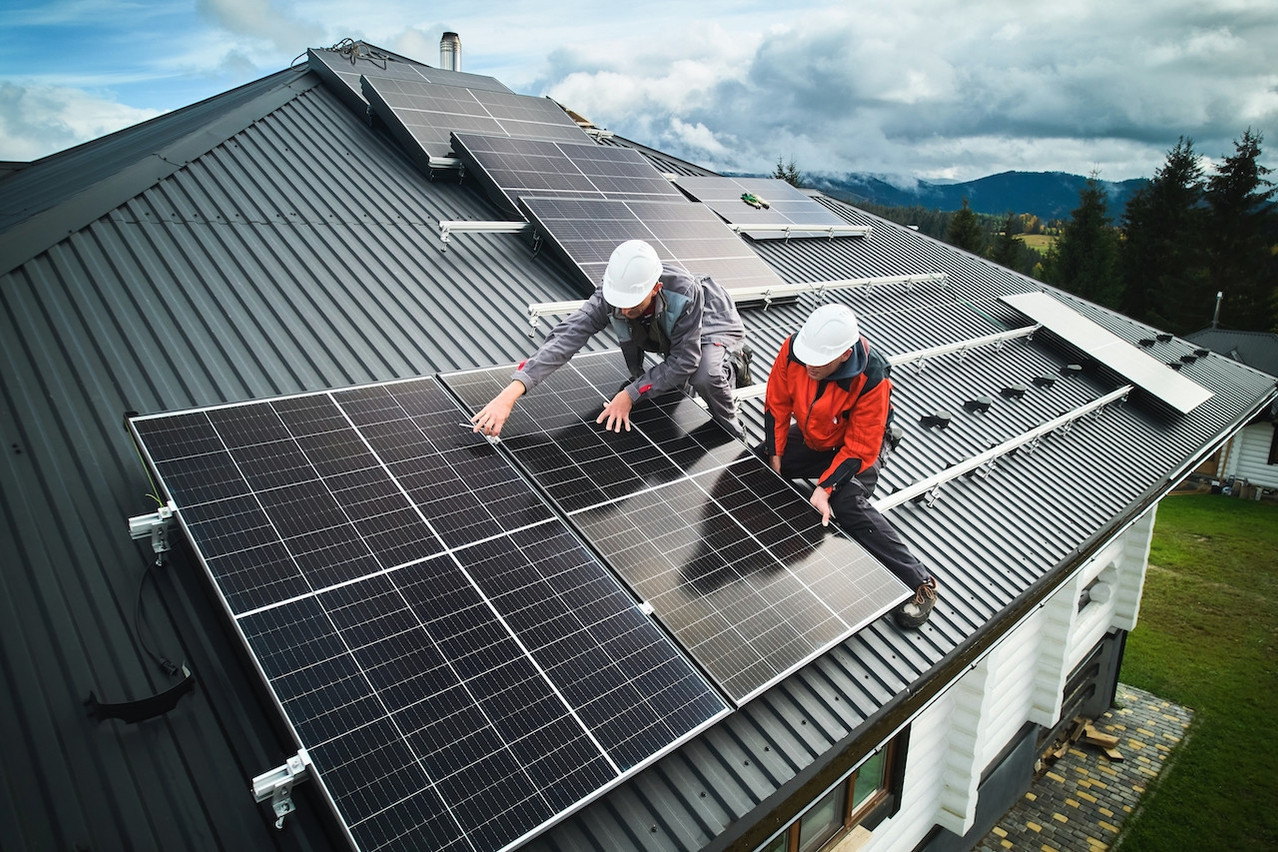
What is the actual yield of a solar installation? “Before it is actually used, it’s quite difficult to determine the exact yield of a photovoltaic system,” says Reding. You have to assess the overall cost of the installation, including the purchase of the photovoltaic panels, the inverters (which convert direct current into alternating current), the labour and any connection or permit fees, as well as the lifespan of the panels. “On average, a standard 6 kilowatt-peak (kWp) installation for a household in Luxembourg costs around €10,000. Annual electricity production depends on several factors: the power installed (in kWp), the average amount of sunshine in the region, and the orientation and inclination of the roof.”
According to the Photovoltaic geographical information system (PVGIS), developed by the European Commission’s Joint Research Centre--which simulates solar production as a function of the precise location, power of the installation, orientation and inclination of the roof--a 6 kWp installation facing due south, inclined at 30-35°, produces around 5,400 to 6,600 kilowatt hours (kWh) per year in the city of Luxembourg. This is equivalent to the annual consumption of a household of three to four people.
An amortisation of between four and nine years
“The amortisation of a photovoltaic installation depends on several criteria and varies according to the individual situation of each household: the household’s electricity consumption, the times of consumption during the day (for example, a day spent teleworking versus a day spent in the office), the possible installation of a battery, a heat pump, etc.,” adds the director of the Klima-Agence 
According to Switchr.lu, which centralises the country’s commercial offers, if the electricity is consumed directly by the household, each kWh saved is equivalent to around €0.25/kWh, according to the 2024 residential tariffs. Electricity fed into the grid is remunerated at between €0.13 and €0.17/kWh, depending on the size of the installation and the contracts in force, Enovos says.
Efficiency beyond 25 years
On its website, the Klima-Agence gives an example of a mixed scenario, with an installation that produces 6.000 kWh per year and 60% self-consumption. This amounts to consuming 3,600 kWh, multiplied by €0.25, for a saving of €900. The 40% of electricity resold represents €360 in revenue, giving an estimated annual gain of €1,260 (900+360), based on the average residential sales tariffs quoted by SudEnergie and Switchr.lu, and the feed-in tariffs charged by players such as Enovos.
Including the 50% Klimabonus, the net cost to the household falls to €5,000. By dividing this net cost by the hypothetical annual savings of €1,260, the payback period is further reduced to around four years. To help everyone see more clearly the feasibility and calculate the solar potential of their home, a platform called Joule was launched last September in Luxembourg.
Solar panels also have a lifespan. “Generally speaking, most producers of photovoltaic panels offer two types of guarantee,” explains Faber. The first is the materials warranty, on average 20 years (variable depending on the supplier) to cover physical damage to the panels, for example in the event of hail damage. The second is a production performance: after 25 years (depending on the supplier), the panels must still produce at least 85% of their initial output. In our experience, the actual efficiency of solar panels after this period generally exceeds this threshold.”
This article was originally published in French.