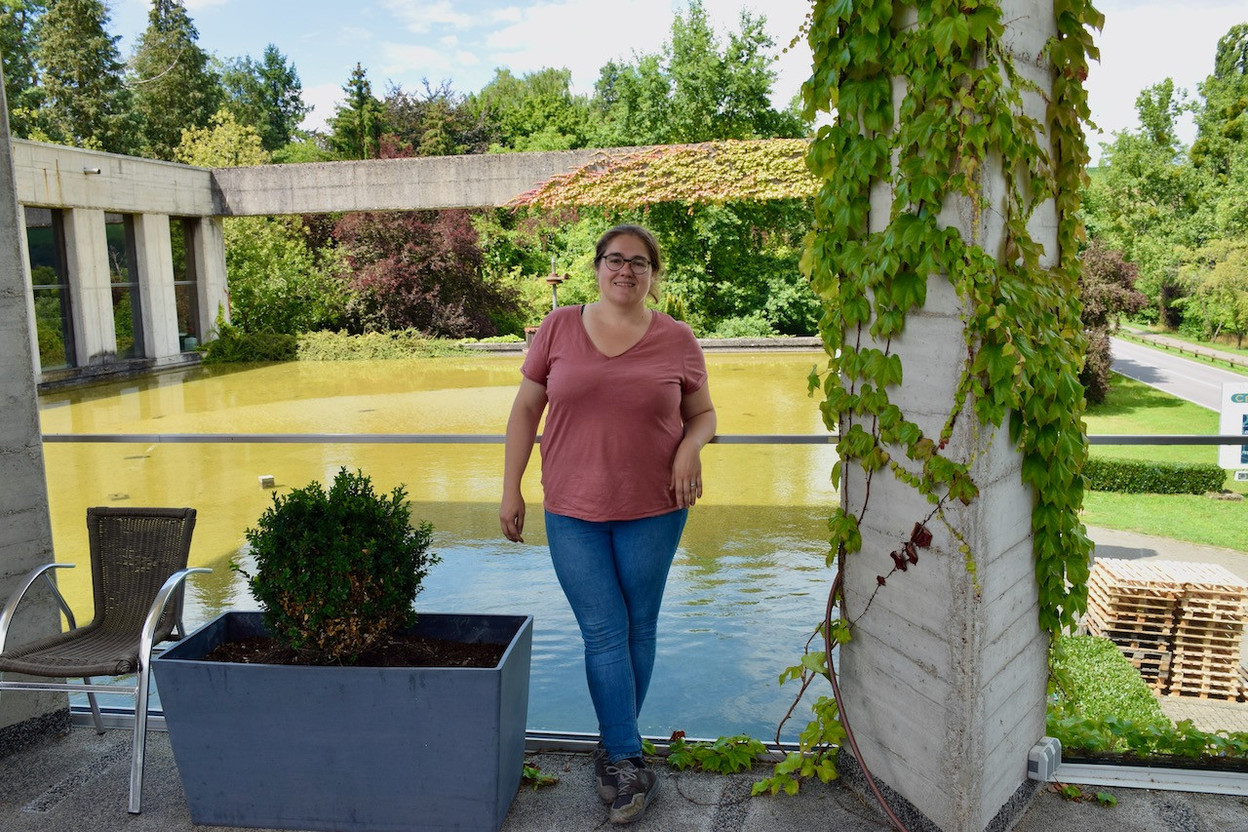
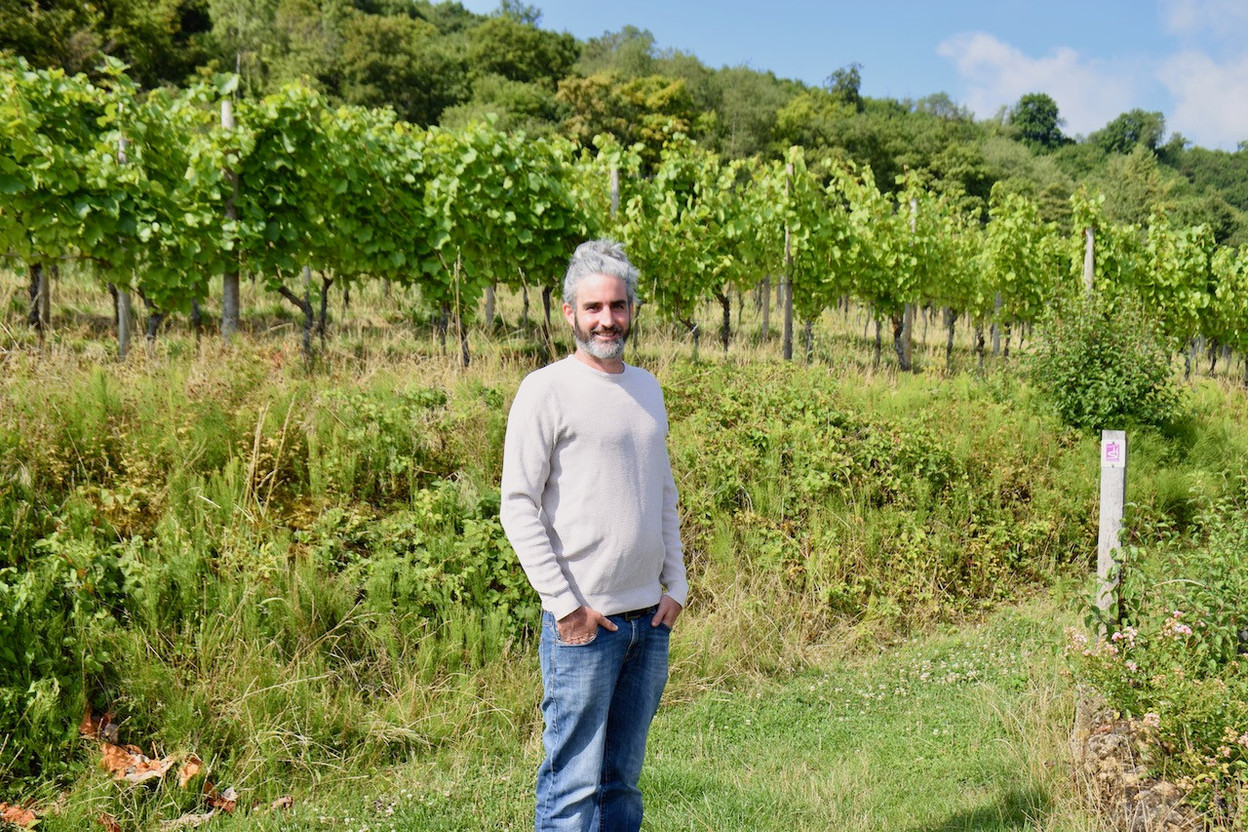
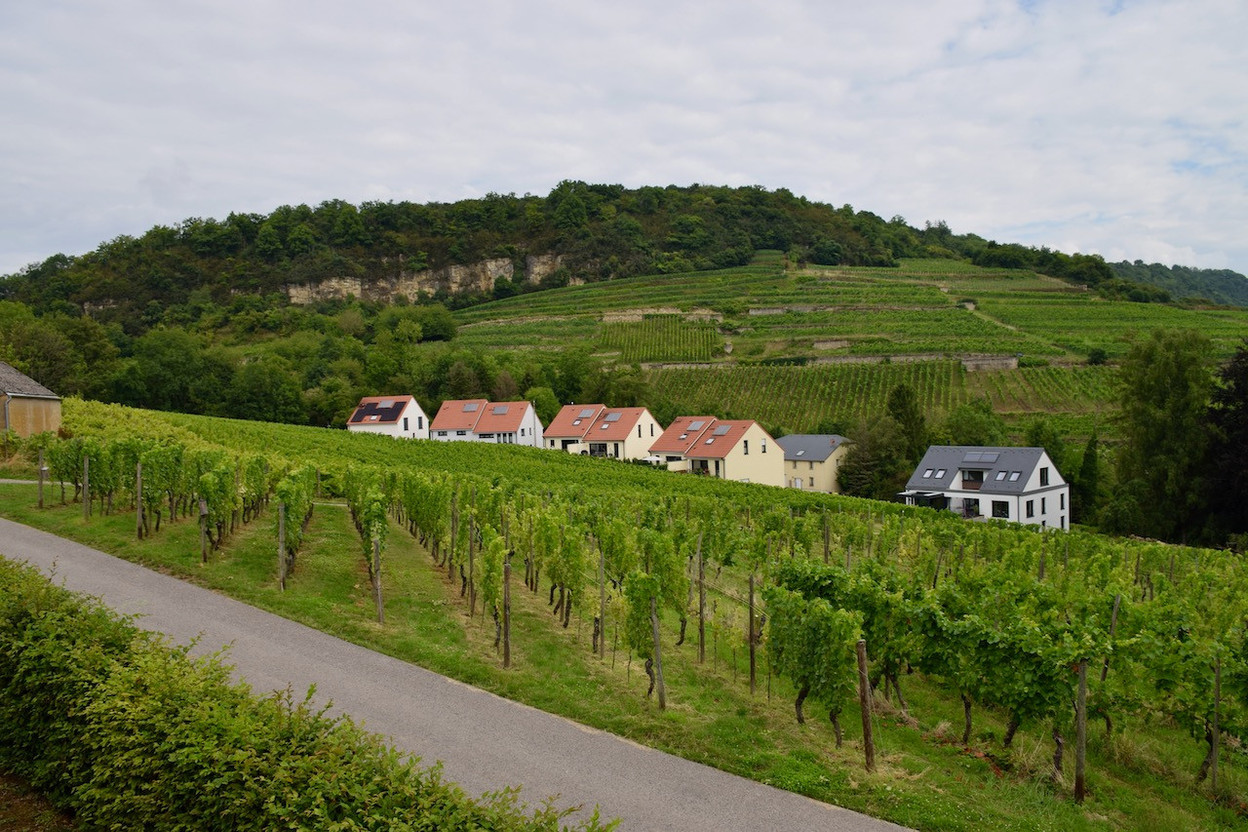
While Nicolas and Mathieu Schmit officially took over the Schmit-Fohl estate in January 2021, including all the vineyards located in the communes of Wormeldange and around Ahn, their commitment goes back much further. Nicolas, who “could never have seen [himself] doing anything else,” started working there in 2017 after studying viticulture and oenology. Mathieu’s path was less linear. Before joining the family tradition, he began studying communications in Brussels. “I quickly realised that I didn’t like it and, at 23, I made the choice to go and study champagne in wine business to take over the estate with Nicolas.”
The organic advantage
The touch of the seventh generation? Going organic. “We have been certified organic since the 2020 vintage,” say the brothers. “This means that the process began in the field in 2017, covering the entire surface area of our vines. This demanding approach means that we only work with organic fertilisers, not mineral or chemical ones. Weeds are treated manually, and the products used to combat mildew and powdery mildew--the vine’s two main enemies--are only contact products that do not penetrate the plant.” It’s a choice that is both socially and environmentally responsible, and one that the brothers believe helps to improve the quality of their production. “For us, the most important thing, as long as the name Schmit-Fohl is on the label, is the quality of the wines. We have always tried to optimise quality and at one point, between 2015 and 2017, we asked ourselves how can we further improve quality. We turned to organic farming.”
Gentle transition
The transition to organic production has been made with the help of the sixth generation, say Nicolas and Mathieu. “The choice to go organic is a choice that involves commitment. In many areas, it’s very complicated. We were lucky to have the support of our father, who also pushed us to develop a little more in this area. After that, what we’ve learnt is that it’s completely different from what we thought and it’s changed the way we work. It forces us to be closer, even more aware of the vines. The products we use are preventive. When the damage is done, it’s too late. You have to be very reactive, you have to be out in the fields all the time to monitor, especially from mid-May to mid-August. All the more so as climate change is leading to increasingly frequent and extreme weather events.”
“Grapes are the basis of the quality of our products,” they add. “Once the grapes have been harvested, there’s no way of improving their quality. Most of the work is done in the vines.”
While the sixth generation is still around to “lend a hand,” the handover has been a natural and smooth one. “We were lucky to have parents who had no problem letting go and entrusting us with responsibilities. There was a constant exchange of ideas. We’re also lucky in that our tastes are similar. Both we and our parents prefer dry, mineral wines.”
Local production
“During the harvest, which is entirely manual, we make a very strict selection. We have a team who have been coming for 20 years--some for 30 years or more--and who know what to do. Once the grapes have been pressed, very few ingredients are added. Mostly yeast. Some wines are vinified with indigenous yeasts.” The choice to work on the quality of the wines goes hand in hand with changing consumer habits. “Customers are looking for quality products rather than thirst-quenching wines.”
The estate produces 120,000 to 125,000 bottles depending on the vintage: crémants (more than a third of production), whites (Riesling, Pinot Gris, Chardonnay) and reds (Pinot Noir). Almost all of it is sold in Luxembourg, “mainly direct to private customers who have been coming to the estate for generations.” International sales account for 3% of production. The two brothers do not attend wine fairs.
They are also working on developing their grape varieties. These changes have been made necessary by climate change and the changing tastes of our customers. “Next year, we’ll be bringing out a rosé and our first Merlot, which we planted seven years ago. Twenty years ago, our father would never have thought of doing it. Merlot is a resistant grape variety that matures the earliest in the Bordeaux region. We chose it for this reason as well as to develop our range of red wines.”
“Conversely, Rivaner is one of the losers of recent years. People are consuming less of it. And the big consumers are disappearing as they get older. It’s a grape variety for the older generation, and, what’s more, it’s very difficult to integrate into a crémant base, unlike Auxerrois, which can be used for still and sparkling wines. It’s a shame, because it’s a good variety. We manage to make some very fine Rivaners, but the name makes it difficult to sell. Alongside this, we’ve developed a vin nature [editor’s note: a wine without any additives], still using our Rivaner vines, in order to promote this grape variety once again. And we’ve noticed that older customers like it because they recognise it, and younger generations appreciate it for its modernity. But it remains a niche product.”
The future lies in quality
For Nicolas and Mathieu, the future of the profession lies above all in constantly improving quality. “We’re too small to produce inexpensive, thirst-quenching or table wines. Production costs are too high. It’s better to leave it to the Spanish, the South Africans and other countries that have the capacity to do this. Our customers prefer to consume smaller quantities of better products. Generally speaking, the traditional customer who was loyal to his winemaker and could order 120 bottles at once no longer exists. We miss him…!” They laugh. “Nowadays, people go round the cellars and are more aware of quality. They’re even proud of it. It’s an asset. And I’m not just talking about Luxembourgers. Foreign residents are proud of this local product and advertise it to their family and friends. In the last two months, we’ve had two orders for weddings, one in Paris and the other in Madrid.”
This article was originally published in French.