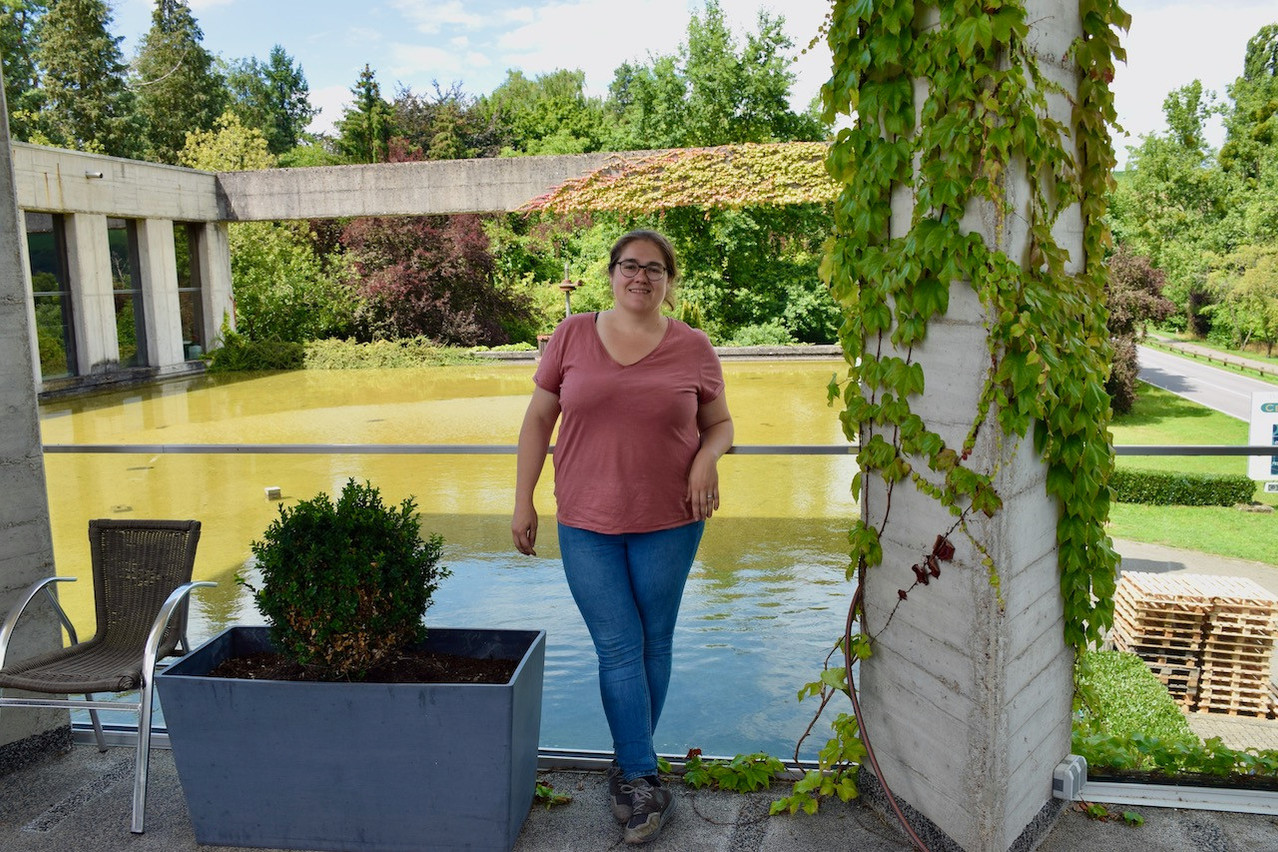
As we await the harvest, Paperjam is off to talk to young winemakers about their passion: wine. Today: Lisa Vesque, who in 2016 joined her father Jean-Marie at the head of the Cep d’Or estate.
Lisa Vesque grew up on the estate founded by her father in 1995. And when the question arose as to what profession she would pursue, her answer was immediate: “The same as my father.” In doing so, she has continued a family tradition in winegrowing that goes back at least as far as 1762. After completing her secondary education in Luxembourg, she went abroad for a number of internships, notably in Saarland and Kaiserstuhl. She followed this up with studies in viniculture and oenology in Geisenheim in Germany and Bordeaux in France before joining the family business in 2016.
A successful handover
Working with family and carrying on a tradition can be complicated on a day-to-day basis. “I’m lucky to have a father who is open to progress and willing to try new things,” says Lisa. “During my studies, I’d come back to the estate at the weekend with lots of ideas based on what I’d learned during the week. And my father was always open to discussion and experimentation. That’s how we developed our winemaking method.”
And while she admits that there may have been some friction at first--“which is normal”--her integration went smoothly. All the more so as Lisa had expressed her wish to take on responsibilities gradually. Today, her father devotes his energies to the vineyards, while she has made the cellar her domain. “I’m not going into the vineyards at the moment. But I know that I’m going to have to get into it over the next few years. I was lucky that my father was still going strong when I started.” While everyone has their own area of expertise, the big decisions are taken together. “When you come back from university, you think you know everything, but I quickly realised that there are things that you acquire through hard work and experience.”
Asked what has changed since 2016, Lisa points to the progress made in the vinification of red wines. “At Kaiserstuhl, I saw how pinot noirs were worked and I was inspired. Since then, I’ve found that our Pinot Noirs are fuller-bodied and more structured. I also insisted on planting new grape varieties, including the Pinot Meunier that is emblematic of the Champagne region, in order to evolve the blend of our crémants.”
A showcase for the Moselle
Lisa has not noticed a drop in consumption, but she does recognise that consumer practices are changing. “People don’t buy like they did 20 or 30 years ago. Once a year, especially at wine fairs, people would come to taste and order for the next six months or the next year. This is no longer the case. Customers buy small quantities on an ad hoc basis. As with most independent winegrowers, the main clientele is private individuals.”
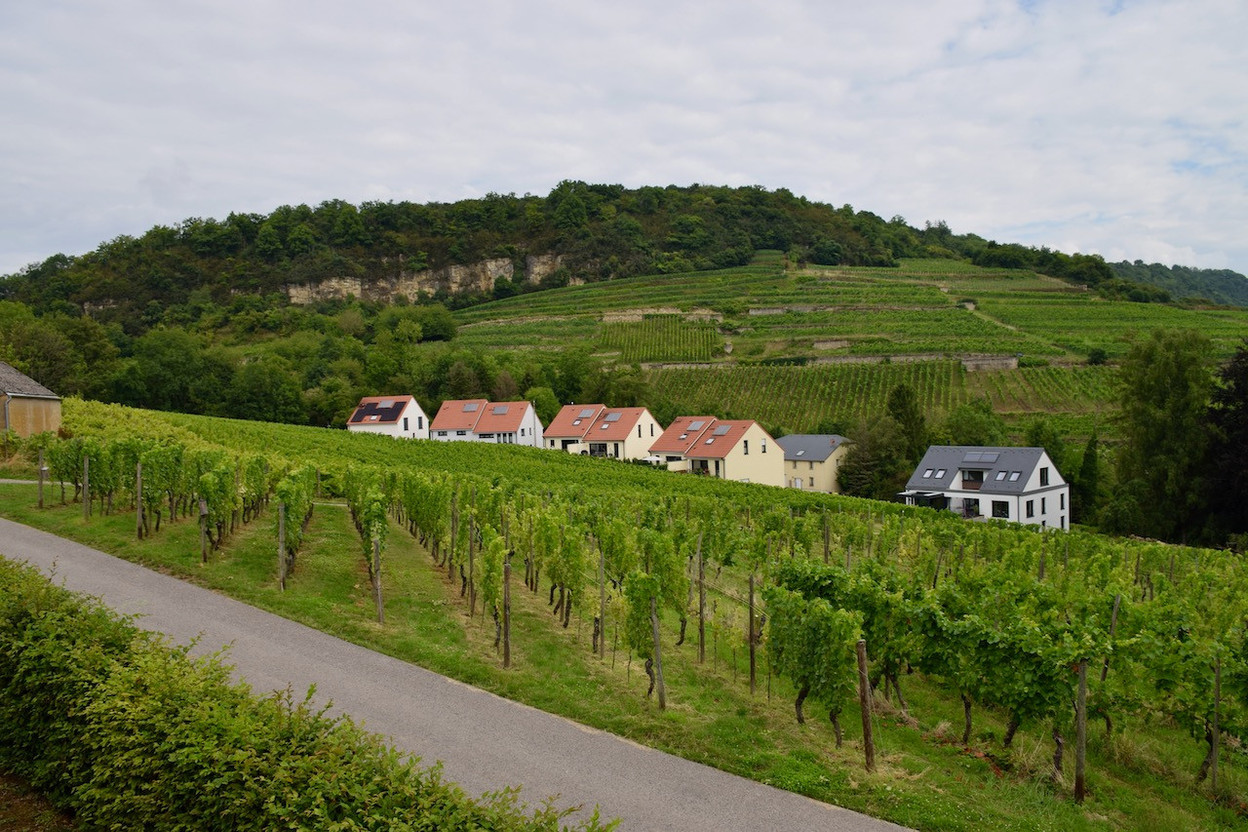
And here, the Cep d’Or estate has a trump card: its majestic concrete building on the banks of the Moselle. Designed by architect François Valentiny, the building is reminiscent of a wine press. “When he built the estate, my father wanted it to be equipped with a wine bar and a large tasting room that can be hired out and lends itself well to the organisation of events such as weddings. We’re open every day, so people can come and taste and buy our products. It’s our showcase. And it’s also a convivial meeting place: lots of people from the region meet here for a drink before going out for dinner.”
While private customers are the estate’s main clientele, along with the gastronomy sector and retailers, exports account for between 15% and 20% of sales. “We’re always looking for new markets,” says Lisa. While the two main markets are currently Belgium and the Netherlands, Eastern European countries such as Poland and the Czech Republic are developing with more wine bars and delicatessens. Northern Europe is also an interesting market that is opening up to wine. Next January, the estate will be taking part in a trade fair in Denmark. “We’ve had a customer in Japan for around 15 years and a contact in the United States with whom we’ve worked well over the last three or four years.” With US trade policy, though, things are bound to be more difficult. The estate also takes part in major international trade fairs, such as the Wine Expo show in Paris in February, where the independent Luxembourg winegrowers have a joint stand.
Climate change, a real concern
What are the challenges facing the profession? Lisa begins by highlighting the increasing complexity of administrative procedures. “We’re lucky to have a minister who’s quite open, who listens and who wants to change or improve things. And I hope that the government’s talk of administrative simplification will be followed by action.” Another major problem for her is the lack of qualified staff.
And of course there’s climate change. “It’s a real concern for winegrowers. This year, for example, we had a very sunny spring. Since then, there’s been a lot of rain. Two or three months of rain in summer is not easy to manage, and these things are happening more and more often. I don’t remember it being like that when I was growing up. When there’s a drought, you can think about how to irrigate the vines better. But when the rain doesn’t stop, there’s not much you can do. You can add more organic matter so that the soil can store water better, but when the water table is saturated, there’s nothing more you can do.” This year, in any case, the weather has been kind and she is expecting a good vintage in terms of both quantity and quality.
This article was originally published in French.