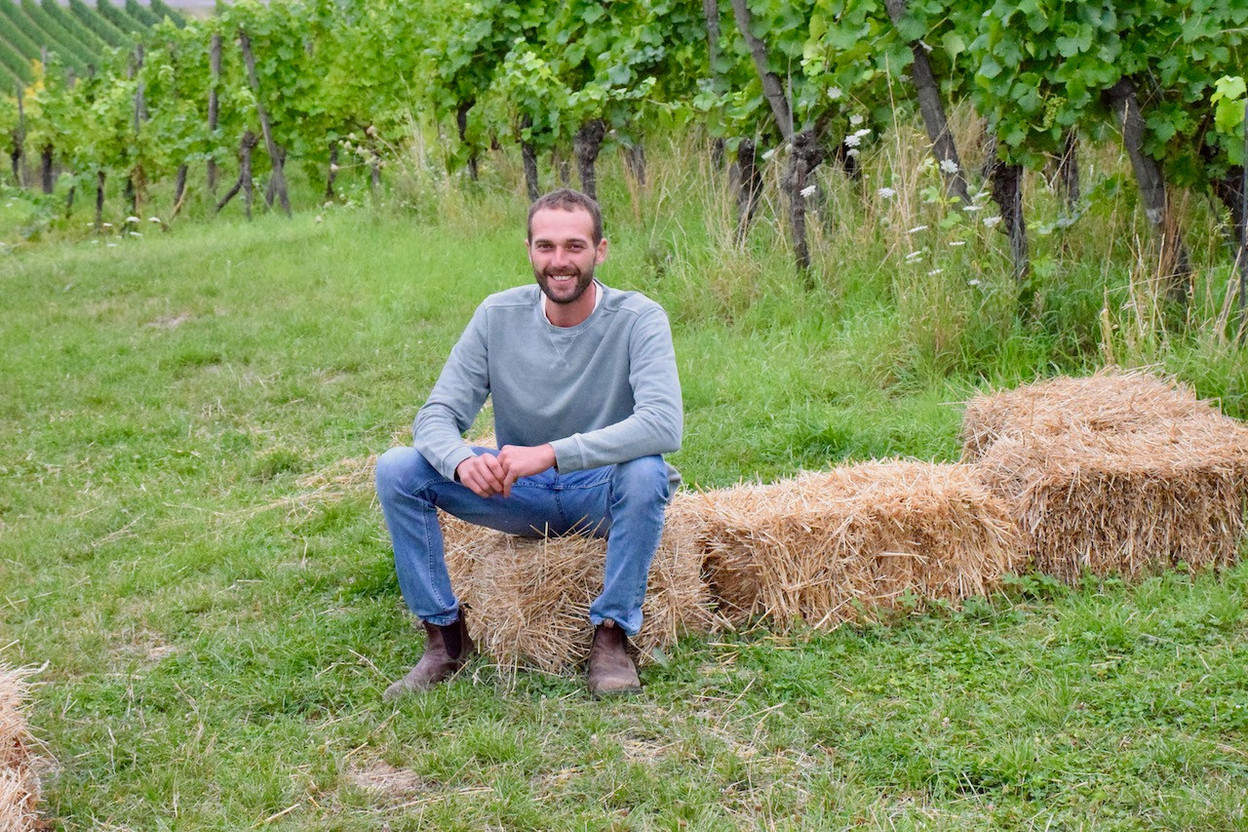
As we await the harvest, Paperjam is off to talk to young winemakers about their passion: wine. Today, Marc Kohll, who in 2024 decided--after years of selling his grapes--to finally produce his own wine, reviving the practice established by his grandfather, founder of the Vitikohll estate.
Marc Kohll (35) comes from a family of winegrowers. His grandfather Albert started the estate, which was taken over by his father Joseph. Joseph decided to stop producing wine, instead delivering his grapes to the Vinsmoselle cooperative. Marc lost his father in 2004 when he was 14. His mother then took over the running of the Vitikohll estate. In 2010, Marc, who had studied agricultural mechanics and then viticulture and oenology, joined her. It’s a partnership that’s going quite well. “Of course,” he says, “there have been days with and days without, but we’ve always been able to communicate.” It was a period during which he gradually took on more responsibilities until his mother retired. But his mother was always there when he needed her. She enjoys taking part in the fairs, events that became unmissable when Marc made a strategic decision: to relaunch wine production.
A successful first vintage
The relaunch was gradual. Of the 17 hectares farmed, only 3.5 ended up in vats. The rest of the production was sold to another independent producer, Desom. Why Desom and not the Vinsmoselle cooperative? “If you want to bring your harvest to the cooperative, you have to contractually give 100% of your production.”
The first vintage? Marc produced a Pinot Gris and a Rosé. And almost all the bottles put on the market--2,700 bottles of rosé and 2,300 bottles of Pinot Gris--were sold out. Very quickly. “I sold my production at wine fairs. The first one I took part in was the Wäikues in Ettelbruck. The wine wasn’t even bottled, I just took it straight from the barrel. And the labels weren’t even finished.” These somewhat rock‘n’roll conditions did not put off the curious onlookers, who appreciated the characteristics of the products on offer.
“Originally, I didn’t want to make rosé. But I listened to my friends who advised me to do so, telling me that it was the product everyone wanted. So I made a rosé to be drunk light on the terrace--12 degrees--with a lovely light colour and a broad aromatic palette thanks to the incorporation of a Rivaner from an old vine.”
In addition to his Pinot Noir and Rosé, Marc has also composed a crémant which, after resting for two years, will be bottled in the week of 25 August. At the same time, he is due to bottle a Riesling and a barrel-aged Auxerrois. The latter wine comes from a very aromatic old vine. “As a child, I loved eating these grapes. I absolutely wanted to use them to produce my Auxerrois. This vine doesn’t yield much, but it was important to me.”
Renovated infrastructure
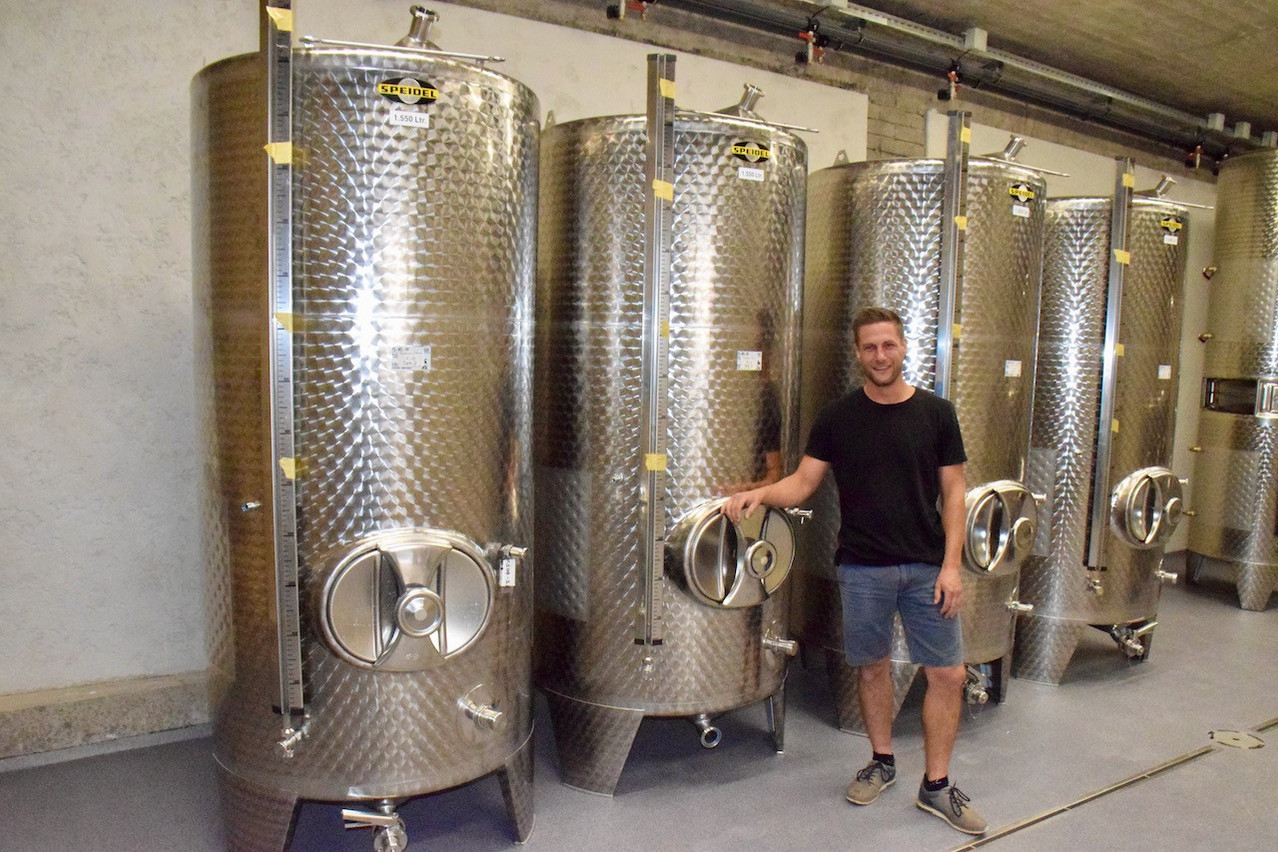
This year, Marc will be able to process his harvest in his own cellar, which he is in the process of completing. “Last year, I wasn’t able to make my first cuvée at the estate. It took a long time to get the necessary administrative authorisations. So I turned to the Domaine Henri Ruppert in Schengen, where I had done my apprenticeship. Henri Rupert had just built a new storage shed and had space in his cellar. He very kindly opened his doors to me. What’s more, for my first year of production, I was able to ask the cellar master for advice.” He got his advice, but Marc knew where he wanted to go: the acidity, sugar levels and aromatic palette are all his choices and he takes responsibility for them.
The cellar should be completed before the harvest. “It’ll be tight, but we’ll be ready. There’s been a lot of stress over the last few months coordinating all the trades that have had to intervene.” The infrastructure will also be equipped with a sales outlet and tasting rooms, one of which can accommodate events for up to 30 people.
This year, Marc will increase his production by using grapes from an additional hectare. He plans to produce a crémant made from chardonnay and Pinot Noir, a Chardonnay that will be aged in barrels and a Pinot Blanc. Weather permitting, a red wine will also be produced. An increase in production, but a reasoned increase: vinifying all the grapes he produces himself is not on the agenda. “I prefer to stay small,” he says. Small, but ambitious.
This article was originally published in French.