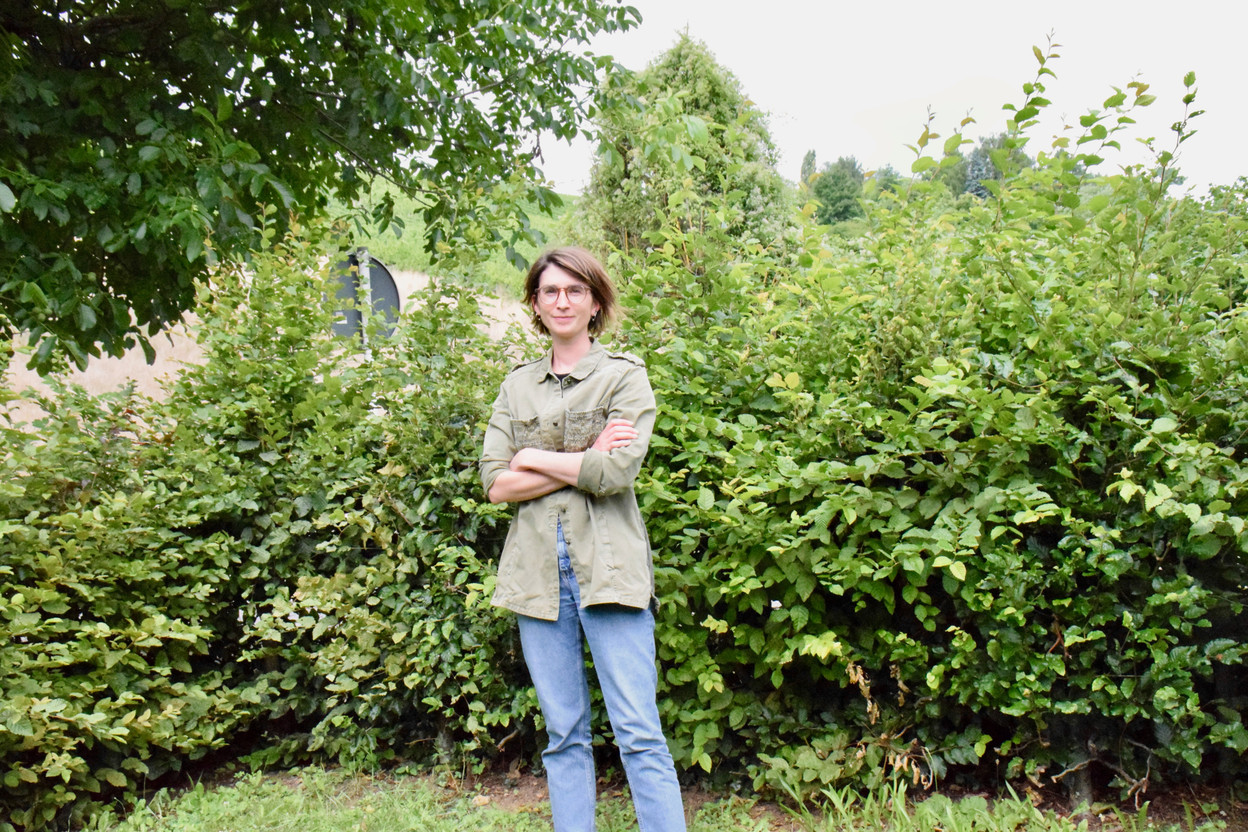
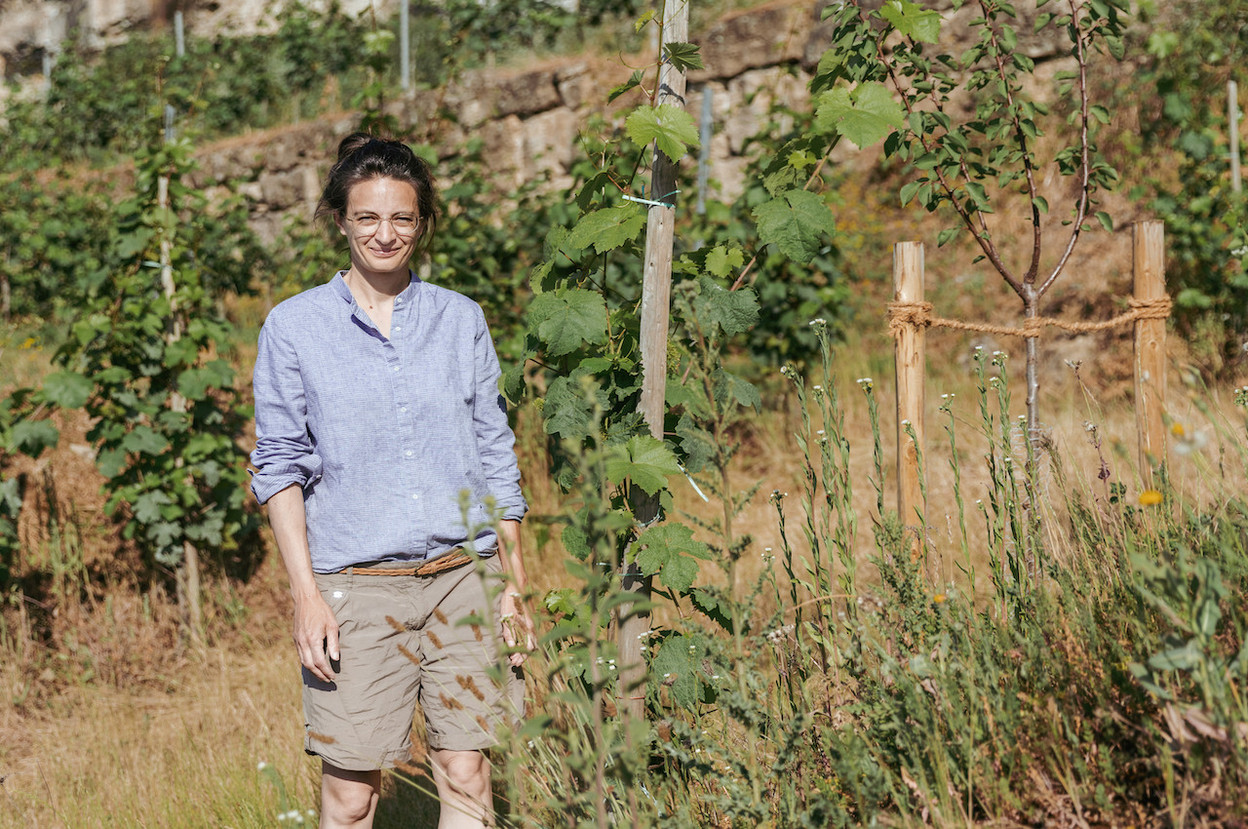
As we await the harvest, Paperjam is off to talk to young winemakers about their passion: wine. Today, Bob Molling, at the helm of Domaine Molling Wines since 2020.
Can you really escape your roots? Like others before him who were descended from winegrowers, Bob Molling was not destined to pursue this path. What attracted him--“like many other Luxembourgers”--was economics. With his baccalaureate in economics in hand, he enrolled at university. It took him a semester to realise that this was not the path for him. He found the prospect of spending his career behind a desk unbearable. At the same time, the idea of working in the vineyards resurfaced. “Not professionally,” he says, “more as a hobby.” He knew all about vines. His grandparents were cooperative winegrowers. Before they retired around 2005, they produced grapes that they sold to the Vinsmoselle cooperative. As a child, Bob Molling frequently helped them, particularly during the grape harvest. “Good times.”
He then undertook studies in viniculture and oenology and did a number of work placements, particularly abroad. “During my studies, I became interested in wine culture around the world, which made me curious and gave me the desire to travel. Both privately and professionally, I’ve been to Germany, France, frequently to the Balkans--Serbia, Bosnia, Romania--and South Africa.” He was in South Africa when his grandmother informed him in 2019 that the last parcel of the family estate--half a hectare rented to farmers--was becoming available. He agreed to take it over “without really knowing what I was going to do with it.” He adds: “At the time, although my career plan was to work in the wine industry, there was no question of producing a wine with my name on the label.” With the takeover of the family plot, however, the project evolved.
Experiences and travel
The 2019 harvest, due to a late spring frost spell, was reduced. Bob wanted to experiment, to attempt to “obtain a good vintage inspired by my travels.” The result was called “Roots.” Those 1,400 bottles produced under the 2020 vintage got the ball rolling. Thanks to the network he had built up by working in different estates before starting up under his own name, his production quickly found takers. But it was time to make the most of this initial success. “I was lucky that, during the winter of 2019-2020, some plots became available. More and more growers were unable to find a successor or buyer, which meant that I could take over vines, even on more sought-after slopes.” The surface area of the Molling Wines estate has now increased to four hectares, mainly located in the commune of Schengen and the surrounding area (Remich and Wormeldange). Most of it is rented out. “It’s still a small operation on a national scale,” says Bob, “but it allows us to produce around 20,000 bottles a year.”
Bob accepts the fact that he has a low yield. He produces mainly white wines, “the typical product of Luxembourg. We have the Luxembourg classics, Rivaner, Pinot Noir, Chardonnay and two ares of Elbling.” He also produces crémant, but in small quantities. “For a small producer, especially one just starting out, producing crémant requires capital. Before it can be put on the market, crémant has to rest longer than wine. It’s dormant capital. And you have to be able to store it.” For the moment, he does not yet have the necessary storage infrastructure. While he does have his own press and barrels, for the vinification he sublets infrastructure from the Durh Maddalon cellars in Niederdonven, where he worked as a freelancer before setting up on his own.
Bob produces rather dry, mineral wines “that often need some time to develop, to open up,” he explains. “In my production, I want to express the authenticity of the terroir. I want to create vintages that speak of the region where they are made, the vines and the work of the winemaker.” He adds that he tries to minimise the amount of intervention in the cellar. “The wines are first and foremost produced in the vineyards. We try to obtain a raw material of the highest possible quality. The work in the cellar consists of preserving quality. We can rarely improve on it.”
His production is aimed at a clientele looking for something new. “[They’re] wines that are different from classic wines. As young producers, we’re not constrained by the tastes of existing customers who are looking for wines they know. I’m not saying we shouldn’t listen to customers, but, thanks to our youth, we can experiment to develop our own style.”
For customers looking for something new
The estate’s clientele is almost entirely local. To meet his customers, Bob uses events “to create personal relationships with people.” He organises tastings in the vineyards “in a lounge atmosphere,” and also has a trailer that he uses for travelling tastings during the summer months. He also takes part in various trade fairs and is looking to increase his links with the catering sector, “a sector that also helps to increase visibility and reach new customers.”
Exporting is a marginal activity for him, as is often the case for small farms whose production sells well on the local market. But, in his view, it remains a strategic activity for the Luxembourg market, which is a local market but which, against a backdrop of a general decline in wine consumption across Europe, needs to make itself known outside its borders. “To achieve this, it’s important to ensure a certain presence on international markets.” How? By taking part in international trade fairs, he says, and by using foreign residents “who show an interest in Luxembourg production.” This local production will decline, he fears, because of the probable reduction in the area farmed in Luxembourg due to a lack of buyers.
The impact of climate change is also a concern. Faced with an increase in extreme weather events (frost, hail, rain) “over which we ultimately have little control,” Bob is in favour of improving soil quality to make it more resistant. As for global warming, he sees it as an advantage for red wine grape varieties. And he notes that Merlot, Syrah and Cabernet Franc are spreading through the vineyards. That’s a good thing, as long as it doesn’t mean a decline in the traditional grape varieties that give Luxembourg wines their distinctive character.
This article was originally published in French.