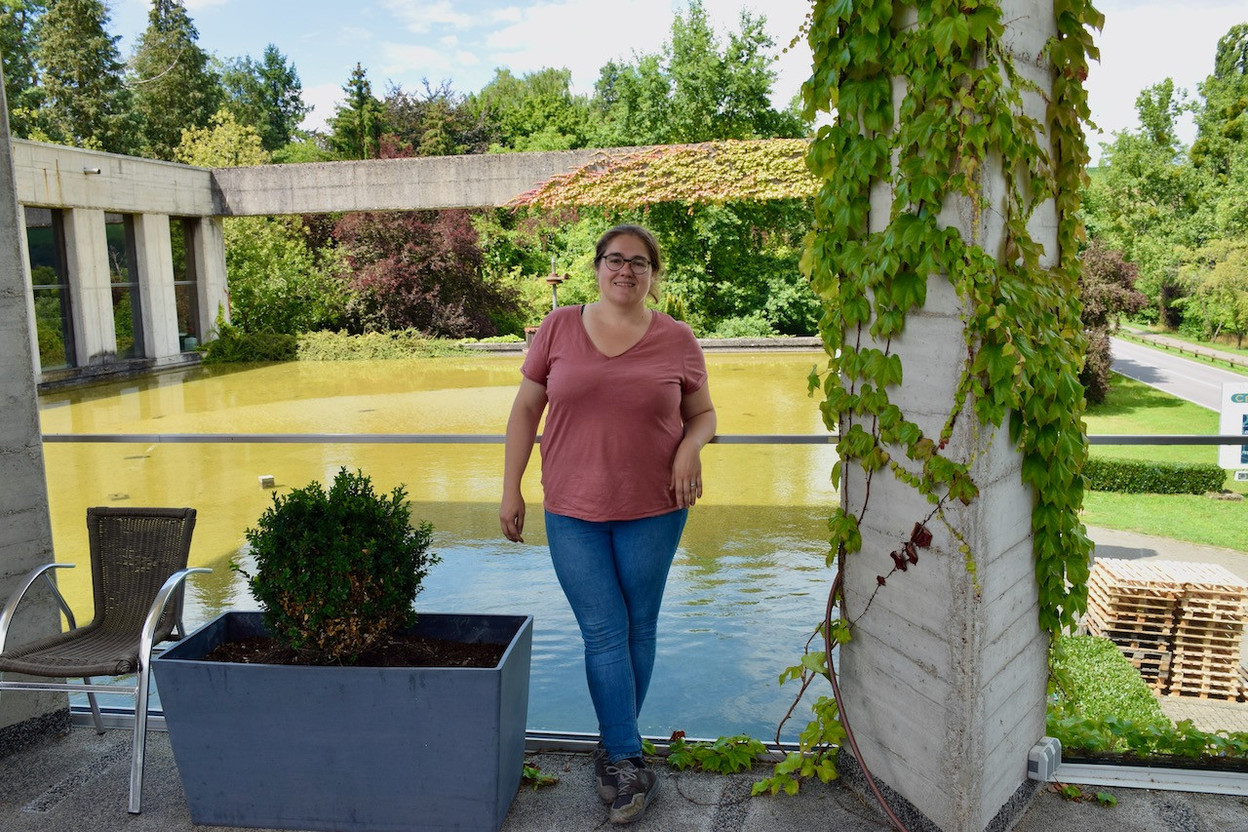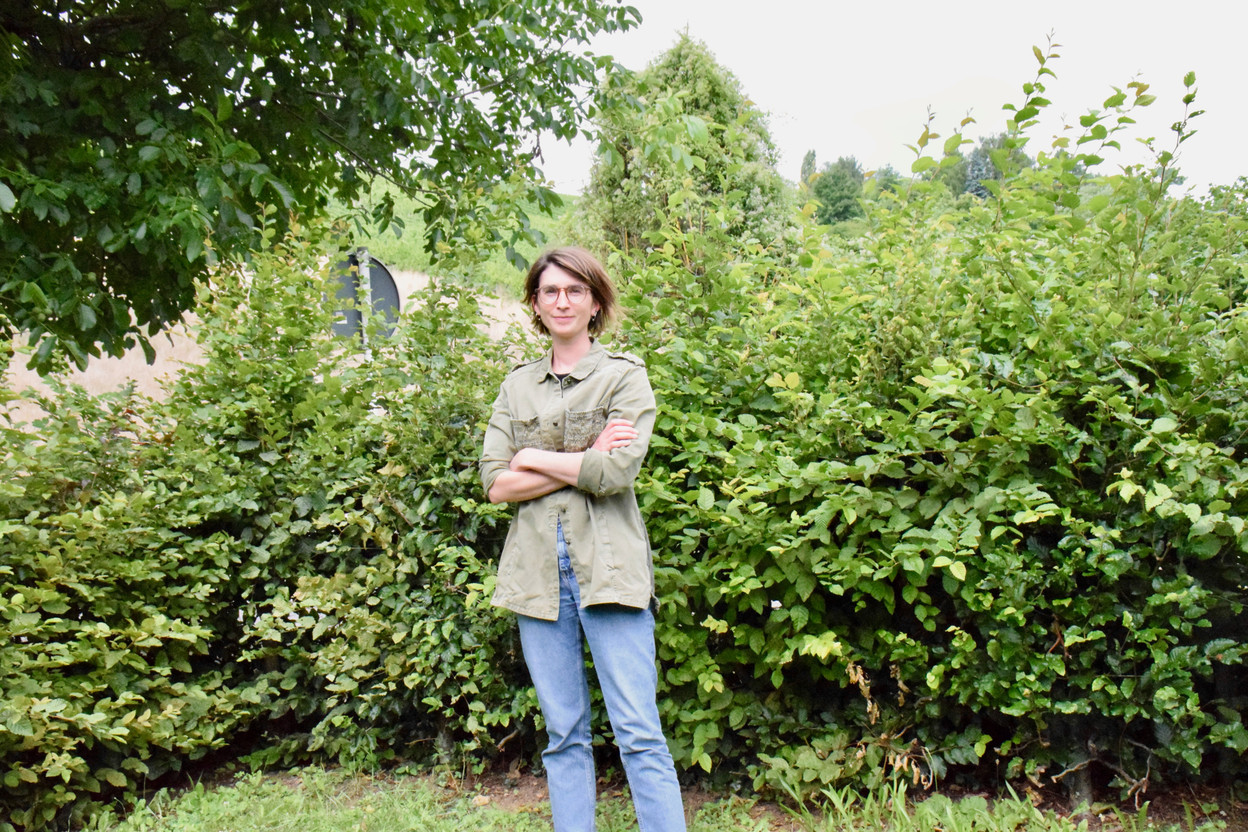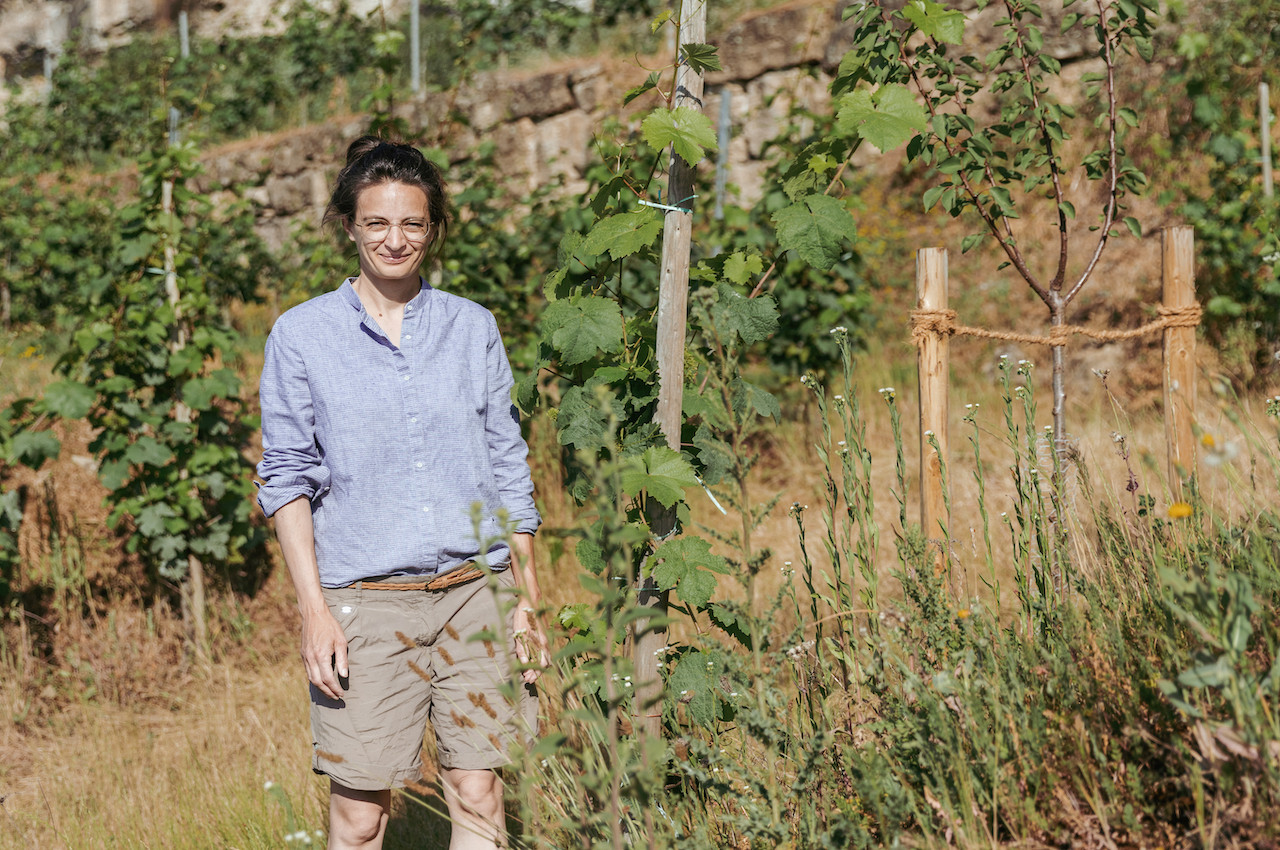
As we await the harvest, Paperjam is off to talk to young winemakers about their passion: wine. Today, Corinne Kox, of Domaine L&R Kox, who took over the family estate in 2019.
Taking over L&R Kox was not a smooth and easy process, Corinne Kox says. “Initially, I hadn’t planned to take over the estate. I left quickly after my A-levels. I needed to get out of the country to see something else. Having been interested in biology since childhood, I went to study molecular biology in Montpellier, France--a country where it’s a bit warmer. After placements in England, Luxembourg and Germany, it was in this country that I did my doctorate in molecular biology with a medical science option. I then asked myself whether research was really my thing.”
“I’m someone who needs change,” she continues, “who always has to learn something new. I can’t stand the feeling that I’m stagnating. So I turned to scientific communication. I spent two years working on a science popularisation programme on German television. While I was on one fixed-term contract after another, my boyfriend had a stable job in Luxembourg. So I returned home in 2012.”
“Initially, I worked on the estate. But relations with my father were complicated. We’re both very assertive people. I got a job as a project manager for international activities at the ministry of higher education and research. It was 2015, the year in which the grand duchy held the presidency of the council of the European Union. At the end of the presidency, the ministry offered me a permanent contract. But that didn’t stop me from working in the field. It was untenable in the long term and working two part-time jobs was not a satisfactory option for me. After a year’s consideration, I took the plunge and took over the estate in 2019.”
A proponent of vitiforestry
The winemaking profession came to her because of its versatility: working the soil, using the fruit to make something that is no longer grapes, marketing the production and running the estate. “It was impossible for me to get bored.” The second argument was freedom--a freedom to which a project manager cannot aspire. Alongside this versatility and freedom, the third argument is the opportunity to apply a deeply held conviction in the field, namely that cultivation methods must respect ecosystems. In her view, this is incompatible with current monoculture practices. Even if she acknowledges that the fragmentation of Luxembourg’s vineyards makes it possible to preserve a little diversity.
“Criticism is easy,” she says. “It’s better to act.” And from 2019, she set about putting into practice what she had learned about interactions within ecosystems and applied the principles of vitiforestry on the estate. The idea is to plant trees in the vineyard--“not a forest”--which will encourage the presence of vine auxiliaries and thus enrich biodiversity. “The composition of the soil gives the wine its characteristics. We talk, for example, of a mineral wine. Here, we work on the biology of the soils to create a viable and highly resilient ecosystem. This is very important in the face of climate change.”
Difficult generational cohabitation
However, this scientific approach has not helped Corinne with another challenge: that of cohabitation between the generations. Her father, Laurent--one of the pioneers of crémant in Luxembourg--is still active in the company. In fact, crémant accounts for half of the estate’s production.
While the Kox family has been working with vines for several generations, Laurent was the first to do so as his main activity. “In the past, you couldn’t make a living from the vine alone,” Corinne explains. “My grandparents were farmers and winemakers. My great-grandfather was a bricklayer. He built the house with its first cellar. The family has worked in the vineyards for several generations, but as a sideline. In those days, the risk for a small winegrower was not having a harvest. Several jobs were needed to make a living. Today, with advances in the weather, this risk has diminished.”
“Our cohabitation was very hard at the beginning. As I said before, we both have very strong characters. There were times when we both said to each other that things weren’t going well at all. We’ve been living together for 10 years now and I’m only just beginning to understand how I should have done things. I think it would be a good thing to create an institution that would accompany the process of taking over a family business and that, thanks to a neutral eye, could ease tensions. For example, by establishing rules for the division of tasks and responsibilities.”
These difficulties have not prevented Corinne from adding her own touch to the management of the estate, both in the broad outlines and in the details. In addition to the vitiforestry, she has insisted on installing kvevris, two Georgian terracotta jars in which the grapes ferment freely. “It’s the oldest winemaking technique in the world,” she says. This respect for tradition is reflected in the joint determination of father and daughter to preserve grape varieties that have gone out of fashion, but which have left their mark on the history of Luxembourg winemaking. Like Rhäifrensch, a variety planted since the Middle Ages, or Saint Laurent, which disappeared from the landscape during the phylloxera crisis in 2019 but makes it possible to produce an amazing red wine.
The imperative of resilience
Asked what the main challenges facing the profession are, Corinne replies “climate change and economic and political crises. All this can have a big impact, even on a small business in Luxembourg.” Regarding the first, she is trying to reduce her company’s climate footprint and combat the loss of biodiversity. On the second, the political and economic crises--“which are linked and increasingly frequent”--she wants to diversify her customer base, which is currently very local. For her, diversification is synonymous with “resilience.” “During covid, those who depended on the restaurant business lost a huge amount of turnover. That was a lesson for me: having a very diverse clientele is synonymous with resilience.” To that end, she is pushing exports. Some 10% of her production is currently exported. She would like to increase this to 20%, a level she believes is compatible with strengthening her company’s economic base and her desire to reduce its carbon footprint.
To achieve this goal, Corinne takes part in numerous trade fairs and visits other winegrowers abroad, particularly in France, Austria and Italy, to create networks. “It’s easy for me,” she says, “because I’m very comfortable abroad and enjoy talking to people from other cultures and in other languages.” She is also counting on wine tourism, which is a long-term project. “The spin-offs from social networking give our wines greater visibility. It’s also a way of meeting importers without having to do the legwork.” She has found that while local customers tend to be traditional--“people look for the things they know”--atypical things sell rather well abroad.
The decline in wine consumption is also seen as a risk. “Legislation equates wine with drugs. Wine has been around for 8,000 years and it also has benefits. Wine has a role to play and we shouldn’t demonise it.”
This article was originally published in French.