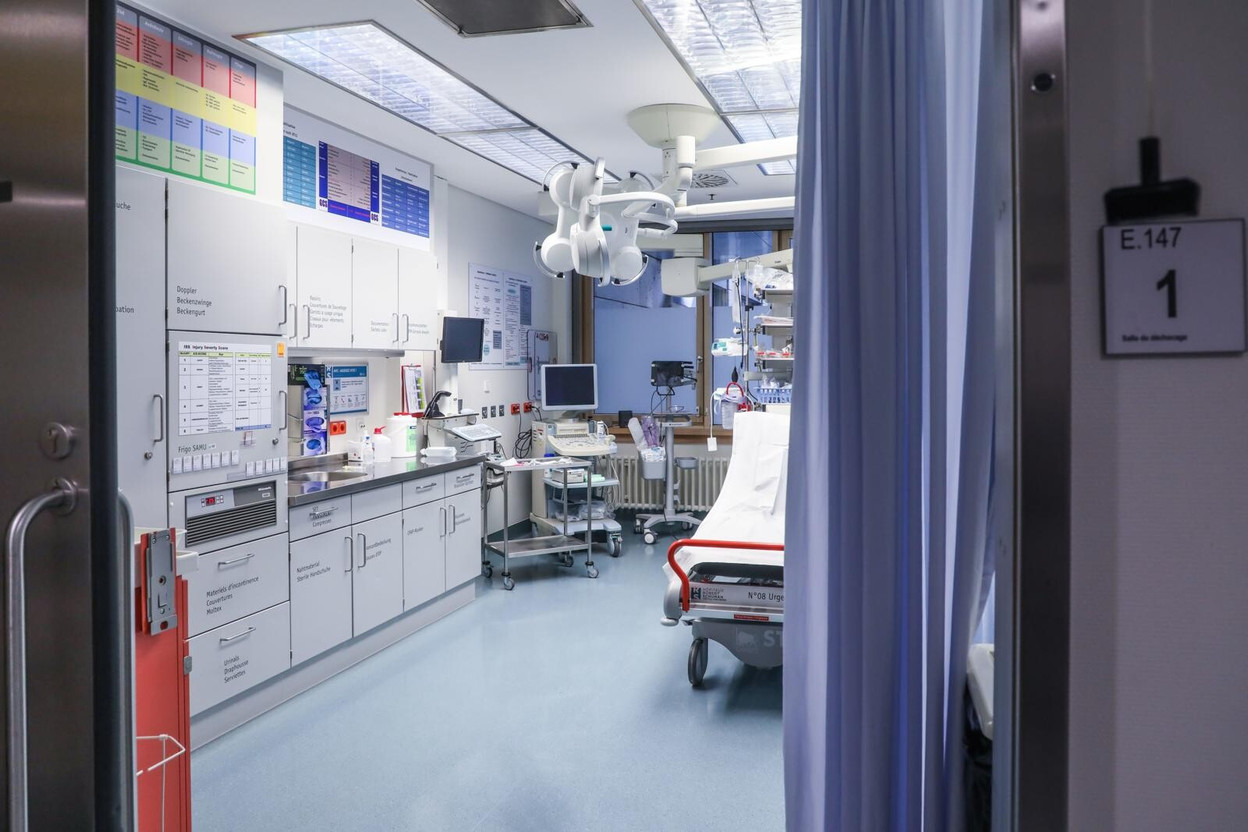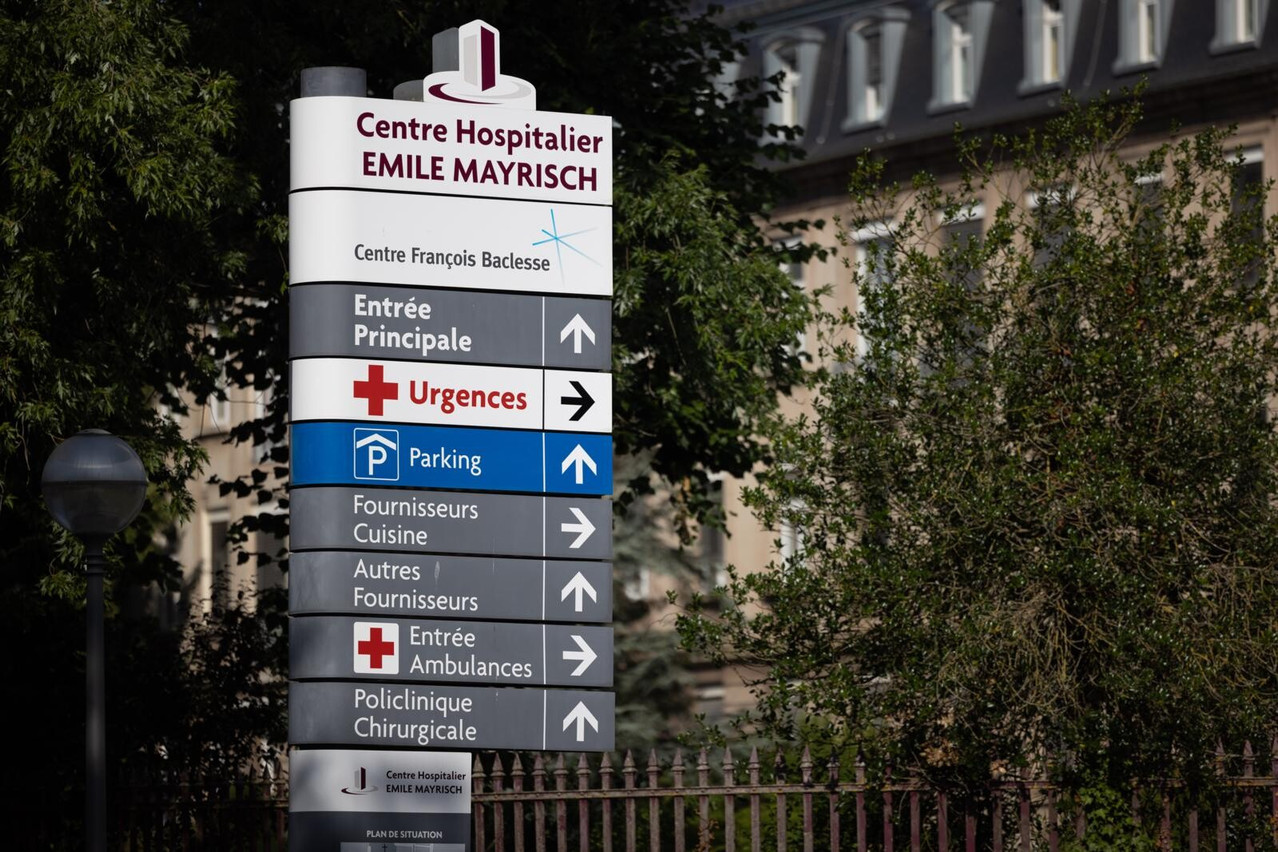
This is one of the key findings of the Country Health Profile 2025 published by the National Health Observatory (ObSanté): hospital activity has reached an unprecedented level. Having exceeded the volumes seen before the health crisis as early as 2022, Luxembourg’s hospitals have continued to grow. In 2024, they recorded 156,923 admissions and over 645,000 hospital days, the highest levels in the statistical series analysed by the Observatory. This increase is not merely a short-term phenomenon. It reflects a more profound shift in healthcare needs.
The impact of an ageing population is becoming increasingly significant
Population growth continues to fuel demand for healthcare, but it is above all the ageing population that appears to be the main driver of future trends. Older patients are accounting for an increasing proportion of hospital admissions. In 2024, people aged 75 and over – who represent 6.7% of the population – accounted for 31.8% of acute hospital bed days. This proportion even reached 37% at the Centre hospitalier du Nord (CHdN) and 36.7% at the Centre hospitalier Émile Mayrisch.
The reasons for their hospital stays are mainly linked to musculoskeletal, respiratory and circulatory conditions. This trend is also reflected in geriatric rehabilitation services. Between 2014 and 2023, the number of beds rose sharply, as did the number of stays and days spent in hospital. Despite this growth, occupancy rates remain particularly high, reaching 91.6% in 2023 before stabilising at around 89% in 2024. The report’s authors believe this trend is likely to continue over the coming decades as a result of the population’s accelerated ageing. Projections indicate that the old-age dependency ratio will almost double by 2060.
For the first time, the report analyses emergency department indicators. In 2024, 268,683 visits were recorded, or around 734 per day. The crude utilisation rate stands at 397 visits per 1,000 inhabitants, and around 13.5% of these visits result in hospitalisation.
3.9 beds per 1,000 inhabitants
In the face of this growing pressure, hospital policy is not about reducing capacity, but rather about adapting it. The Country Health Profile highlights the many changes introduced in recent years as part of hospital planning: increased capacity in geriatrics, child and adolescent psychiatry and paediatrics; the creation of reserve beds; the development of new networks of expertise; and the upgrading of major equipment.
As at 1 January 2026, Luxembourg therefore had 2,813 inpatient hospital beds – comprising 2,151 acute care beds, 575 medium-stay beds and 87 long-stay beds, in addition to 759 day-care places and 54 emergency beds, intended primarily for A&E departments. These are spread across 13 hospitals.
In total, the Grand Duchy will have a ratio of 3.9 hospital beds per 1,000 inhabitants in 2025. In terms of acute care beds, this ratio will be 3 acute care beds per 1,000 inhabitants in 2025. European comparisons from 2023 show that the number of hospital beds per 1,000 inhabitants in Luxembourg (3.9 in 2023) is below the average for the 27 EU countries (5.1 beds per 1,000 inhabitants). This ratio is lower than that of Germany (7.7 beds), France (5.4 beds) and Belgium (5.4 beds). These comparisons show that the number of acute care beds per 1,000 inhabitants in Luxembourg (3 in 2023) is lower than that of Germany (5.7), Switzerland (3.4) and Belgium (4.8), but higher than that of France (2.7) and the Netherlands (2.2).
Strengthening human resources
In terms of human resources, hospital staffing levels have been significantly increased. The number of hospital doctors rose by 43.7% between 2014 and 2025, reaching 1,505 professionals. The total number of employees in the sector followed a similar upward trend (+24.9%), reaching 10,413 people. However, the system remains heavily reliant on cross-border workers, with the number of such workers residing in France rising by 77% over the period. In 2025, 5,273 employees were residents, representing 50.6% of the total workforce. There were 2,968 French cross-border workers (28.5%), 1,296 Belgian cross-border workers (12.44%) and 876 German cross-border workers (8.41%).
The shift towards outpatient care is slowing down
The other key finding of the report concerns the growth of day care (HDJ). For several years now, the authorities have been seeking to shift an increasing number of procedures to outpatient care in order to reduce the number of conventional hospital admissions. Whilst this trend has certainly taken hold over the last decade, it now appears to have levelled off, stabilising at around 48% since 2021. Day hospitalisations accounted for 38.4% of admissions, compared with 48.4% in 2023 and 48% in 2024. Between 2014 and 2023, day hospitalisations grew by an average of 4.3% per year. However, growth appears to have been slightly weaker in the recent period, with an increase of +15% between 2019 and 2023, compared with +21.6% between 2014 and 2018.
According to the Observatory, this stabilisation suggests a slowdown in the shift towards outpatient care. In other words, the gains in capacity resulting from the expansion of outpatient care now appear to be more limited than before. In terms of volume, the number of day-case admissions rose from 63,868 in 2019 to 75,294 in 2024, following a decline observed in 2020 (54,870) against the backdrop of the Covid-19 pandemic. For certain procedures, outpatient care has become the norm, such as for cataract surgery (98.1%) or strabismus treatment (96.8%).
Luxembourg-specific features
Another notable fact is that cross-border workers contribute more to the system than they use it. Whilst they account for 38.5% of those insured by the National Health Fund (CNS), they account for only a small proportion of the country’s hospital activity. The Observatory points out that they account for 8.1% of hospital bed-days, as their population is younger and they frequently seek healthcare in their country of residence. Conversely, the number of non-residents seeking hospital care in Luxembourg is steadily increasing, rising from 6.2% in 2014 to 10.4% of hospital stays in 2023.
Beyond the accumulation of data, the Country Health Profile highlights a fundamental trend: the Luxembourg hospital system is entering a phase in which an ageing population is becoming the main determinant of healthcare needs. In this context, the efficiency gains associated with the expansion of outpatient care will no longer be sufficient, on their own, to absorb the rise in demand.