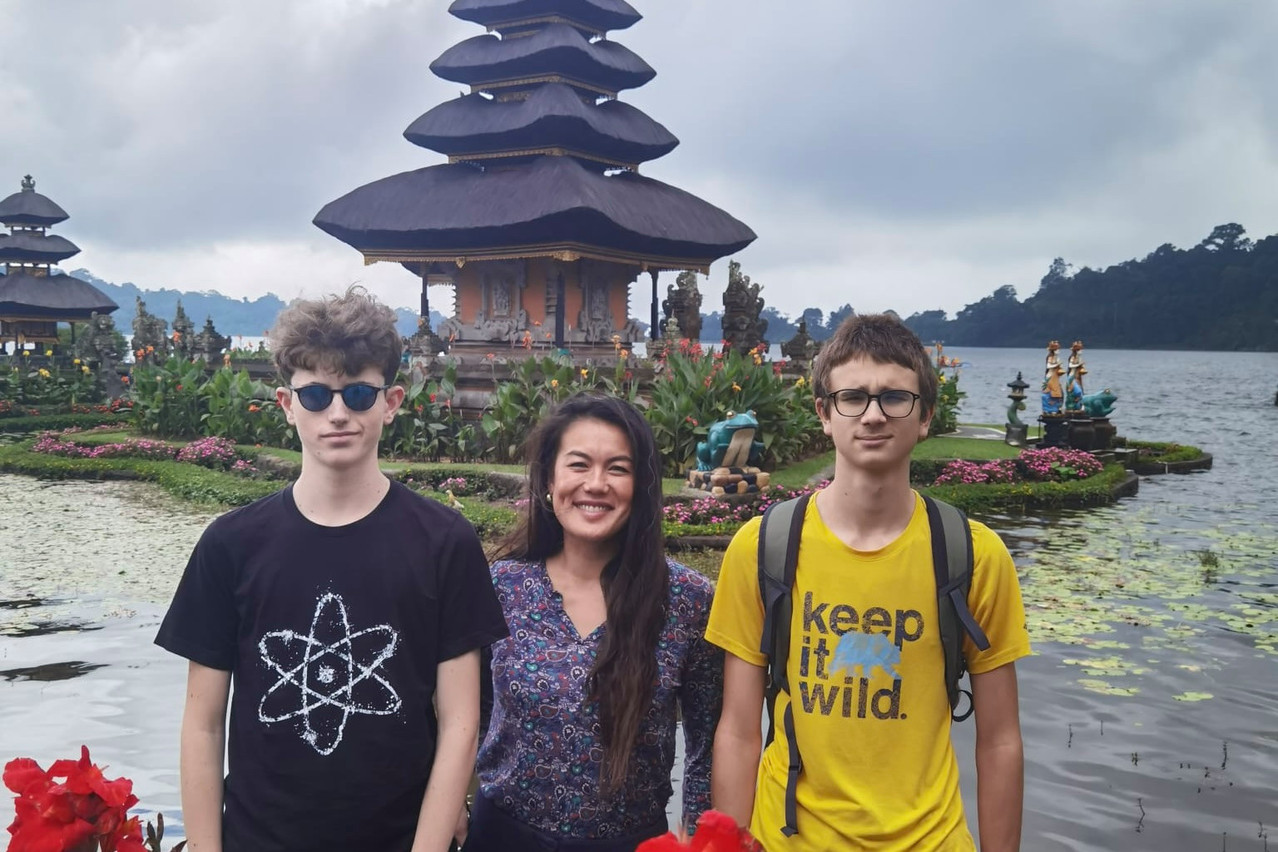
Two young scientists from Luxembourg defied the odds—and a bout of ill health—to secure last month two major accolades at the International Science and Invention Fair (ISIF) in Bali, Indonesia.
On 17 November 2025, Martin Rajadel-Cachau and Benedict Sloboda, both students at the European School in Mamer, won a gold medal in the environment category and the IYSA Semi Grand award, ranking their work as the second-best project in the competition.
First-time delegation
The pair represented the Grand Duchy for the first time at what organisers describe as the “biggest scientific fair of Indonesia”.
The event featured nearly 280 projects physically present and about 700 in total including online entries.
Their project, “Environmental and Social Impacts of Lithium-Ion Batteries”, offered a critical analysis of a technology now ubiquitous in modern life.
Battery boom under scrutiny
According to Sloboda, 16, the idea began as a summer brainstorm when the pair realised “everything around us had batteries in it” and wondered whether this was “sustainable in the long term”.
Their research combined a literature review on social impacts—specifically child labour in artisanal mines in the Congo—with lab work.
Rajadel-Cachau said they simulated the contamination of aquifers by mining runoff.
“We used lithium, copper and nickel,” he explained. They applied the chemicals to watercress to observe biological effects. The results confirmed severe risks to ecosystems and water supplies, as mining often intersects with aquifers, making it “inevitable that a lot of the minerals will end up in the water”.
Adapting to a global stage
Competing at ISIF required the students to adapt their presentation for a southeast Asian audience.
Rajadel-Cachau noted that while the origin of energy is a major topic in Luxembourg, it is “less of a preoccupation” in Indonesia.
This drove them to shift emphasis.
“We had to more emphasise its advantages,” he said, acknowledging how battery technology has improved lives in developing nations while still warning about sustainability.
Illness and resilience
That ability to pivot was tested by physical challenges. Sousana Eang, director of the Fondation Jeunes Scientifiques Luxembourg (FJSL), who accompanied the delegation, said both students fell ill on arrival.
“Martin was almost losing his voice,” she said. “Benny had developed also persistent cough.”
Despite this, they presented effectively to judges—something Eang described as “truly remarkable”.
Scale shock
The scale of the fair also took some adjusting.
Sloboda described a “sense of awe” at the size of the competition.
Rajadel-Cachau, who grew up in the Philippines, found the environment familiar, but for Sloboda it was a “big change”.
Smarter consumption
Their research concludes that while lithium-ion technology remains necessary, it must be managed better.
Rajadel-Cachau argued against wasteful applications, citing vapes as products that “have no added value to society and waste a precious resource”.
Sloboda said alternative technologies deserve far more investment. He pointed to sodium batteries and molten sodium for heat storage as promising paths away from lithium dependence.
From national win to Bali
The duo secured their place in Bali after success at the National Jonk Fuerscher Contest in Luxembourg, refining their work through an eight-month iterative process.
Eang said the national jury assigns winners to specific international fairs, and this project was deemed a strong fit for the Indonesian event.
She added that the two were so humble they initially did not realise the second award was theirs, asking: “Do I really deserve that?”
Diverging paths
Despite shared success, their futures differ.
Sloboda, for whom the project was a “passion project”, plans to study medicine. He sees environmental science as a “smaller step” toward the ethical and access challenges in medical research.
Rajadel-Cachau said the experience shaped his ambitions. “It really trained me in the scientific method,” he noted, confirming an interest in engineering or physics. The project also taught him how to “write a proper scientific paper with analysing sources”.
Both credited the FJSL’s Science Next programme and the European School’s science department as crucial to their development.
As they return to their S6 (second last year of high school) studies, their double victory in Bali stands as a testament to the global competitiveness of Luxembourg’s youth research.