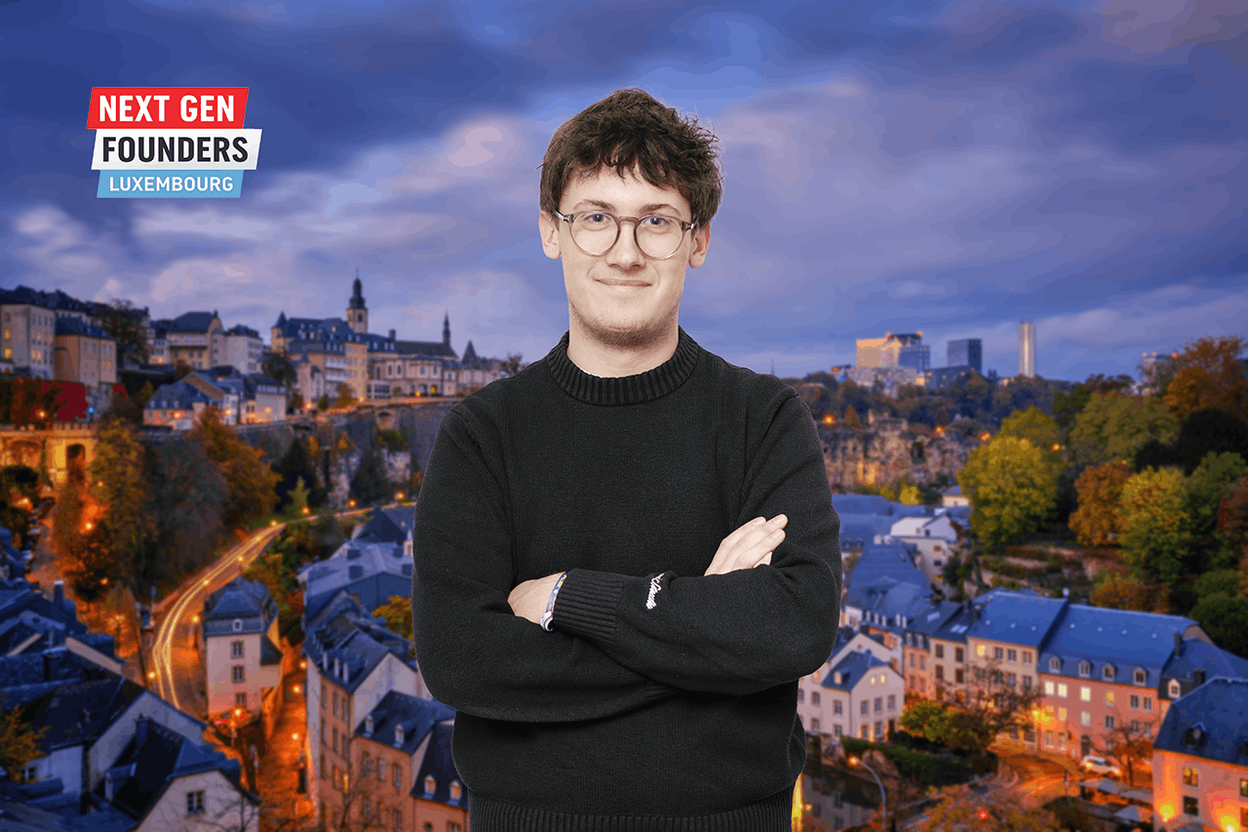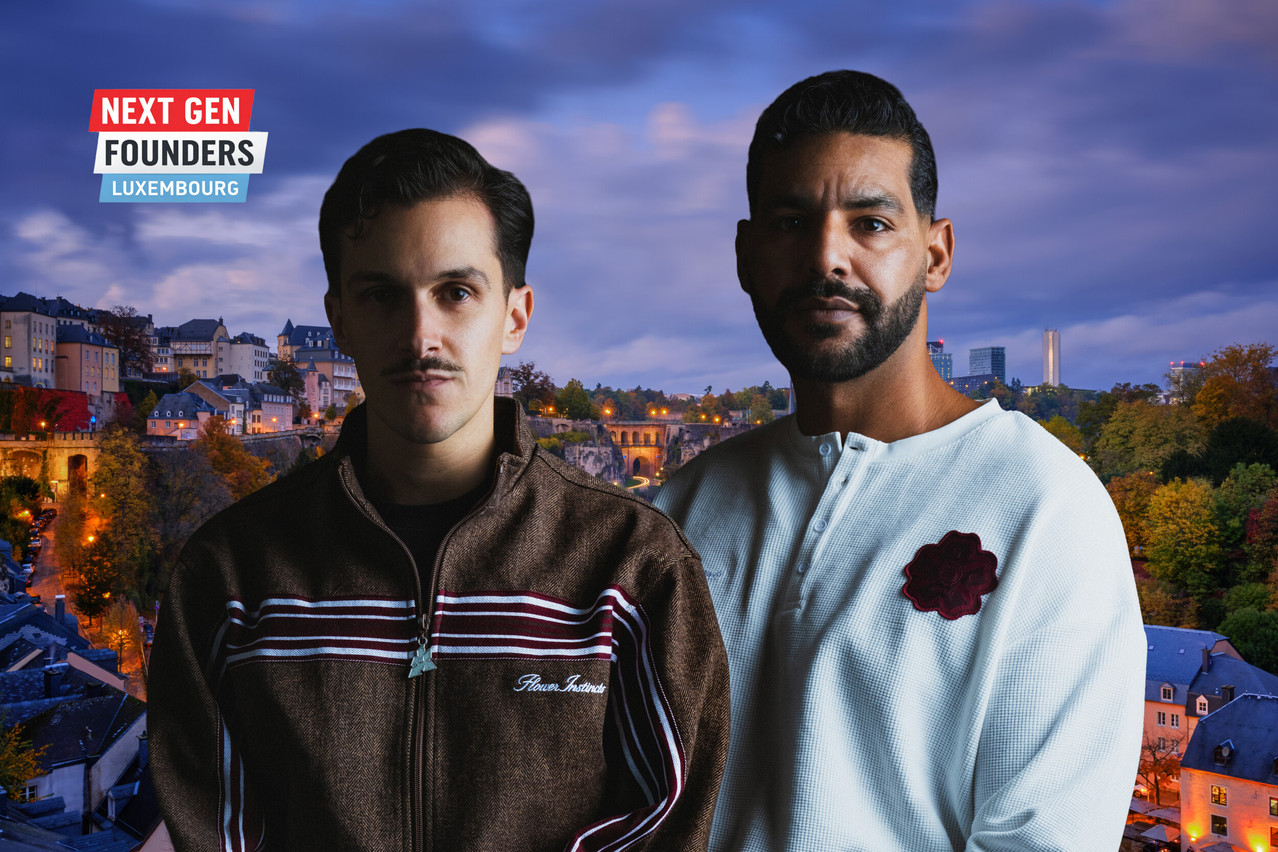
Before designing his own trainers, Alexis Goncalves collected other people’s. A keen collector since secondary school, he began buying and reselling pairs to fund his next purchases, before discovering the trade whilst on a work-study scheme at Le Vestiaire in Metz. He then joined Smets in Luxembourg for a nine-month marketing placement. It was there that he met Shafik Dridi, then head of marketing, with whom he would go on to found Flower Instincts. Their shared passion brought them closer together and they began buying and reselling trainers. “We’ll do something together,” Shafik kept telling him.
At the end of his work placement, Alexis returned to Paris to continue his studies, where he is doing a Master’s degree in 2D and 3D audiovisual production. The two have stayed in touch, but their joint project has not yet taken shape. The pandemic then made it more difficult for Alexis to find a work placement or a work-study scheme.
In late 2020, an opportunity arose: an American basketball player Shafik had met at Smets – who had already launched his own brand of trainers – put Shafik in touch with a manufacturer. Shafik then rang Alexis to suggest they design their own pair. He agreed to give it a go. The project got underway in early 2021; Alexis dropped out of his master’s degree to develop Flower Instincts.
I wanted the design of a sneaker and the comfort of a shoe that gets better with age.

A brand designed with instinct in mind
In 2021, Alexis is well aware of the models that collectors are snapping up, but he’s grown tired of seeing the same silhouettes keep reappearing and of certain resale prices. Alongside Shafik, he’s also following the ‘bootleg’ movement, which reimagines existing models to give them a new identity. They want to recapture this creative freedom in their own project, whilst also focusing on quality. “I wanted the design of a sneaker and the comfort of a shoe that gets better with age.”
For their first pair, they’ve brought together the elements they love: colourways from the 1980s and 1990s, distressed effects, and those yellowed soles that give vintage styles their character. Shafik, a graphic designer and illustrator, is responsible for translating their ideas into drawings.
The name and logo were decided in a single evening. The flower brings the roundness and softness they were looking for; ‘Instincts’ says something about the way they go about things. “We do everything on instinct, and still do today. We don’t bring out a product that we wouldn’t wear ourselves.” They have to want their own creations first before offering them to others.
Addictions provide them with a common thread, ranging from tobacco and coffee to alcohol, drugs, sport and speed. Alexis explains that their artistic approach aims to expose these addictions and raise awareness of their consequences, without promoting or glorifying them. Each theme influences the colours, materials, details and packaging. “It allowed us to give meaning to each product,” he explains, describing the collection as “a bouquet of our creations”.
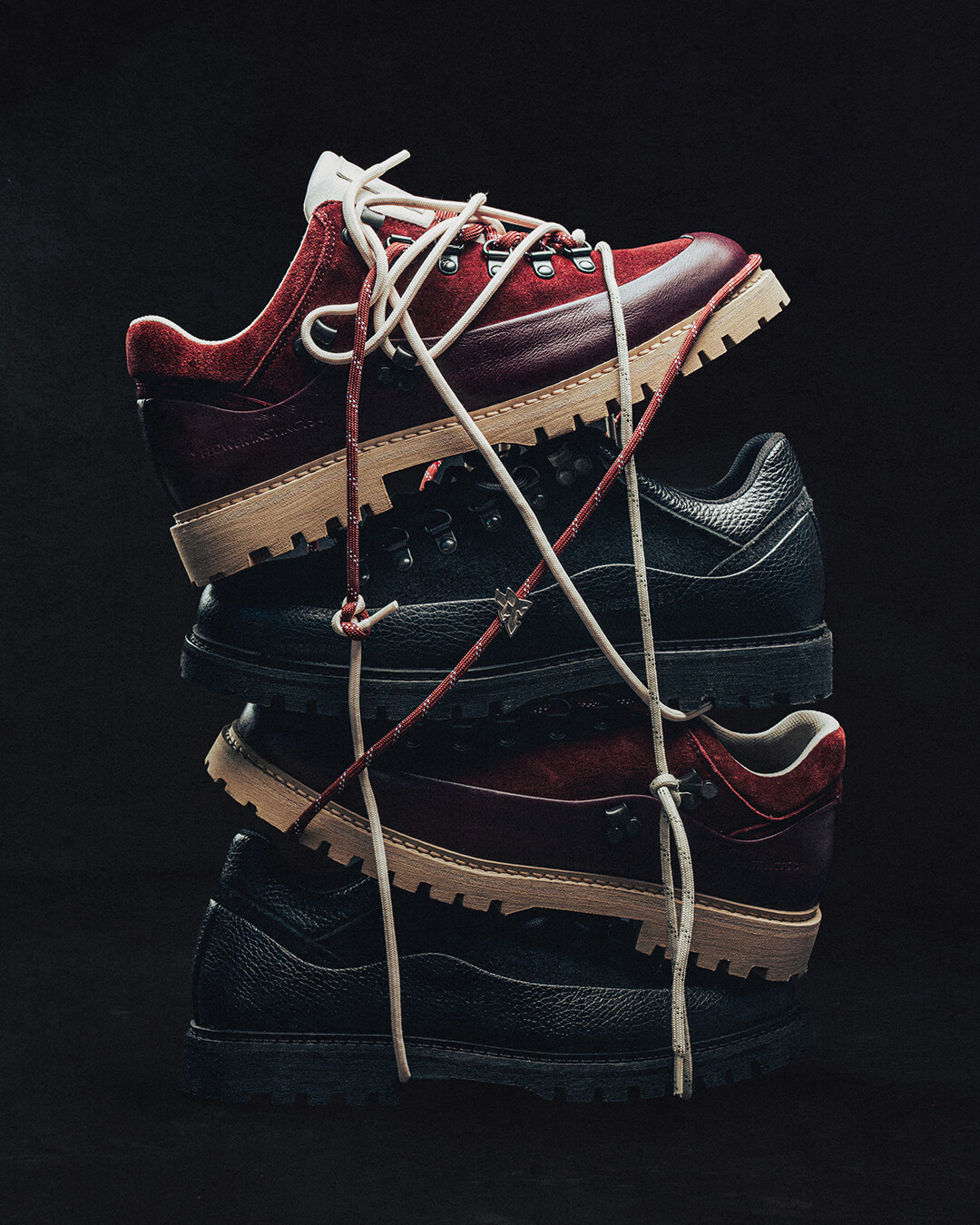
“This month, Flower Instincts has sold an average of one pair every four minutes,” Alexis says in late November. (Photo: Alexis Goncalves)
Start in China so that we can manufacture in Europe
To make these shoes, the partners first had to make do with what they had. “We launched the brand with €200,” says Alexis. The costs of manufacturing in Europe were therefore beyond their means, whilst their contact in China enabled them to start with small batches and short lead times. They had their first three models manufactured there, with a view to raising the funds needed to move production to Europe. “For us, China was a springboard.”
The business was initially based on Alexis’s French sole trader status, which he had already been using for buying and reselling goods. They opted for a pre-order model to fund production using customers’ money. About two months after they first started thinking about the idea, they had a prototype ready to be photographed. Shafik prepared the visuals and Alexis contacted more than 150 influencers. Four or five agreed to showcase the project, with the promise of receiving a pair once the range went into production.
After a week, we’d sold over 100 pairs, which seemed like a huge amount to us.

In April 2021, they opened orders for a week and announced delivery two months later. “After a week, we’d sold over 100 pairs, which seemed like a huge amount to us.” After a few collections, a freeze on funds and goods put pressure on their cash flow. According to Alexis, customs suspected the products were counterfeit. Whilst waiting to recover the frozen funds, everyone chipped in. Alexis sold his car to inject €6,000 into the business.
Meanwhile, he was looking for manufacturers in France, Italy and Portugal. The move to Europe had to be made without losing customers, who were used to a price of €180 a pair. The French manufacturing that Alexis had envisaged would not allow him to maintain this price. He therefore compared the options in Italy and Portugal, where he found the compromise he was looking for. “Of the two, Portugal offered the best value for money.” Both agreed to earn less per pair than they would with Chinese manufacturing, prioritising the preservation of their shoes’ design above all else. “Ethics must not compromise design.”
400 orders in 15 minutes
Their fourth model is set to be the first to be manufactured in Portugal. The partners believe they can repeat the approach they used at the start: present a prototype, take pre-orders, then launch mass production. Within 15 minutes, 400 orders come in. They halt sales, worried they won’t be able to keep up. “We don’t know how to handle more than 400 pairs – it’s just not possible,” they told themselves at the time.
The workshops they were working with were unable to reproduce the prototype in the quantities and within the timeframes promised. Delays and defects were piling up, forcing the founders to travel there in person. “We had no money. We slept outside the factories,” says Alexis. With no budget for a hotel, they also slept at the airport.
The shoes were due to be delivered within two months. Six months after placing their orders, customers are still waiting, and the founders are sending out a flurry of emails to explain the situation and offer refunds. Many, however, are keen to receive their pair. “They were annoyed, but they didn’t want a refund,” recalls Alexis. Having repeatedly postponed the delivery, the partners are considering calling it a day. They’ve given themselves one last month: if the shoes don’t arrive, all orders will be refunded. “We started out with $200; at least we gave it a go.”
Being a small team also means we have to master everything from A to Z.

When the goods are finally delivered to the family garage where they prepare the parcels, the shoes still have to be sorted through one by one. Traces of the pattern markings, which had been removed by heat at the factory, had reappeared during the winter transport. “We had to strip every pair by hand, one by one, working day and night for a week.” The parcels are then dispatched at a rate of around fifty a day, but some customers discover further faults whilst wearing the shoes. Exchanges and refunds are eating into the takings from this first European production run.
The materials are part of the problem. For this range, they were sourced from Portugal, but the leather has proved to be too supple, and the ageing process has been disappointing. After one partner pulled out and another let them down, they need to review their supply chain and find a workshop capable of keeping up.
“I’ve found the right factory in Portugal and the right materials in Italy,” says Alexis. For around four years now, they have been working in particular with Pedro, one of their Portuguese suppliers. Leather, suede and fabrics come from Italy, whilst the shoes are made in Portugal. Despite the difficulties, some of their earliest customers have continued to place their trust in them. “We have customers who have been buying all our styles for five years.”
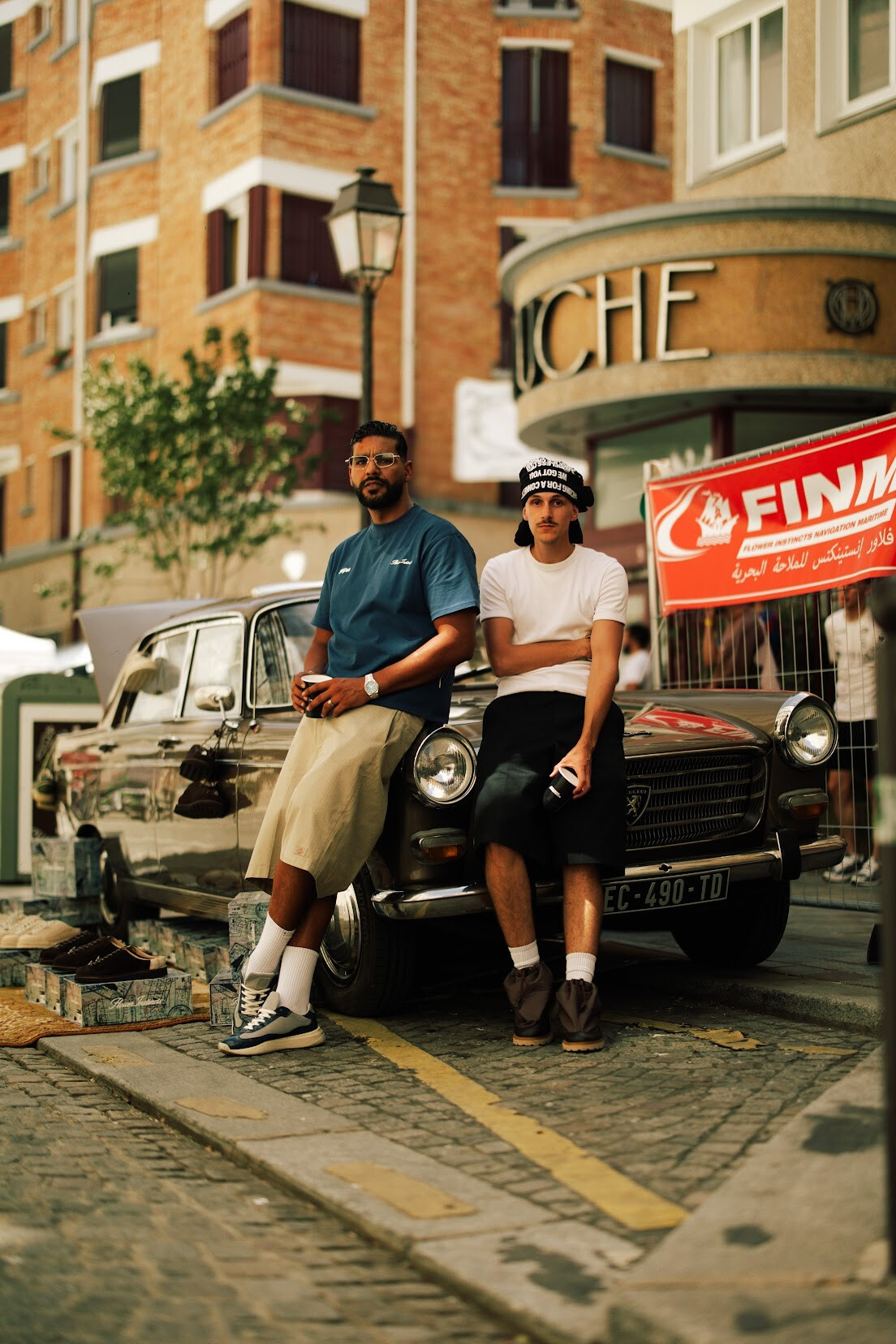
Alexis Goncalves and Shafik Dridi have built Flower Instincts without investors, reinvesting part of the revenue to grow the brand. (Photo: Alexis Goncalves)
From Luxembourg to US customers
The business was set up as a Luxembourg limited liability company (Sàrl) in 2022. Shafik already lives in the country; Alexis, who is originally from Thionville, has worked there and believes that a brand like theirs can carve out a niche there. “Having worked at Smets, I realised that their range was far too limited, even though there is demand for it,” he says.
Based at the 1535° Creative Hub in Differdange, the duo were joined around three years ago by a friend nicknamed Pépé. Initially in charge of parcels, he moved on to video production and managing the shop after logistics were outsourced. Shafik focuses mainly on design, visuals and marketing, whilst Alexis handles management and operations. Nevertheless, both remain versatile: “Being a small team also means we have to master everything from A to Z.”
The brand says it has sold more than 50,000 pairs since its launch. Alexis reports annual growth of 50% and expects to exceed 20,000 pairs in 2026 alone. “This month, Flower Instincts has sold an average of one pair every four minutes,” he says in late November. He reports revenue of €1.6 million in 2025 and expects between €2.5 million and €2.8 million for 2026. According to his figures, half of sales come from France, around 40% from other European markets and 10% from the rest of the world.
Social media and events give them access to these markets. “We’re children of the internet,” Alexis points out. As a result, a video posted from Luxembourg can also reach an audience in the United States. For the past three years, Flower Instincts has been taking part in ComplexCon in Las Vegas and Los Angeles, where the brand connects with the American streetwear audience. Some buyers from across the Atlantic are already among its biggest customers.
As an online brand, having a physical shop also puts a lot of customers at ease.

The designs evolve in line with the founders’ tastes. Boots have been added to the range of trainers, which now comprises around fifteen styles, according to Alexis, in sizes 3.5 to 13. The core range accounts for around 60% to 70% of the collections. As for the rest, they rely on collaborations that allow them to step outside their comfort zone. “Collaborating with a basketball brand, to me, makes no sense.”
Alexis cites, in particular, the collection with Pizza Delamama – Mister V’s pizza brand – as one of their most memorable collaborations. “Personally, I like to be where people don’t necessarily expect us to be.” In Luxembourg, the annual open days at the 1535° Creative Hub also provide an opportunity to work with an artist each year. Following on from Thomas Iser, Flower Instincts collaborated with Lisa Junius. The brand has expanded on this latest project by adding a clothing collection to its footwear range this year.
The Cloche d’Or: ensuring its long-term future
The Cloche d’Or branch might never have seen the light of day. When the shopping centre approached them in 2024, the founders turned them down: they weren’t convinced they would find a space there that suited their brand. “A good product must also be in the right place.”
After relaunching in 2025, they visited the former Scotch & Soda premises and began to make plans. They initially agreed to set up a pop-up shop there for three months. “It went so well that they said, ‘Do you want to stay for a year?’” The trial was extended, and the shop was officially opened on 28 February 2026. Today, it employs a manager and two sales assistants and accounts for around 20% of turnover, according to Alexis. “As an online brand, having a physical shop also reassures a lot of customers.”
The young man wants to make it the brand’s flagship store, but its long-term future is still to be negotiated. “They want us to stay, too,” he says. But a commercial lease would mean higher rent, which he would need to be able to absorb whilst retaining the team.
The founders have been making a living from the business since the end of the first year, in line with the deadline they had set themselves: “After a year, if we’re not able to pay ourselves, we’ll call it a day,” they had told themselves. Once they’d achieved that goal, they only increased their salaries slightly so they could reinvest. “Just being able to make a living from your passion is brilliant,” says Alexis. Manufacturing in Europe has reduced their profit margins, and rising costs are pushing the price of some new models up to €200 or €230. “The pairs priced at €180 are still at €180,” he points out.
“We’re still self-funded; we don’t have any investors or banks backing us at the moment,” Alexis said at the time of the interview. Discussions with investors are under way to support international expansion. With around 80% of sales made online, he plans to focus primarily on expanding online rather than opening more shops. He is already looking ahead two years: “We’ll have a presence in other countries.”