The most obvious risk is that of making the wrong decision. The hardest to gauge is the risk of a decision that was never made. This asymmetry leads companies to wait, at the very moment when uncertainty calls for more decisive action. “When you act too soon, the mistake is immediately apparent: the company incurs losses or write-downs,” observes Jim Goldman, associate professor of finance at McGill University. “The cost of waiting too long is much harder to measure, as is the accountability of those who waited too long.”
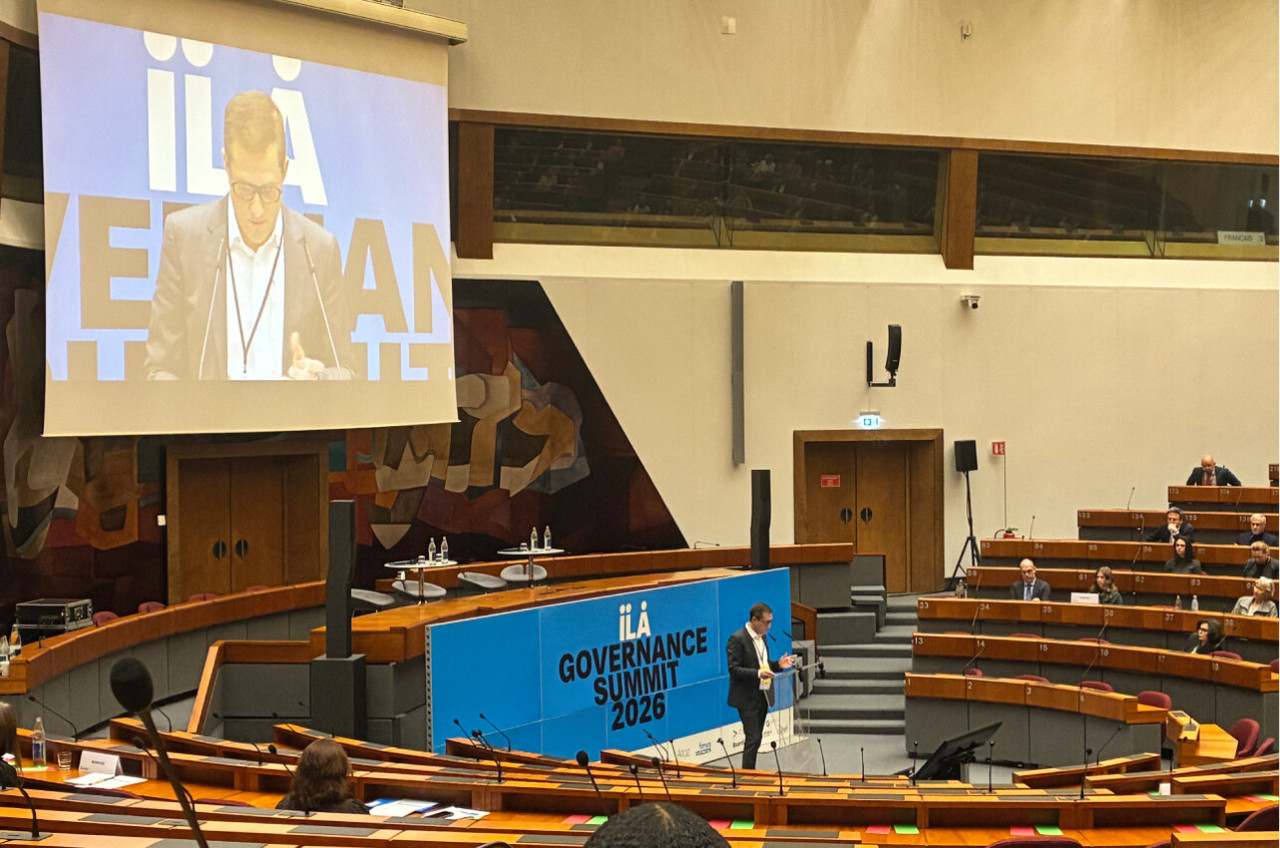
This challenge was a recurring theme throughout the morning’s discussions at the Governance Summit organised by the Luxembourg Institute of Directors (Ila) on Thursday 26 November at the Hémicycle in Kirchberg. Artificial intelligence (AI), cybersecurity, climate change, pay transparency, supply chain resilience and geopolitical tensions are no longer simply a series of specialised issues. Their convergence is challenging the very way in which a board understands the company, decides on its investments and oversees its management.
“The main challenge is the pace of change, on all fronts,” sums up the non-executive director 
Compliance threatens to take precedence over governance
The first obstacle is practical: the volume of information passed on to directors exceeds their capacity to absorb it. This is particularly evident in regulated sectors. “The amount of information received by boards is quite simply too much for a normal human brain to process,” notes 
This accumulation gives rise to a paradox. The more obligations there are, the greater the risk that the board will devote its time to formal checks and the less it will be able to focus on decisions that have implications for the company. The distinction between compliance and governance therefore becomes crucial. “The day-to-day management of compliance must be the responsibility of senior management,” says Monique Bachner. “The board intervenes at the governance level, to determine how the company intends to position itself beyond this minimum.”
To survive, we will probably need to place greater responsibility for compliance in the hands of specialists.

Anne-Marie Nicolas believes that experts must take on a greater share of the technical work so that managers can regain a broader perspective. “To survive, we will probably need to place greater responsibility for compliance in the hands of specialists and focus our advice on priorities and the bigger picture.”
The aim is not to artificially reduce the directors’ liability. It is to ensure that meticulous adherence to fragmented procedures does not mask an inability to identify strategic risk. 
AI is forcing us to rethink the skills we need
AI brings this tension into sharp focus. It requires the board to monitor usage, data, access and confidentiality. But the real issue is not the tool used to summarise a document. It concerns the transformation of the business, skills and revenue streams. “If directors cannot engage with these issues, how can they challenge management?” asks Monique Bachner. “AI will have a real impact on the company’s strategy, its sector and its supply chains.”
Urgency does not justify deployment without a framework. A company must define the authorised use cases, the users, their access rights and the information that may be processed. An administrator who sits on several boards could, therefore, be subject to different rules for each of their appointments.
The most sensitive issue, however, concerns the future composition of the company. Anne-Marie Nicolas warns against the idea that a junior employee equipped with AI could simply replace someone with more experience. “That’s not how it works at all. You need risk assessment, critical thinking and experience of crises to use these tools properly.”
Retain your senior staff. They have weathered crises, but also crises that were predicted but never actually happened.
Reducing the number of experienced staff too quickly would create a risk of knowledge loss at a time when companies need, more than ever, people who have already weathered disruptions. “Hold on to your senior staff,” she insists. “They have weathered crises, but also crises that were predicted but never actually happened. That experience counts too.”
The question that boards should put on their agenda therefore goes beyond the number of licences or the amount of investment: what will the company’s workforce, skills and revenue look like in five years’ time, following the roll-out of AI?
Recording the proceedings may undermine the decision
The use of AI in drafting minutes carries another, less obvious risk. Systematically recording a meeting may speed up the production of the minutes, but it can alter the nature of the debate. “When people feel they are being watched, they censor themselves,” warns Monique Bachner. “In a board meeting, we need open discussions. Directors should not be constantly wondering whether an idea will sound silly on the recording.”
The risk is that disagreements, incomplete insights and the most sensitive issues will be pushed to the dinner the night before or a pre-meeting. The official minutes then become more precise in form, but less faithful to the actual decision-making process. Automated summaries may also obscure cultural nuances, reservations or partial agreements. The quality of a board meeting therefore does not depend solely on documentary accuracy. It also relies on sufficient psychological safety to allow for dissent.
The chair of the Ila, 
Geopolitics is no longer a peripheral risk
Of all external forces, geopolitics has the most direct capacity to reshape a company’s scope of operations. It can close off a market, render a currency unusable, alter energy prices or prohibit a relationship with a counterparty. “Geopolitics does more than just drive up costs,” explains Jim Goldman. “It can completely reshape a company’s strategy by altering the jurisdictions in which it can operate, the currencies it can use and the counterparties with which it can do business.”
Maria Pierdicchi, chair of EcoDa, notes, however, that many companies are still content merely to acknowledge this risk without seriously testing their ability to respond. Scenario analyses are helpful, but sometimes generate so many assumptions that they no longer enable a course of action to be chosen.
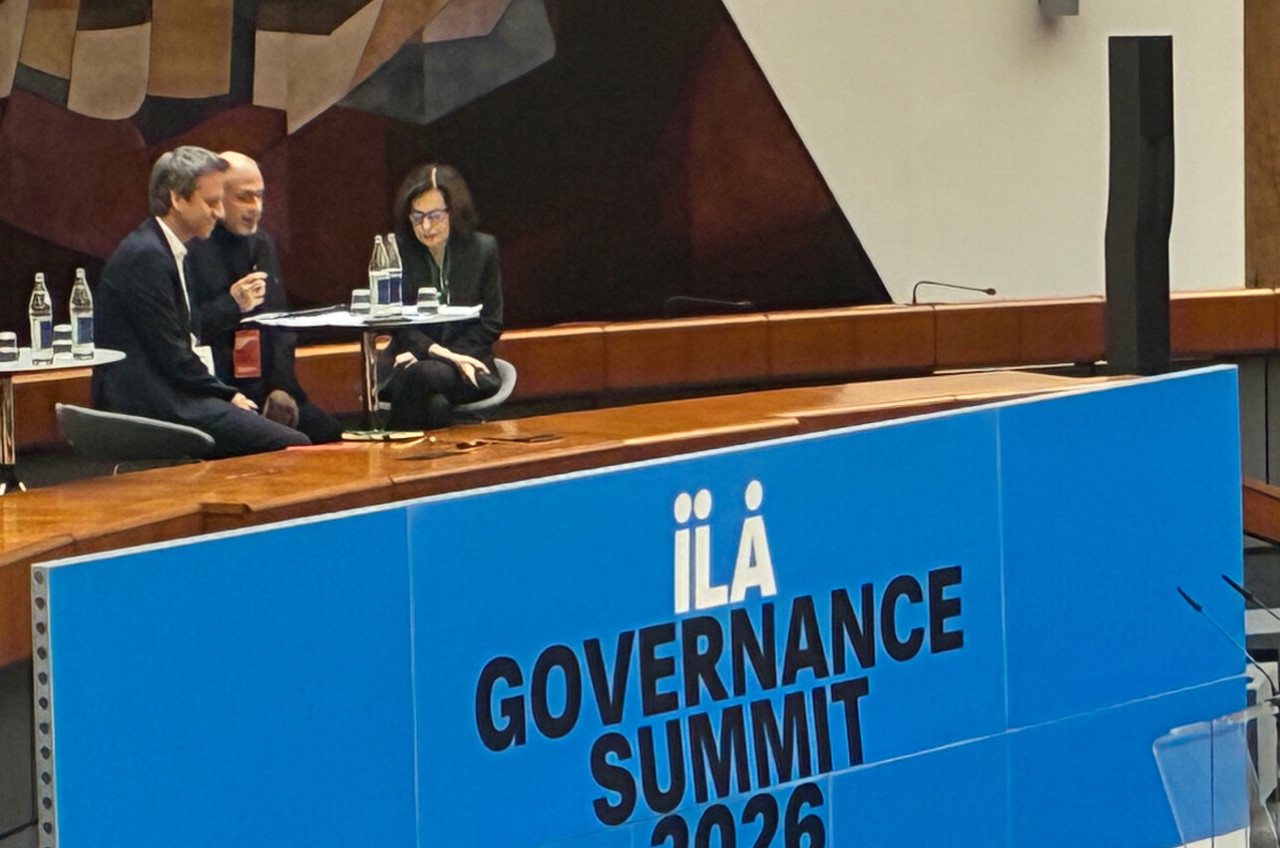
Jim Goldman, associate professor of finance at McGill University (pictured on the left during his panel discussion), points out that the cost of a premature decision is immediately apparent, whilst the cost of sticking with a strategy for too long remains largely hidden. (Photo: Paperjam)
The challenge for the board, then, is to bring together decisions that are scattered across finance, investment, acquisitions, the supply chain and public affairs. “The board is one of the few places where you have a comprehensive view of what the company is doing and where you can break down silos,” emphasises Jim Goldman.
Uncertainty generally leads to a wait-and-see approach: companies delay their investments, acquisitions or expansion plans and build up more cash reserves. But waiting and doing nothing produces the same outward result. The difference lies in the existence of an option that is genuinely preserved.
“When a company waits, it must be waiting for something: more precise information or clarification of a situation,” explains Jim Goldman. “If it incurs a cost to keep an investment opportunity or market entry open, it is preserving an option. If it incurs no cost, it may simply be inactive.”
Replace predictability with adaptability
In an unstable environment, strategy does not disappear. Its time horizon shortens and its execution becomes more modular. Maria Pierdicchi believes that a two- or three-year strategic direction remains necessary, but that no company can any longer settle into a plan without reviewing it. “Sticking to a single strategy is no longer an option,” she says. “You need to maintain a direction, but adapt it as new factors emerge.”
The ability to proceed in stages reduces the cost of a mistake. An investment that can be broken down into stages allows new information to be taken on board before committing all resources. Conversely, the rate at which a market position erodes determines how long a company can afford to wait. A regulated sector may allow more time; a market open to new entrants may immediately penalise inaction.
Competitors and start-ups provide more useful indicators here than internal data alone. New entrants using radically different processes, technologies or channels can reveal a structural shift before it becomes apparent in the established company’s results.
Resilience is not just about absorbing shocks by drawing on reserves.
Diversifying markets, suppliers, funding and products is a first step. However, it comes at a cost. For years, companies have prioritised supplier consolidation, stock reduction and global economies of scale. Resilience sometimes requires the opposite.
Jim Goldman distinguishes between two models. The first involves building up reserves: larger stock levels, multiple suppliers or redundant capacity. The second aims to preserve the ability to act through liquidity, managed debt, available credit lines and an organisation capable of adapting. “Resilience is not just about absorbing shocks by drawing on reserves,” he explains. “It also relies on flexibility and the options the company retains to be able to act.”
The climate must be read by the dependencies
This approach also calls for a review of sustainability governance. The relaxation of certain European reporting requirements does not eliminate global warming or its impact on businesses.
For Juliette Petit, a sustainability and business development adviser at the Chamber of Commerce, the first step in providing advice should not be to ask for an emissions inventory, but to identify the resource without which the business would grind to a halt. “I want to know our biggest dependency, find out whether it is exposed to climate risk, and understand what we are doing to reduce that risk,” she explains. “The emissions report remains important, but it should not be the company’s first point of departure.”
The same reasoning applies to the entire value chain. Current mechanisms were often designed for a world in which resources appeared to be abundant and international trade was relatively cooperative. Scarcity, trade restrictions and logistical disruptions now make it necessary to reassess these assumptions.
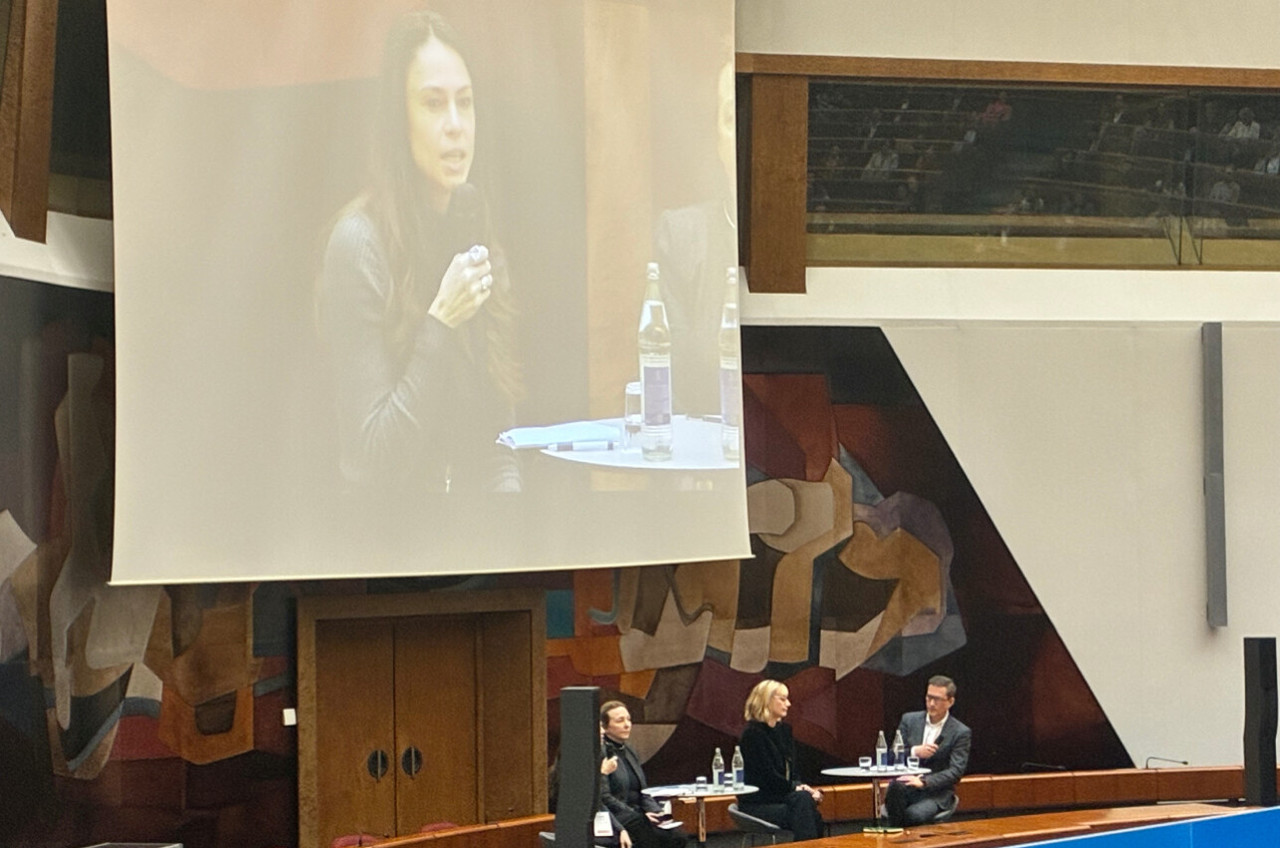
Juliette Petit, a councillor at the Chamber of Commerce, is calling on councils to check, as of now, whether HR teams are prepared for the new pay transparency rules and their impact on recruitment. (Photo: Paperjam)
Pay transparency introduces a more immediate requirement. From 7 June 2027, companies with at least 150 employees will be required to publish several indicators. Any pay gap of at least 5% between women and men performing work of equal value or of equal merit must be justified by objective criteria or rectified within six months. According to Juliette Petit, the board must immediately review the training of human resources teams, the quality of data and the implications for recruitment.
Regulating pay bands will, in particular, limit the scope for offering significantly higher pay at short notice to fill a difficult vacancy. This requirement may, however, go beyond mere compliance. A company that is able to explain its remuneration criteria, career paths and prospects for progression can turn this into an advantage in the competition for talent.
Governance as the capacity for change
All these changes increase the board’s responsibility without providing it with any greater certainty. “We are increasingly having to act with less information than we would like,” notes Maria Pierdicchi. “Volatility means we have to react quickly, but the information available is sometimes very limited.”
The board must therefore accept that even a reasonable decision may fail. Refusing to acknowledge this possibility leads to a focus on visible and immediately attributable risks, at the expense of the hidden costs of inaction. Governance is then judged not merely on the prevention of errors, but on the quality of the decision-making process itself.
This involves scenarios, crisis exercises, resilience indicators and a board composition that is consistent with the company’s actual strategy. Above all, it involves maintaining a space for dissent at a time when tools promise to measure, record and summarise everything. “Good governance is not what slows organisations down,” concludes Virginie Lagrange. “It is what gives them the confidence they need to move forward, even in the face of uncertainty.”