Luxembourg wants to make quantum technology a new pillar of its defence policy. On Wednesday 25 November, the Directorate of Defence announced its interest in joining Nato’s Transatlantic Quantum Community. This does not yet constitute membership, but rather a stated intention to participate in the work being carried out within the Alliance.
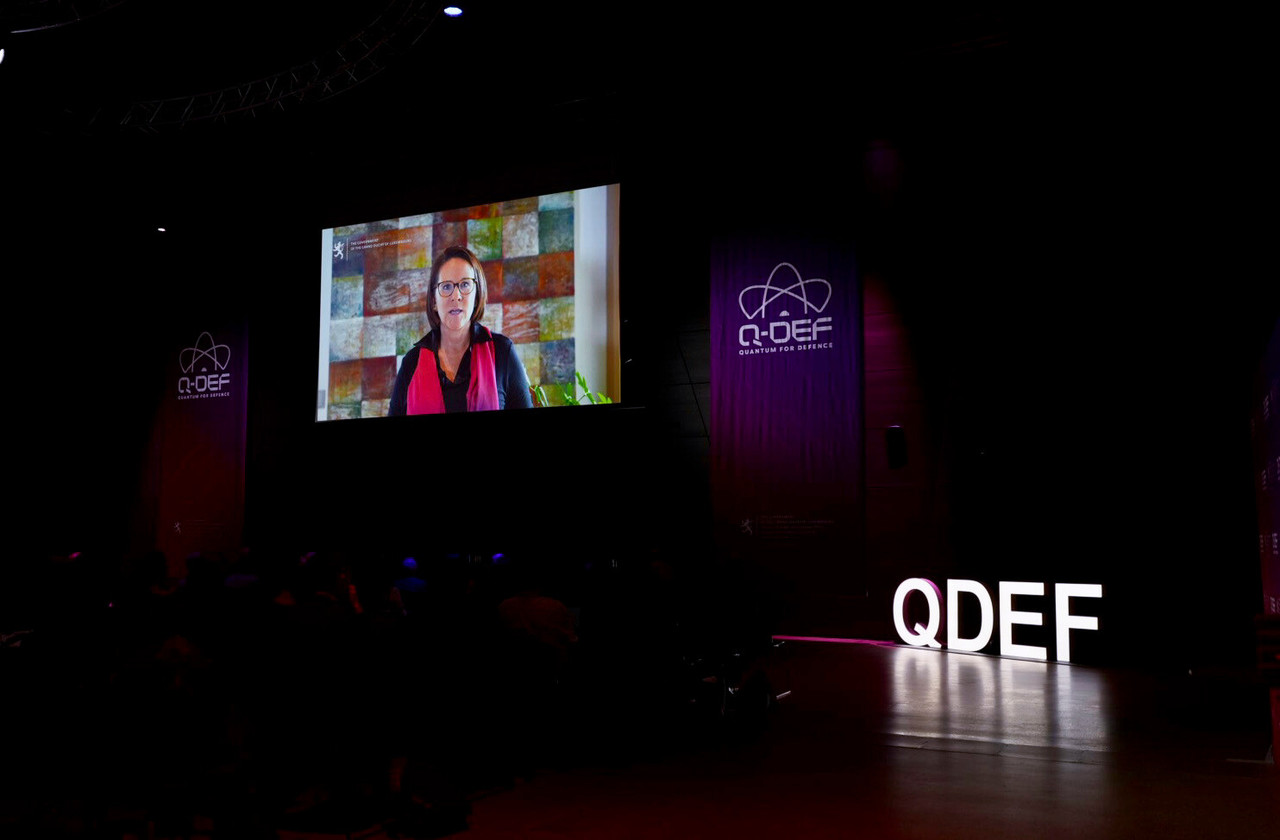
This announcement marked the conclusion of Q-DEF, an international conference held in Luxembourg and dedicated to the military applications of these technologies. More than 250 politicians, military experts, researchers, academics and industry representatives attended the event.
Attention is focused on three areas. Quantum detection could enable navigation that is more resistant to interference, more precise synchronisation, and the detection of targets or structures that are invisible to conventional sensors. Quantum communications, meanwhile, aim to better protect sensitive data and critical infrastructure, whilst quantum computers promise new capabilities for optimisation, simulation and the resolution of complex problems.
Quantum technology is already one of the priorities of Luxembourg’s defence industry strategy. The conference therefore served to highlight the industrial expertise available in the country, but also to assess the actual maturity of the technologies and their applications. By joining the Nato community, Luxembourg is seeking to strengthen exchanges between governments, research organisations, universities and businesses regarding future defence capabilities.