Brasserie Eech joins the group’s 16 restaurants, including Hitch, Parc Le’h and the Rockhal Café, as well as the Taste food hall in Gridx, in Wickrange. But Concept & Partners is not limited to restaurants open to the public: through Arësto, it also manages around 90 catering sites, mainly school canteens for Restopolis.
This diversity does not shield the group from a sector under pressure, with declining purchasing power, remote working and recruitment difficulties. 
How did you start Concept & Partners?
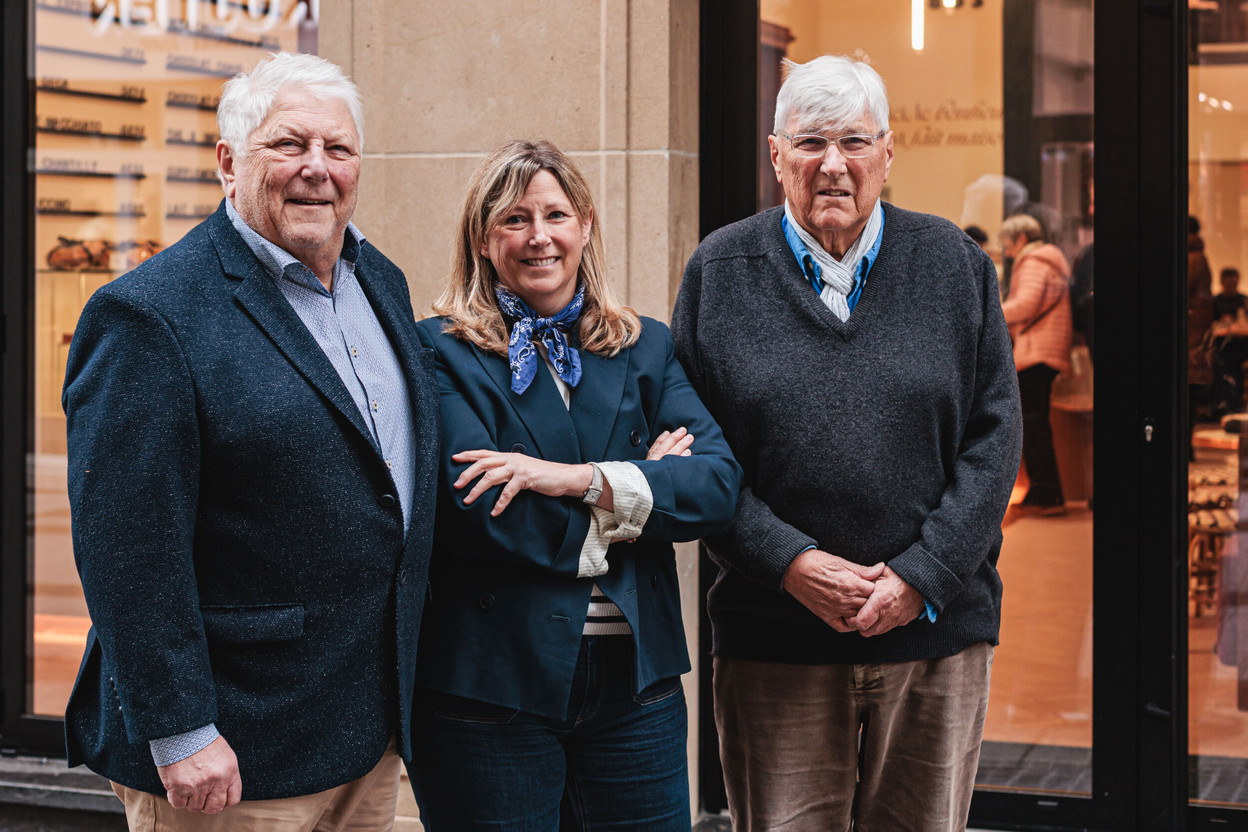
Christophe Diederich. – “It wasn’t planned. My business partner and I each had our own jobs. The owner of a café we used to visit often wanted to sell his business, so we gave it a go – really just as a hobby. With the second, or even the third project, we were very successful, which led us to ask ourselves: do we really go down this route, or do we sell up and go back to our original jobs full-time?
How do you give each of your restaurants its own identity, whilst ensuring they remain part of the group?
“This is a key issue for us. Our first real restaurant venture was the Fabrik. We wondered whether we should expand the concept – without going as far as a franchise – by opening five, six or even seven Fabriks across the country. But we soon realised that wasn’t what we wanted, because we were looking to diversify. Doing the same thing over and over again risked becoming tedious. Each restaurant is therefore run by a manager. They have rules to follow so that we can manage the group, but they also have certain freedoms, which should allow them to create a unique character and ensure that each restaurant has its own distinct identity.
Could you tell me more about your catering business?
“For us, the public sector is the Arësto business line. We work for the Department for Education through Restopolis: we operate in school canteens. On the other hand, we run staff canteens. This amounts to around 90 sites. The majority are school sites, and we have five or six clients for whom we manage the staff canteen.
Covid has changed everything, and since then we have never emerged from one crisis after another.

The Jane food hall and restaurant at Gridx, Brasserie Elmen, Rockhal Café and now Brasserie Eech: you’ve opened a whole host of new venues in recent years. Are you more focused on opening new establishments or on consolidating your existing ones?
“Our development strategy relies above all on thorough preliminary analysis to determine whether a project really makes sense or not, because we have to take into account the economic climate, which is particularly complex at the moment. At present, the main focus is really on consolidating and stabilising our existing operations. When we do grow, it’s because of opportunities that seem so obvious to us that we simply cannot resist them.
Brasserie Eech is a venue that you rent from the municipality of Leudelange, just like Brasserie Elmen in Kehlen, at reasonable rents. Isn’t this the sort of opportunity you simply couldn’t pass up?
“Yes, we won’t hide the fact that this is a factor in our thinking. But the fact that it is a local authority project is not enough: other criteria must also be met. (…) For restaurants open to the public – such as Brasserie Elmen, Brasserie Eech or, to name the best-known ones, Hitch, Parc Le’h and Naga – it’s clear that municipal projects are more favourable. (…) The local council itself also encourages residents to promote their premises.
And one point that particularly favours council-run projects is when problems arise. If you’re renting from a private landlord, I can guarantee you it’s a real hassle to reach an agreement with the owner. In one establishment, we had electrical problems: the wiring no longer met safety standards. It was up to the landlord to bring the building up to standard, but he simply told us: ‘If you want to open your doors tomorrow, do what’s necessary; otherwise, you’ll have to close your restaurant.’ With local councils, these sorts of discussions simply don’t arise.
The food hall seems to be Gridx’s big success. Could you tell me more about it?
“Gridx is a very ambitious project, and it still is today. Since we’ve been here, we’ve been attracting a very diverse clientele to the food hall: business people, families, young people – a bit of everything. That’s the strength of a food hall. In a restaurant – not to mention the setting – when I look at the menu, either it takes my fancy or it doesn’t. With the range we offer, it’s impossible for anyone not to find something they like.
You shouldn’t listen to your heart; you need to look at the figures.

In terms of figures, will the food hall and Jane be in the black in 2026?
“It depends on what you mean by ‘figures’. In terms of turnover, things are looking good. However, we’re located within a large shopping centre, which needs to attract more footfall than it currently does. To get the right number of people on site, I think we might be there in two or three years’ time. If you want a food hall to operate seven days a week with an attractive range of options, there are quite high staff costs, as well as food costs to maintain the range we offer. We need a level of footfall that isn’t there at the moment.
Le Studio has remained somewhat in the shadow of the food hall and Jane. On 27 and 28 November, you’re organising a four-handed dinner there. Are you relying on this sort of event to raise its profile?
“We need to think about what we can do to attract even more people to the food hall, both at Jane’s and at the Studio. For this four-handed cooking session, Chef Charly Biwer is coming to assist our chef. If customers are keen, these are the sort of events we could organise more often. For me, the Studio is a bit of a highlight of the food hall: you’re seated at the counter, with an open kitchen, facing the chef. We’ve refurbished it to make it more welcoming, and also to host private events: if I want to celebrate my birthday with 20 mates, I can book out the Studio. (…) From March onwards, there’ll also be an 800-square-metre area above the food hall dedicated to children, with workshops and games, as well as laser tag and virtual reality games for teenagers.
With the proliferation of new openings and large restaurant chains, is the market starting to become saturated?
“Not necessarily because of existing chains or restaurants. Since the pandemic, something has changed the game: working from home – not just for lunch, but also for after-work drinks and dinners. (…) I think what’s happening is more of a shake-out, because it’s become almost impossible for traditional, independent restaurateurs to survive. There are people who entered this trade out of passion and who now feel it’s better to call it a day: it’s very difficult to find staff, and profit margins are almost non-existent…
There’s been a lot of talk recently about the ten-hour working day. Could this be introduced in your sector?
“In the catering industry, the law already allows us to do this, and we’ve tried it in the past. But we soon realised – partly through feedback from staff – that working ten-hour shifts takes its toll. It’s not an office job: standing on your feet or rushing about for ten hours is a long time. And we thought that working four days and having three days off would be great, but the temptation not to have to come into work is just as strong.
With so many restaurants and concepts, how does your business model work?
“The basic principle is that each entity must be profitable in its own right. That is why, internally, we talk about different business lines: each one requires a different approach. I studied economics, I worked for a bank, and that provides a good foundation today. In our line of work, the most important thing is still a friendly atmosphere, ensuring quality, and making sure customers feel at ease. But these days, the figures have become essential, and we can no longer afford to do things on a whim or just for the sake of an idea. We have to do the maths first before doing anything.
In 2027, we may see one or more establishments closing their doors.

You were talking about the profitability of each establishment. Is that still the case today?
“No, that’s not the case.
Nine of your fourteen investments made a loss in 2025. How do you explain these results?
“They make sense given the way the market and the economy have evolved. For us in the catering industry, it all began with Covid. Covid was a game-changer, and since then we’ve never really emerged from the crises. After Covid came the war in Ukraine, rising energy prices and rising interest rates. Today, we’re faced with a painful reality: people’s purchasing power is steadily declining.
What are your plans in the medium and long term to get back on your feet?
“Up until now, the philosophy was that, even if some restaurants weren’t doing so well, the ones that were doing well would make up for the loss. But these days, you mustn’t follow your heart; you have to look at the figures. Before, we could afford to say: ‘This is a project close to our hearts; even if the financial results aren’t what we’d hoped for, we’ll keep it going.’ Today, it’s the figures that decide whether a project goes ahead or not. In 2027, we may well see one or more venues closing their doors. It’s a possibility.
Do you have any loss-making restaurants that you do not intend to close?
“Brasserie Elmen will end the year in the red. But this is a project we believe in: we’re convinced that we currently have a problem with brand awareness and we know what we need to work on. We’re not going to close it down. The Rockhal Café will also end the year in the red. (…) We underestimated one thing: it had been closed for three years when we took it over. We thought: we’ll take it over, we’ll reopen it, as if it had closed the day before. But people had moved on to other places, and when it reopened, nobody had the Rockhal Café in mind. If we want to give it a chance, there’s only one viable option: to align it with the Rockhal, which attracts large crowds.
Giving things a go is part of your job too, isn’t it?
“That is precisely what we must avoid in future. These days, figures have become essential and we can no longer afford to do things on a whim or simply for the sake of an idea: we must calculate first before carrying out anything. (…) In the past, we could see that something wasn’t working, make adjustments, make further adjustments, and sooner or later we’d find the magic formula. Today, we no longer have the luxury of making mistakes.”