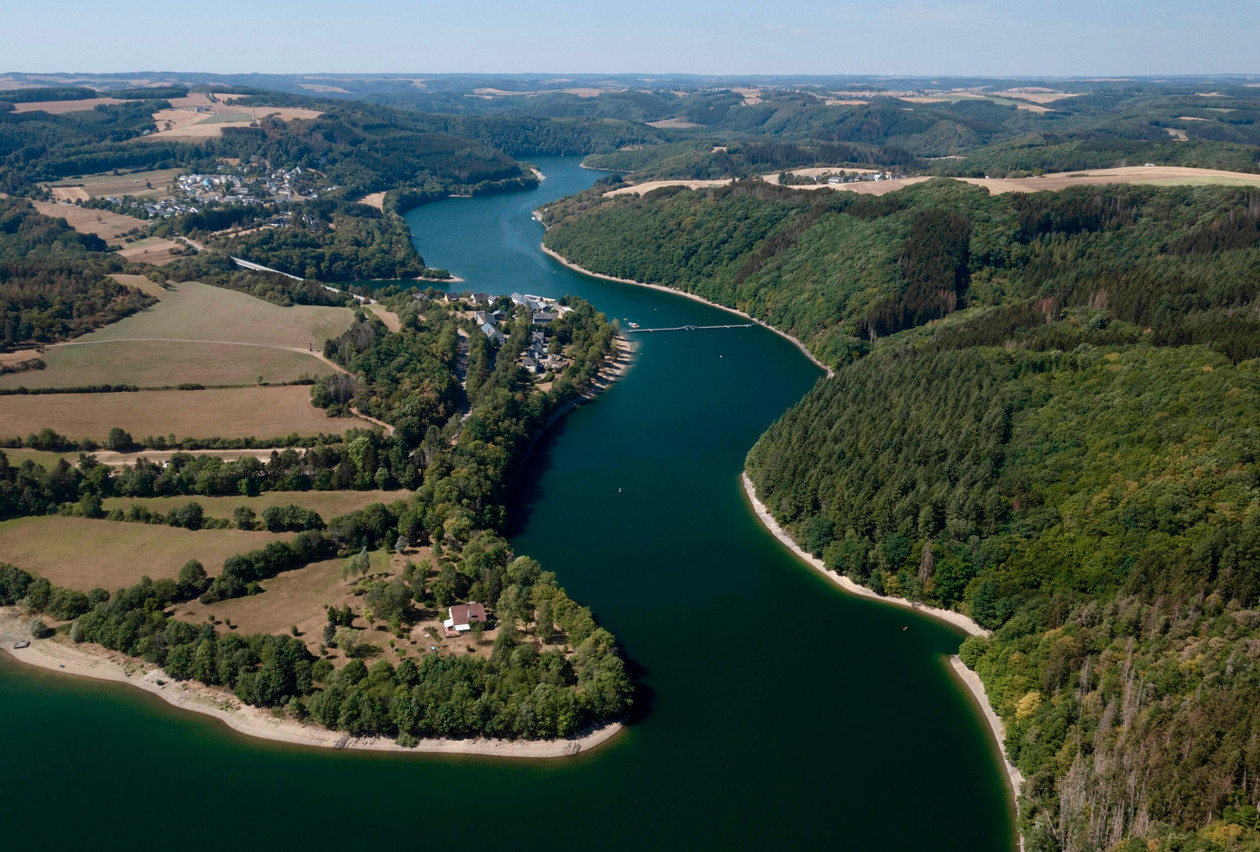
Home Affairs Minister Léon Gloden has proposed that two municipalities bordering the Upper Sûre reservoir concentrate their investment plans on four pilot projects. In a joint statement on Thursday, Boulaide and Lac de la Haute-Sûre said the minister had indicated that they could receive a merger grant of at least €10.5m. The amount and payment arrangements remain to be formalised.
The municipalities are also seeking government contributions towards the construction and running costs of regional facilities. According to figures from the water management administration cited in the merger documents, the reservoir accounts for around half of the resources used to supply Luxembourg with drinking water.
“National support should take into account not only population size but also area, distribution of villages, infrastructure, seasonal visitor numbers and resource protection requirements,” the municipalities wrote in an annex to their statement. They intend to clarify the main financial conditions with the ministries concerned by March 2027.
Research and infrastructure
Meisch welcomed the proposed development of a regional hub specialising in water during a meeting with municipal representatives on Thursday morning, according to the statement. He indicated that technical assistance could be provided to develop the concept, which includes a centre combining scientific research with educational activities for visitors.
Other proposals include expanding sports facilities in Harlange and building a shared municipal works depot in Boulaide instead of extending two separate facilities. The municipalities are also exploring additional government funding for adapting public buildings to accommodate residents during emergencies.
The two municipal councils declared their intention to merge on Thursday and set a referendum for 27 June 2027. The proposal must receive more than 50% of votes in each municipality before returning to the councils for approval. Subject to the adoption of a merger law, the new municipality would be formed after the 2029 municipal elections and would be Luxembourg’s third largest by area, with around 4,000 residents.