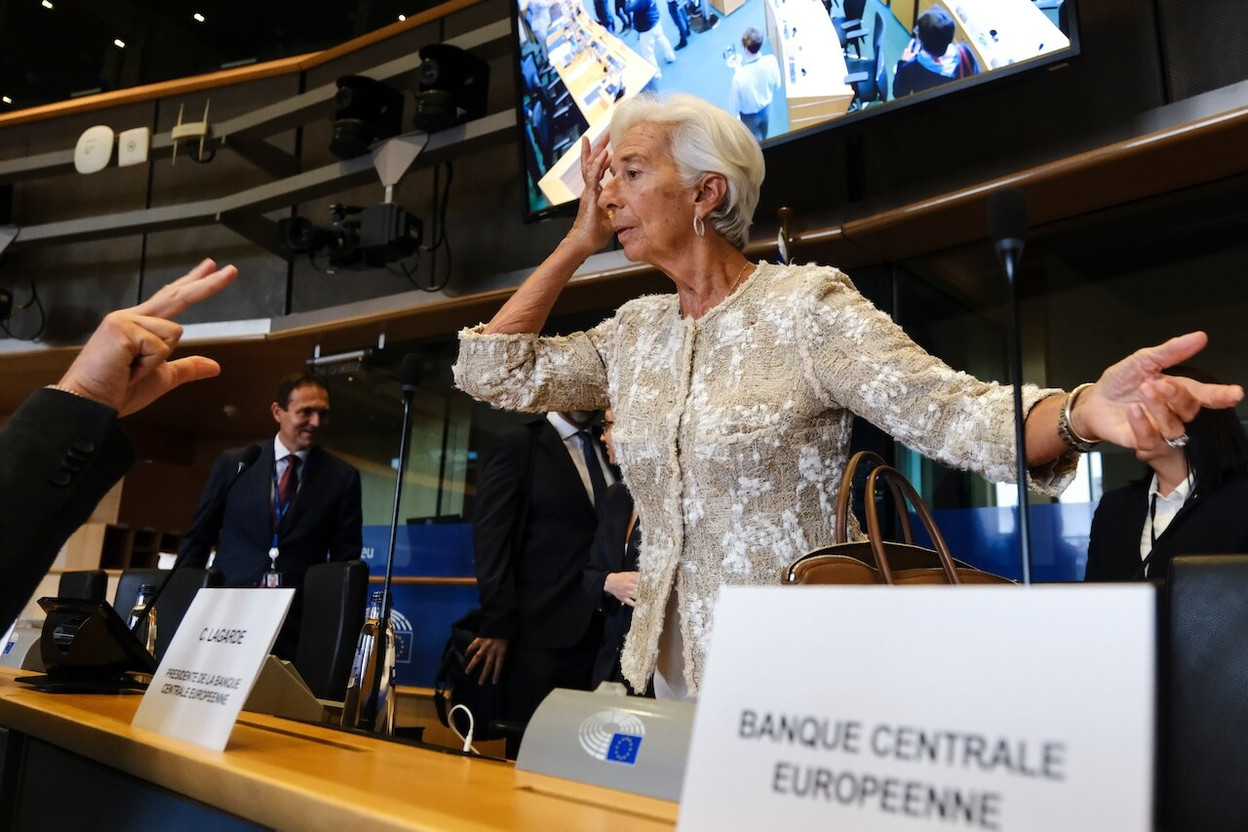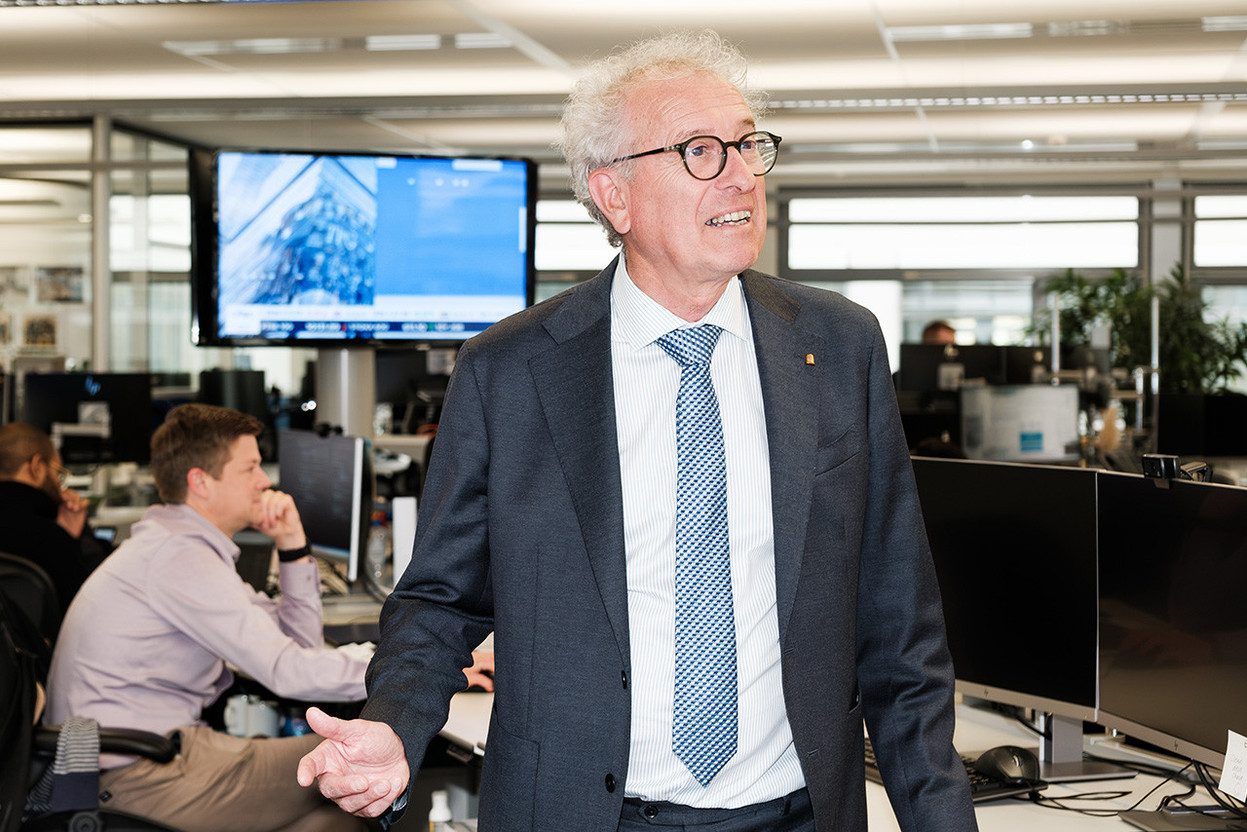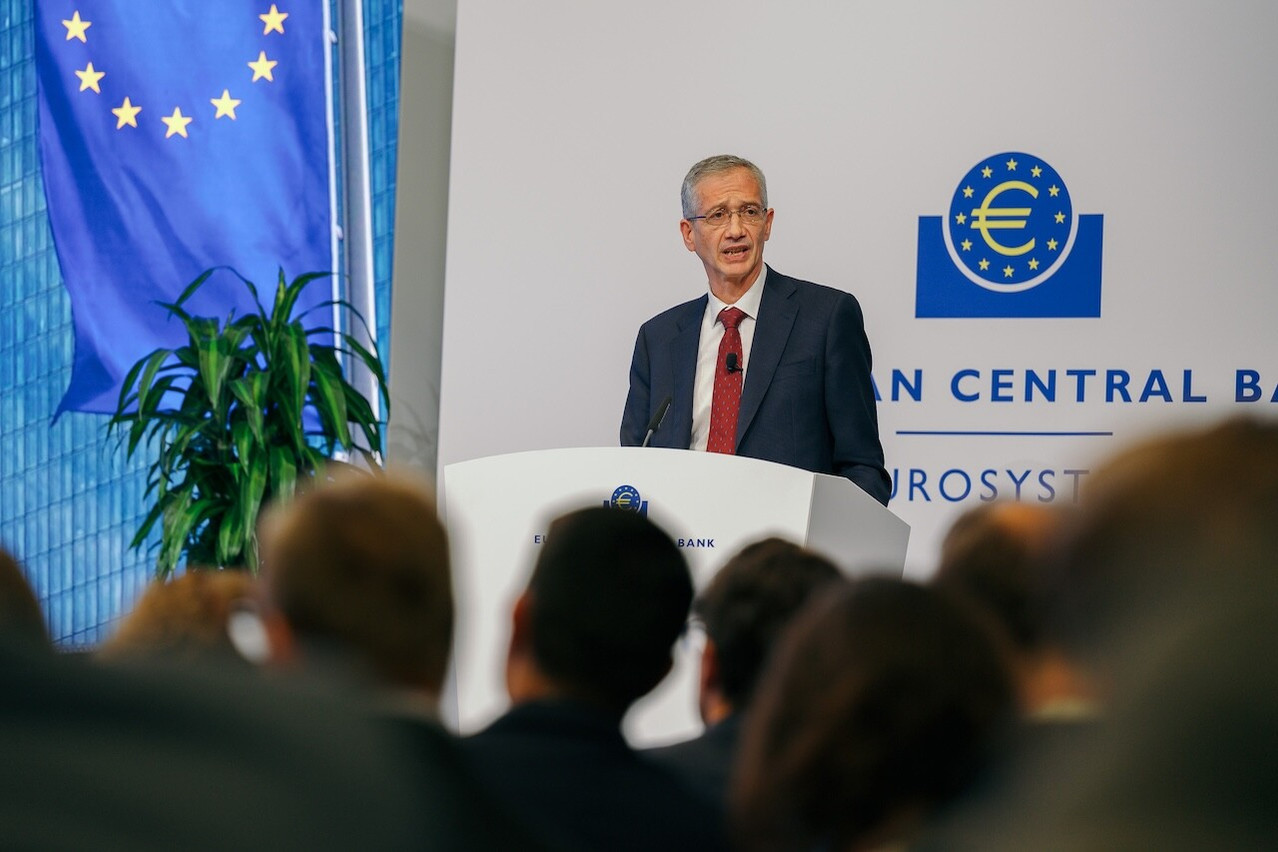
Christine Lagarde’s successor is taking shape. On the sidelines of the European Council, the former governor of the Bank of Spain, Pablo Hernández de Cos, appears to be winning the support of eurozone countries, according to diplomatic sources. If his appointment is confirmed, the Spaniard would take the helm of the European Central Bank (ECB) at a time when the institution is facing 4% inflation.
The final political hurdle to Pablo Hernández de Cos’s candidacy was cleared on Thursday 26 November in Brussels. The Netherlands, which had put forward its former central bank governor, Klaas Knot, has thrown its weight behind the Spanish candidate, who already has the backing of Paris and Berlin, according to diplomatic sources quoted by AFP. Christine Lagarde will step down from her post on 7 February 2027, nearly nine months before the end of his term of office.
The appointment has yet to be formalised. The European Council, meeting in its euro area configuration, will have to decide on the recommendations of the Council of the EU, following consultation with the European Parliament and the Governing Council of the ECB. Pablo Hernández de Cos, aged 55, would become the first Spaniard to chair the institution. Governor of the Bank of Spain from 2018 to 2024, he served on the ECB’s Governing Council for six years. He has been head of the Bank for International Settlements (BIS) in Basel since July 2025.
A rise in interest rates is expected as early as December
The next monetary policy meeting will be chaired by Christine Lagarde. The report of the October meeting, published on Thursday 26 November by the ECB, shows that many members of the Governing Council were already prepared to raise interest rates. All ultimately agreed to keep the deposit rate at 2.5%, having raised it by a quarter of a percentage point in September. Since then, Eurostat has confirmed that inflation in the eurozone reached 4% in October, up from 3.8% in September, driven in particular by rising energy prices. A further quarter-point rise, to 2.75%, is widely expected on 17 December.
Pablo Hernández de Cos could chair his first monetary policy meeting on 17 and 18 March 2027, following a final meeting chaired by Christine Lagarde on 4 February. In the meantime, the ECB will be looking to assess whether rising energy costs are prompting businesses to raise their prices and employees to demand pay rises. In an interview published by the BIS on 7 November, Pablo Hernández de Cos said that these effects had not yet materialised. Asked whether it would be appropriate to raise interest rates as a precautionary measure, he explained that such a decision would depend on the risks to price stability revealed by the data.
Three out of six seats to be filled
Christine Lagarde’s succession is part of as half of the ECB’s executive board is replaced. Isabel Schnabel, from Germany, will leave the ECB in early January to join the IMF, whilst the term of office of Philip Lane, the ECB’s chief economist from Ireland, ends at the end of May.
Laurence Boone of France and Markus Brunnermeier of Germany are the only two declared candidates for the seats they will be vacating. The agreement reached between Paris and Berlin provides for Laurence Boone to take over the market operations portfolio. She would thus oversee the implementation of monetary policy decisions in the markets, in particular the refinancing of banks and the purchase of securities when the ECB so decides. Markus Brunnermeier of Germany is expected to succeed chief economist Philip Lane, whose term of office ends at the end of May.