A law dating from 1915 must now provide a framework for electronic signatures, remote meetings and companies wishing to list on the stock exchange without abandoning their strategy. To 
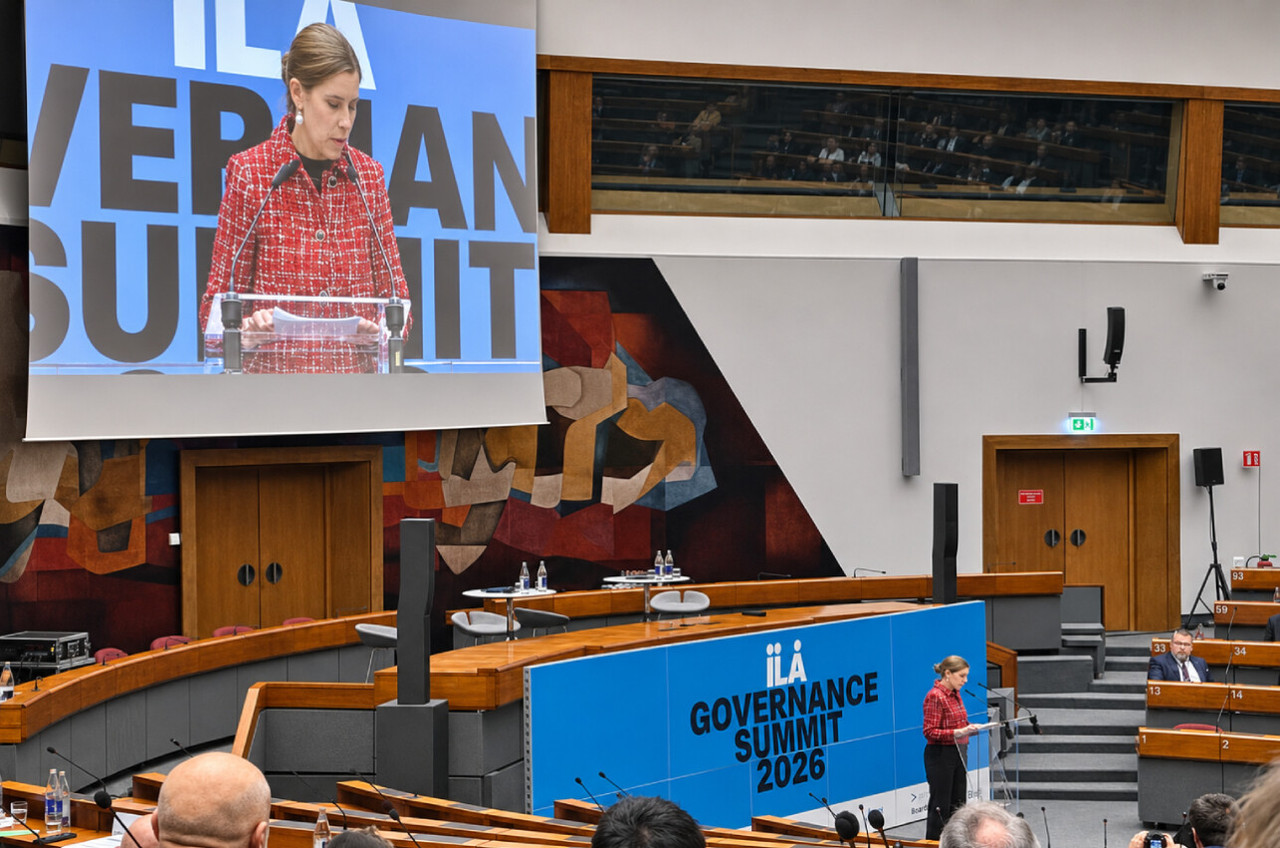
“In a world where capital flows freely and rapidly, trust has become a competitive advantage,” she said. In her view, Luxembourg’s competitiveness cannot be separated from the quality of its governance.
European certificates by 2027
The first area of focus concerns the digitalisation of company law. European Directive 2025/25 must be transposed by 31 July 2027. In particular, it introduces a European Company Certificate and a European Digital Power of Attorney. These instruments are intended to facilitate the formation of companies, the opening or closure of branches, and cross-border mergers, demergers and conversions. They will be able to circulate between member states without legalisation or any equivalent formality.
Businesses need rules that evolve, but they also need rules they can rely on.

The ministry of Justice intends to use this transposition as an opportunity to carry out a broader review of the day-to-day operations of Luxembourg companies. Elisabeth Margue cited electronic registers, digital communications with shareholders, remote general meetings and electronic signatures.
“Businesses need rules that evolve, but they also need rules they can rely on,” the minister summarised. The government therefore intends to “modernise without disrupting what works”.
Retaining control following an initial public offering
The second priority concerns companies’ access to capital markets. Bill 8862 is intended to enable companies to issue several classes of shares with different voting rights. The bill was approved by the Governing Council on 11 November and tabled in the Parliament on 19 November. It transposes the European Directive on structures with multiple voting rights and, in particular, amends the 1915 Act on commercial companies.
The scheme is designed to enable founders to list their company on the stock exchange whilst retaining control over its long-term strategy. Luxembourg has chosen to extend this scheme to companies listed on a regulated market, going beyond the minimum scope required by the directive. The minister gives assurances that minority shareholders will remain protected. The enhanced voting rights must comply with the limits set by European law.
This decision is driven by a desire to enhance the country’s appeal. Luxembourg wants to be able to attract growing companies whose founders are reluctant to open up their share capital for fear of losing control over strategic decisions.
A simplified regime for more than 27,000 micro-companies
The roadmap also includes the most significant overhaul of Luxembourg’s accounting law in several decades. Bill 8286 brings together in a single text rules that are currently spread across the Commercial Code, the 1915 Act and the 2002 Act on the Commercial Register and Annual Accounts.
Tabled in July 2023, the bill is still before a parliamentary committee. It creates a specific category for micro-enterprises. More than 27,000 companies – representing around 37% of those filing accounts – could fall into this category. These businesses would be able to prepare abridged balance sheets and profit and loss accounts. They would be exempt from providing notes to the accounts, a management report and, in certain cases, a statutory audit by a chartered accountant. Their profit and loss account would still have to be filed, but might not be made available to the public. The authorities would retain access to the necessary accounting information.
The relief would, therefore, not be comprehensive. Micro-companies would still be subject to double-entry accrual accounting and a filing requirement.
Holding companies, credit institutions, insurance companies, restricted alternative investment funds and several other financial vehicles would be excluded from this regime. The draft also provides for an increase in the thresholds applicable to small businesses. Some companies currently classified as medium-sized businesses would thus move into a category subject to fewer obligations.
The CSRD has been scaled back, but not abandoned
Elisabeth Margue also announced that amendments were being prepared to Luxembourg’s draft legislation transposing the Corporate Sustainability Reporting Directive (CSRD). Bill 8370, tabled in March 2024, is still before the committee. It now needs to be amended the European Omnibus 1 simplification package.
The new European legislation primarily applies the CSRD to companies with more than 1,000 employees and an annual net turnover of more than €450m. It also seeks to prevent large companies from indirectly passing on their disclosure obligations to their smaller suppliers. Luxembourg will transpose these changes without adding any additional national requirements, the minister has promised. This approach is in line with the principle upheld by the government: “The whole directive and nothing but the directive.” The amendments will be tabled “shortly” in the Parliament, according to Elisabeth Margue. No more specific timetable has been provided.
The minister nevertheless urged companies that will fall outside the scope of the directive not to abandon their work on sustainability. “I encourage you to use the time you have gained to improve your data, your processes and your monitoring, rather than setting the issue aside,” she said.
A board […] that has the necessary information and expertise is the first line of defence when things go wrong.
Cybersecurity is becoming the responsibility of boards
This drive for simplification does not mean that directors’ responsibilities will be reduced. The minister gave the example of the European Nis2 Directive on cybersecurity. Governing bodies must approve cyber risk management measures. They must oversee their implementation and undergo regular training. They may be held liable. Cyber security thus joins finance and strategy among the issues that must be monitored at the highest level of the organisation.
“A board that asks the right questions and has the necessary information and expertise is the first line of defence when things go wrong,” said Elisabeth Margue.
The minister also emphasised the reliability of public registers. Investors, business partners and the authorities must be able to rely on the information contained therein. Stricter controls and penalties should ensure that this data is kept up to date.
The justice roadmap therefore pursues two objectives that may come into conflict. It aims to remove obligations deemed disproportionate. At the same time, it seeks to improve the quality of information provided to investors, creditors and the authorities. For Elisabeth Margue, this balance directly determines Luxembourg’s economic model. The law can set out the controls and responsibilities. Trust then depends on how boards of directors utilise this framework.