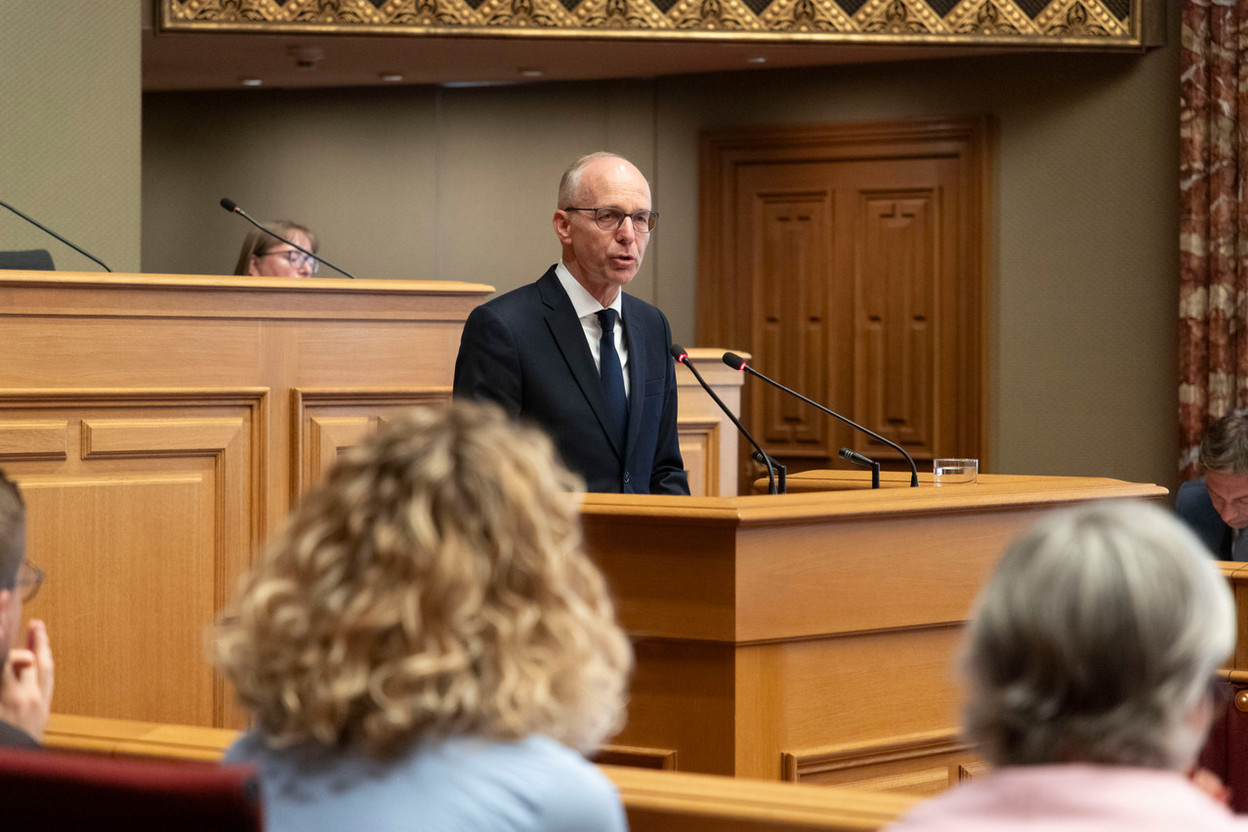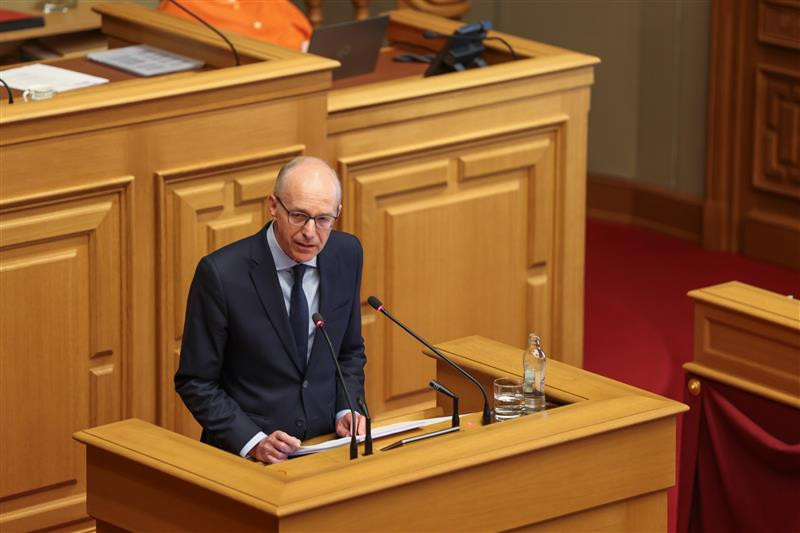
This is a key objective of the coalition agreement: to promote innovation in order to keep Luxembourg at the forefront of new technologies and digital technology. An objective reiterated by prime minister 


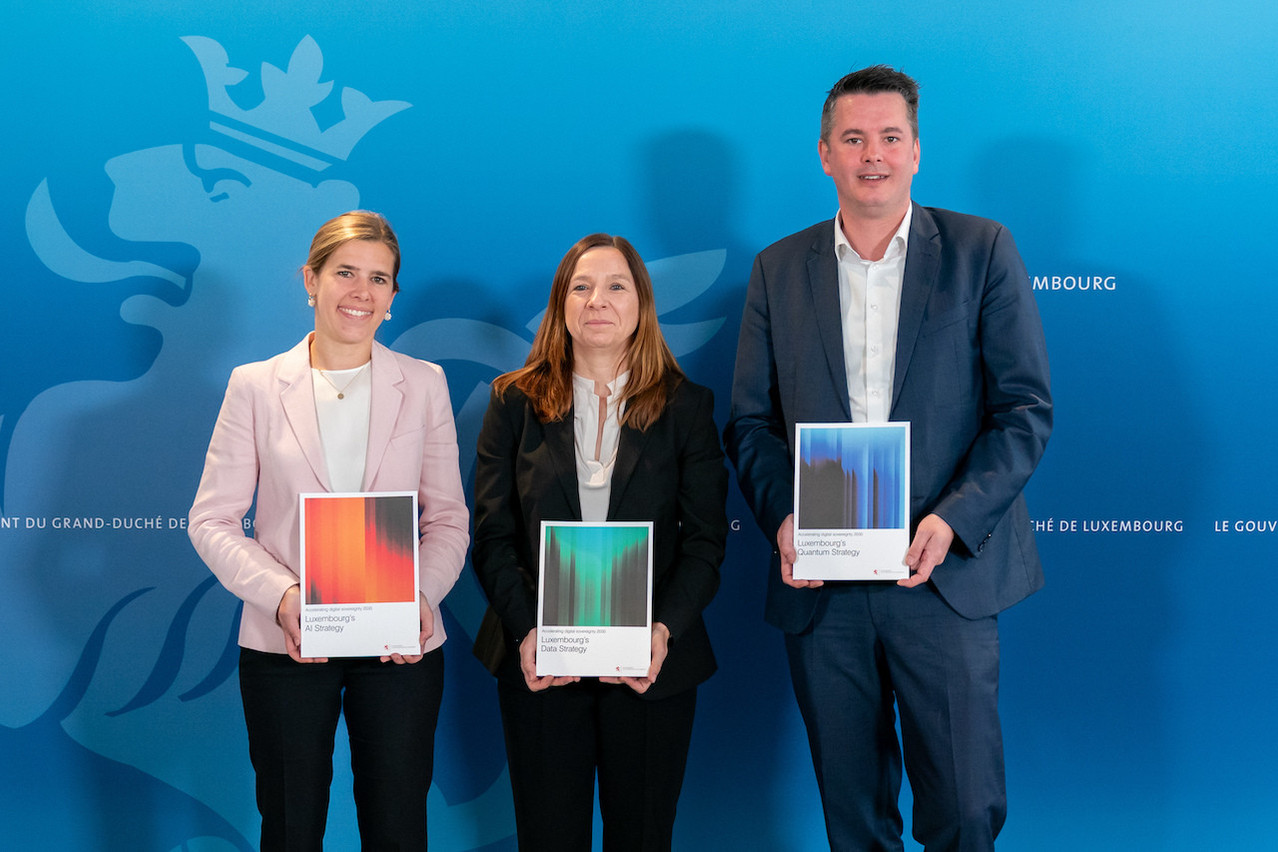
Three complementary technologies, then, just as the three specific strategies concerning them are intended to be complementary. "We need to avoid a silo approach to make it easier to highlight synergies" detailed Obertin, who emphasised in these three areas "the excellent cooperation between ministries, the private sector, research and civil society".
To facilitate collaboration between all the ministerial departments involved and ensure liaison with civil society and the economy, a Digital Transformation Committee has been set up under the direction of Stéphanie Obertin, Minister for Higher Education and Research.
Three strategies, six levers
On each of these three strategies, six levers have been highlighted "in order to forge a coherent digital ecosystem". The first of these levers concerns governance. "It is necessary to establish and promote means of governance and regulations to stimulate the use and re-use of data and accelerate the adoption of AI and quantum technologies, while guaranteeing the security and protection of data, the sovereignty of infrastructures and the reliability of developments". The key project is project 8395 B concerning the use of data in a trusted environment and the implementation of the "once only" principle, a project tabled by Stéphanie Obertin last June and currently in committee, awaiting the opinion of the council of state. Another key project is the transposition of the AI Act. Bill 8476 tabled in December 2024 by Elisabeth Margue, minister delegate to the prime minister, in charge of media and connectivity, and currently in committee in the parliament.
The other five levers are attracting and developing talent, deploying cutting-edge connectivity and computing infrastructure, offering a range of services for society and the economy, stimulating research and contributing to international initiatives in the fields of artificial intelligence, data and quantum computing.
"The aim would be to generate both societal progress and economic resilience," stresses Margue, for whom "humans will always have ultimate control over artificial intelligence". She posits this principle of control as a specific feature of the Luxembourg framework.
A quantum factory in the works
When it comes to data - "a fundamental resource" for Obertin, Luxembourg wants to create "an attractive, high-performance, sovereign and secure ecosystem". For the minister, this means collecting quality data - "Luxembourg is a small country that generates little data, so it is essential that it is of high quality" - which will be easier to use and re-use. Lex Delles insisted on the need "that as a centre of digital innovation, we always have sovereign technologies."
A number of flagship projects have been launched by the three ministries. These include the 4 LM project, which aims to develop a specialised legal language model to simplify access to legal information. Also on the agenda are a sovereign Chatbot to support educational programmes, an artificial intelligence experience centre developed within the Luxembourg House of Financial Technology (Lhoft), the democratisation of cybersecurity, and the creation of a digital twin providing advanced climate services and the real-time exploitation of energy data. "A key project to accelerate the country's energy transition", said Delles, minister for the economy.
€100m for AI
Other projects are set to follow, particularly in the field of quantum with post-quantum cryptography. "Quantum technology will make it easy to decrypt keys. It is therefore important to develop Quantum Key Distribution so that communications can no longer be hacked", insisted the minister for the economy, who says he is working on the creation of a quantum factory built on the AI factory model.
New dedicated budgetary resources will be mobilised between 2025 and 2030 in order to implement the investments and projects identified in the context of these three strategies. Frieden had mentioned a budget of €3bn, including €100m for the artificial intelligence strategy according to Margue.
This article was originally published in French.