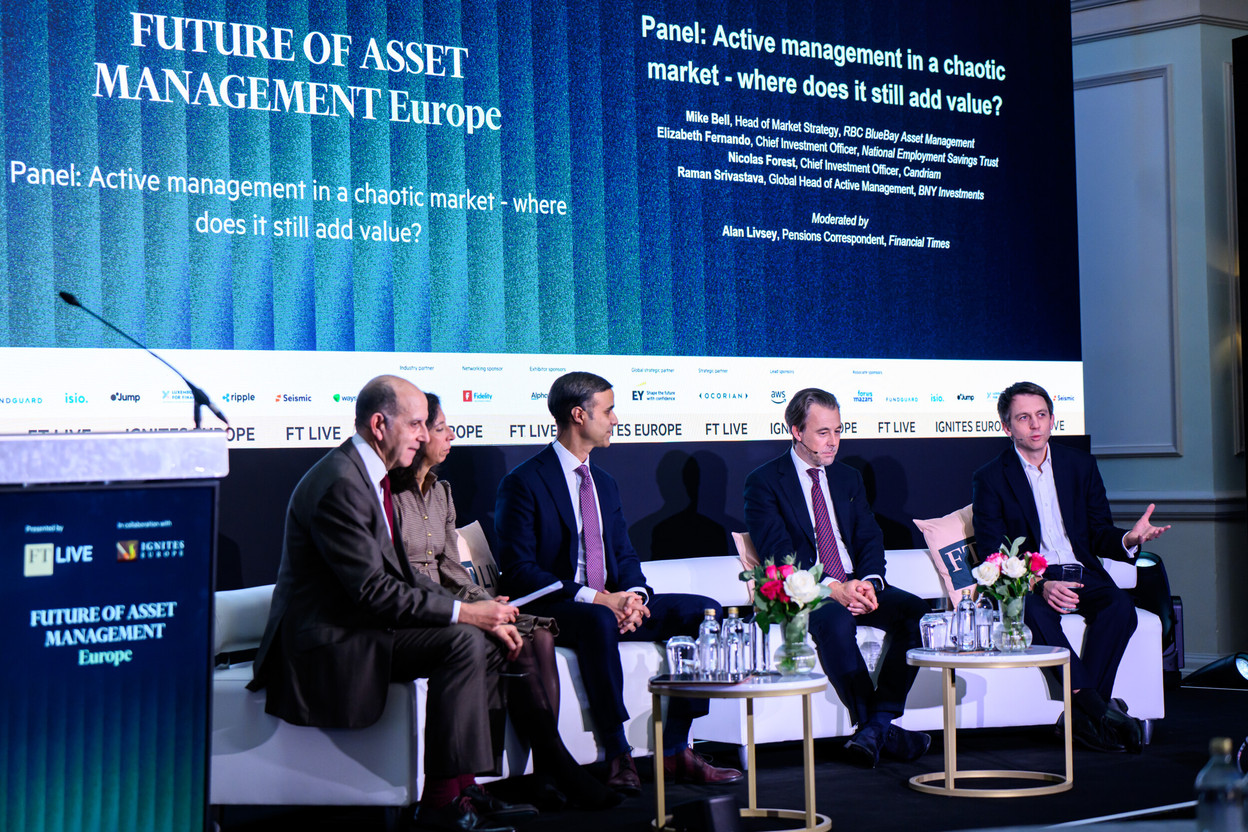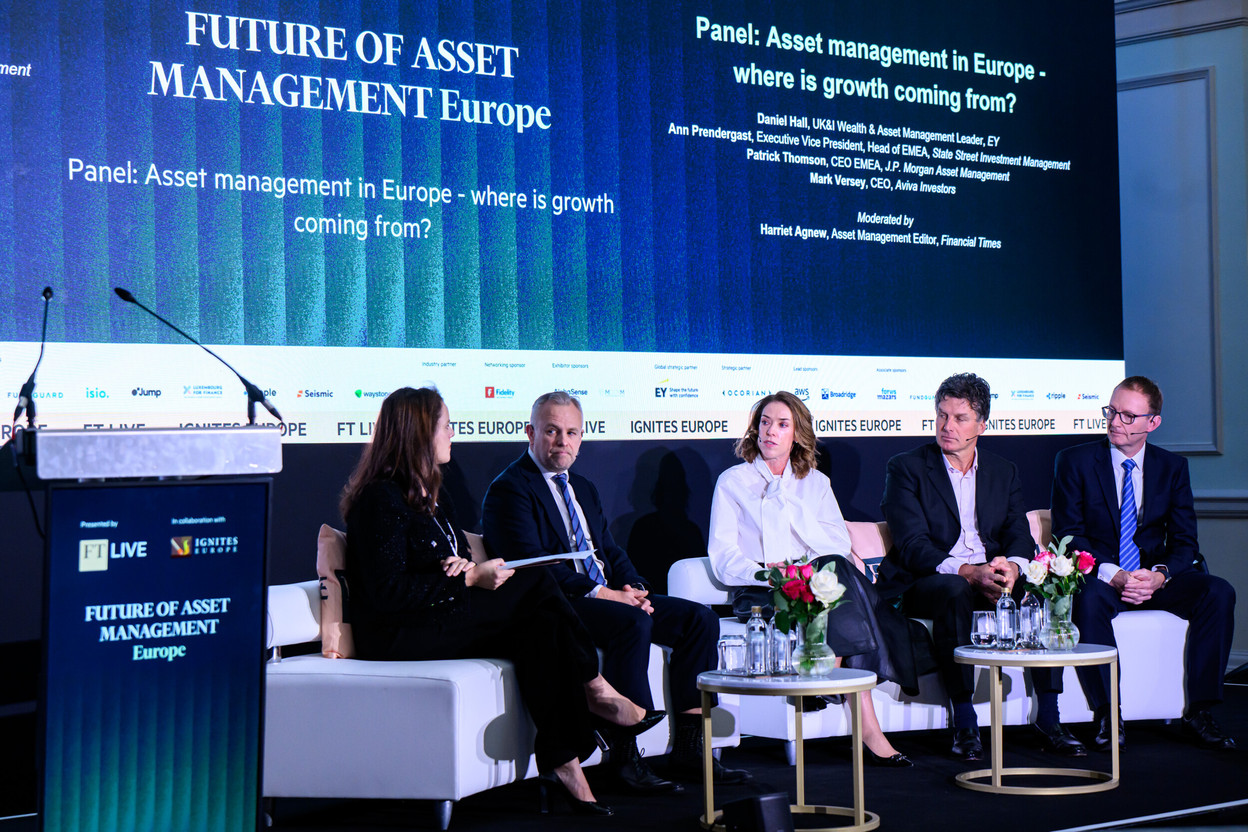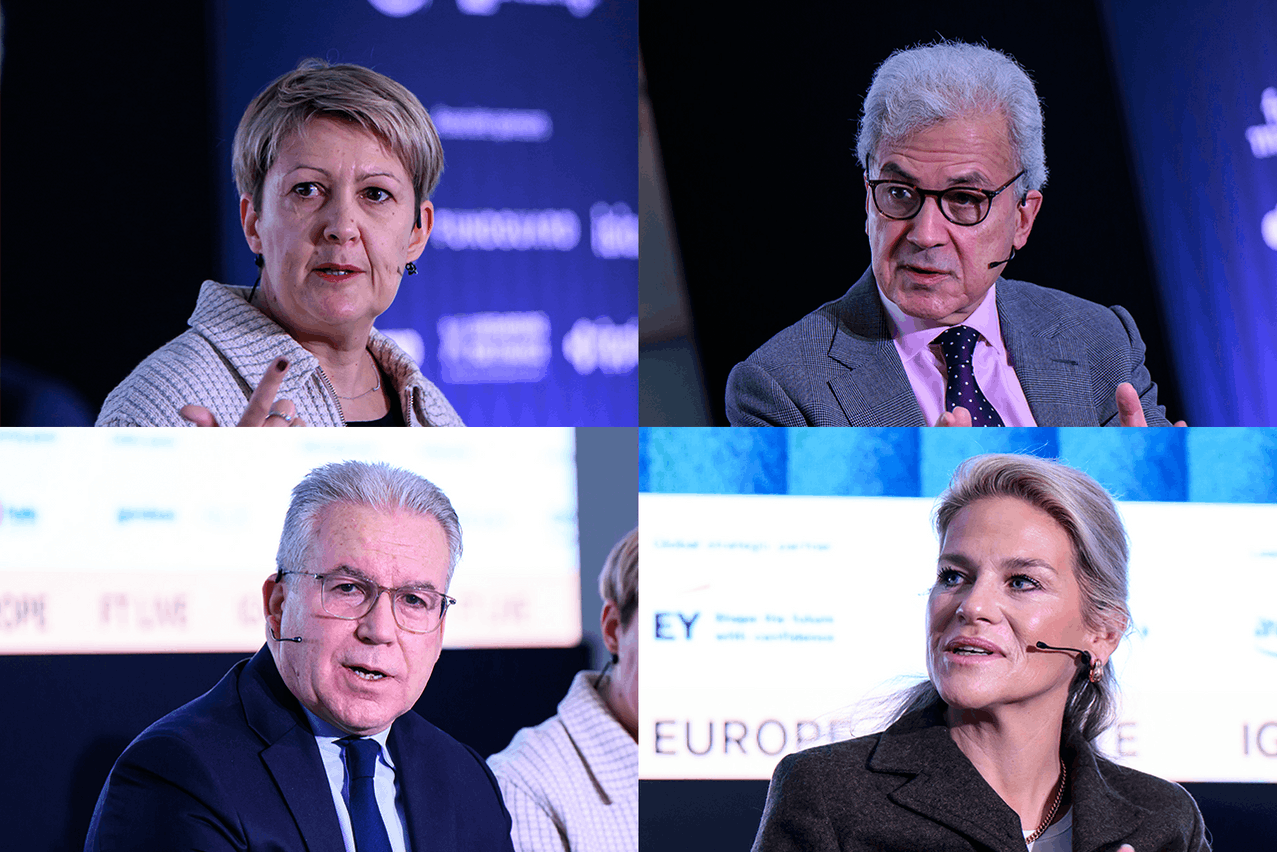
As the post-war global order fragments into competing trade blocs, asset managers are confronting geopolitical tensions, mounting debt and technological disruption that are testing established strategies.
Speaking at the Future of Asset Management Europe conference on 25 November 2026, senior industry leaders warned that higher financing costs and vast commitments to artificial intelligence are reshaping investment and business decisions. On the panel “The CEO agenda – navigating global threats and competing through policy shifts”, they argued that operating across borders increasingly requires local flexibility, active stewardship and strong governance.
Navigating a fractured financial world
Geopolitical tensions are no longer low-probability tail risks. Saker Nusseibeh, CEO of Federated Hermes observed that recent US tariff policies signalled an attempt to dismantle post-1945 international order, fragmenting the global economy into three distinct blocs: Europe, the US, and emerging markets.
For global managers, this ends unified supply lines and synchronised economic cycles. Firms must service three differentiated client bases with tailored strategies while holding cash reserves against volatility.
As Karin van Baardwijk, CEO of Robeco, emphasised, directing global operations from headquarters is no longer viable. She argued that firms must delegate authority to local investment teams who understand regional dynamics while adhering to core company values.
The end of zero rates shifts the game
The return of interest rates to 5% marks a regime shift following several years of zero-interest rate policy. Philippe Setbon, CEO of Natixis Investment Managers, described the post-financial crisis decade as an abnormal era that distorted capital allocation and artificially fuelled passive investing.
Zero rates disguised corporate risks. With refinancing costs reaching high single digits, economic projects must justify their fundamental returns.
Panellists agreed that this environment resurrects active management. Passive tracking deprives investors of stewardship, whereas active engagement is essential to navigate market dispersion and select winning assets.
Why $5trn in artificial intelligence is too big
Technological innovation presents operational necessity and systemic risk. According to Nusseibeh, projected investments in AI will reach $1trn followed by another $4trn by 2030, with 25% directed towards sustainable energy infrastructure for data centres.
This $5trn capital outlay is heavily backed by debt, creating leverage that is “quite circular by nature,” said Nusseibeh. It could trigger economic fallout if productivity gains fail to materialise quickly. The scale of commitment renders the AI sector “too big to fail” in government eyes.
“Too big to fail never stopped anything from failing; look at the East-India Company,” said Nusseibeh.
Nvidia: I'm more concerned about the board [members] than the president
Setbon argued that any sector achieving such dominance demands regulatory oversight, warning that laws of gravity will reassert themselves on inflated valuations.
Governance cracks under geopolitical pressure
Recent corporate events have put board independence under scrutiny.
Highlighting the rapid reinstatement of Nvidia’s CEO following political pressure from the US administration, panel members raised concerns over the board's credibility when decisions flip within 48 hours, argued Nusseibeh.
He noted that bad governance inevitably leads to poor long-term performance, stressing that institutional investors must challenge board compositions regardless of political sensitivities.
“I'm more concerned about the board than the president,” Nusseibeh said.
Meanwhile, regulatory consultant Rebecca Thorp, global head of regulatory consulting at Ocorian, pointed out that asset managers face escalating expenses due to cross-border regulatory divergence, such as the different interpretations across Europe on AML regimes and AI cyber opportunities and an increasing number of threats resulting in additional costs.