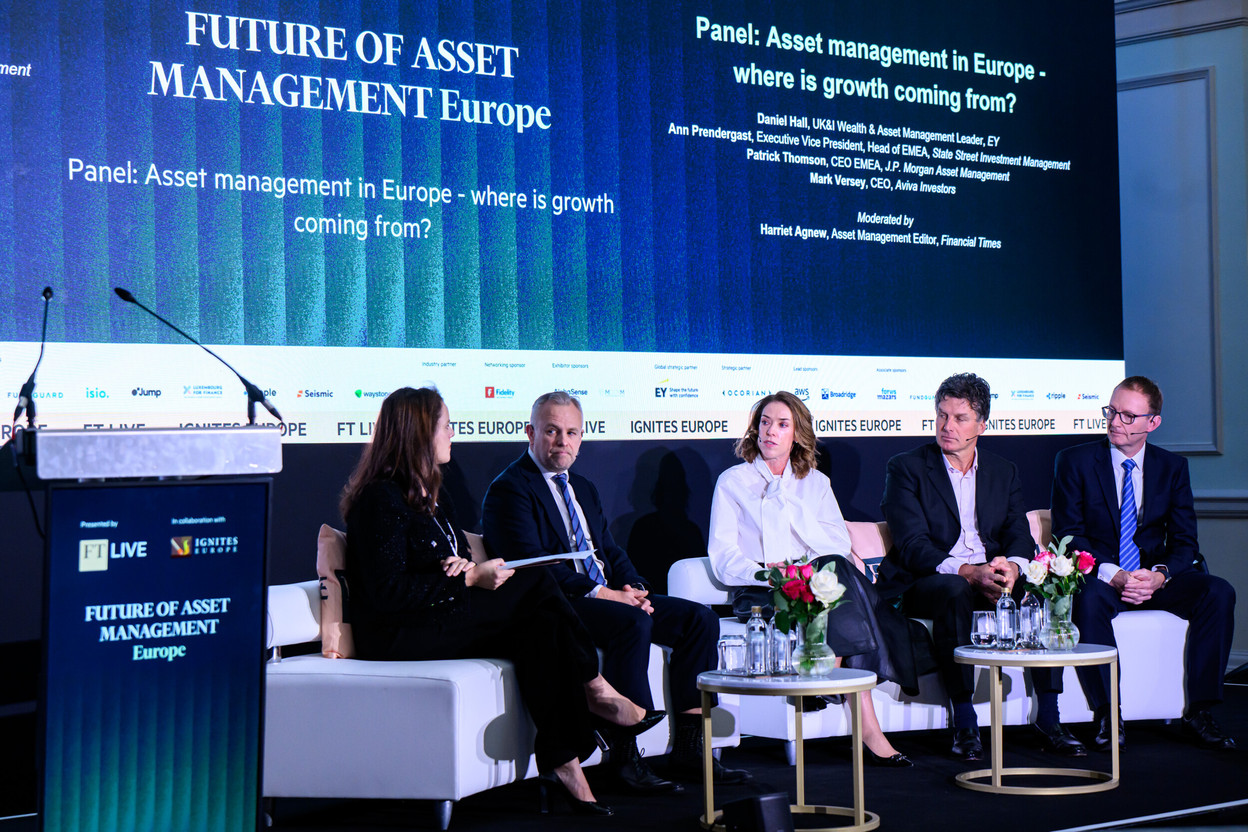
Concentrated equity markets and higher bond yields are prompting institutional investors to reassess where active management can add value, panellists at FT Live’s Future of Asset Management Europe conference said.
Speaking on 24 November 2026, representatives from Nest, BNY Investments, Candriam and RBC BlueBay Asset Management discussed benchmark concentration, portfolio construction and the potential consequences of rising artificial intelligence spending. The panel, “Active management in a chaotic market – where does it still add value?”, was chaired by the Financial Times’ Alan Livsey
The case for active management faces a persistent challenge: its performance record. Morningstar’s European Active/Passive Barometer found that only 11.4% of active equity funds across the categories studied both survived and outperformed their passive peers over the 10 years to the end of 2025 (see chart 1).
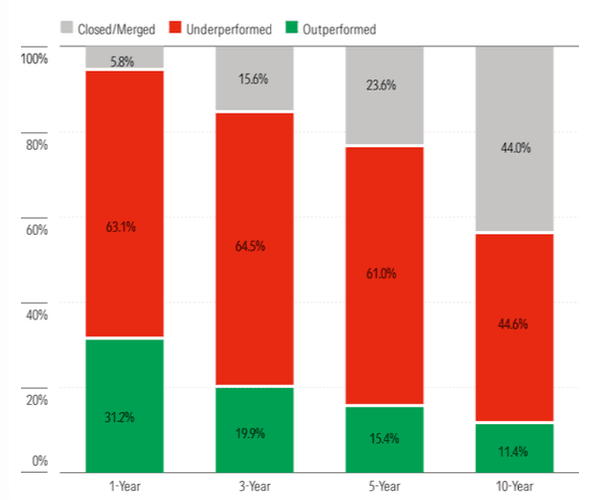
Chart 1: Active Equity Managers’ 2025 Year-End Outcomes (%) Source: Morningstar Direct. Data as of Dec. 31, 2025.
Concentration complicates the choice
Mike Bell, head of market strategy at RBC BlueBay Asset Management, argued that the growing weight of technology-related stocks had made it difficult for active managers to outperform without substantial exposure to the sector.
“Yet there is a limit to how big tech can become as a percentage of the index,” he said.
Raman Srivastava, global head of active management at BNY Investments, warned that investors tracking major equity benchmarks could be taking larger positions in a small group of companies than they realised.
Bell argued that flows from active funds into passive vehicles were reinforcing the dominance of recent winners. Such allocations, he said, implicitly assume that past market leaders will continue to outperform.
Passive management still involves active choices
Yet avoiding those leaders carries its own risks. Elizabeth Fernando of the UK’s National Employment Savings Trust (Nest) cited research by Hendrik Bessembinder showing that just 2% to 4% of companies account for all net market outperformance. Identifying these rare winners is notoriously difficult, making passive investing a default choice despite its flaws, or, as she put it, “the least bad thing to do.”
Starting with the investment objective
“Passive management still involves active choices,” said Nicolas Forest, chief investment officer at Candriam. Investors must choose which benchmark to follow and whether to use market-cap weighting, equal weighting or another approach.
Fernando described Nest’s use of both active and passive strategies. She said stewardship and transparency were important considerations in its decision to use active management for emerging-market equities.
“When members and journalists come and say, 'Why are you owning this thing?’ Being in the index is an unacceptable answer,” she said.
Fernando also described a shift from equities towards high-yield bonds and emerging-market debt as bond yields became more attractive relative to equity valuations.
“You only put ingredients into your portfolio that move you towards achieving your objective,” she said.
A stronger case in credit?
Panellists argued that debt-weighted bond indices present a different challenge: issuers with more eligible debt outstanding can receive larger index weights.
Forest said active credit selection and governance screening could help managers avoid troubled issuers. He cited Wirecard and Credit Suisse as examples of risks Candriam had avoided.
The longer-term performance evidence was more mixed. Morningstar reported a 10-year success rate of 44.3% (bottom-right on the chart 2) for active funds in the EUR corporate-bond category. Although stronger than the broad equity result, the figure still meant that fewer than half both survived and outperformed their passive peers.
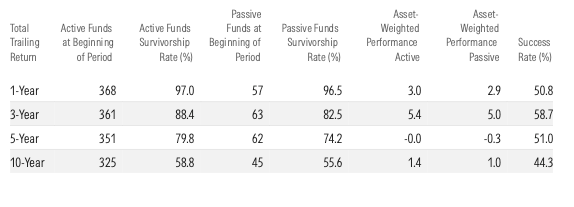
Chart 2: EUR Corporate Bond Category: Survivorship, Performance, and Active Success Rate Data Source: Morningstar Direct. Data as of Dec. 31, 2025.
Could AI spending trigger a reversal?
Bell identified AI investment as a potential source of market disruption. Companies committing substantial sums to the technology would need to demonstrate a return through productivity gains or lower costs, he argued.
He warned that widespread job cuts could weaken demand and increase pressure on households. If affected retail investors sold technology holdings, that could reverse some of the flows supporting recent market leaders.
That scenario would test the panellists’ argument that flexibility and risk management can justify active strategies. Whether those advantages translate into stronger returns after fees remains the central