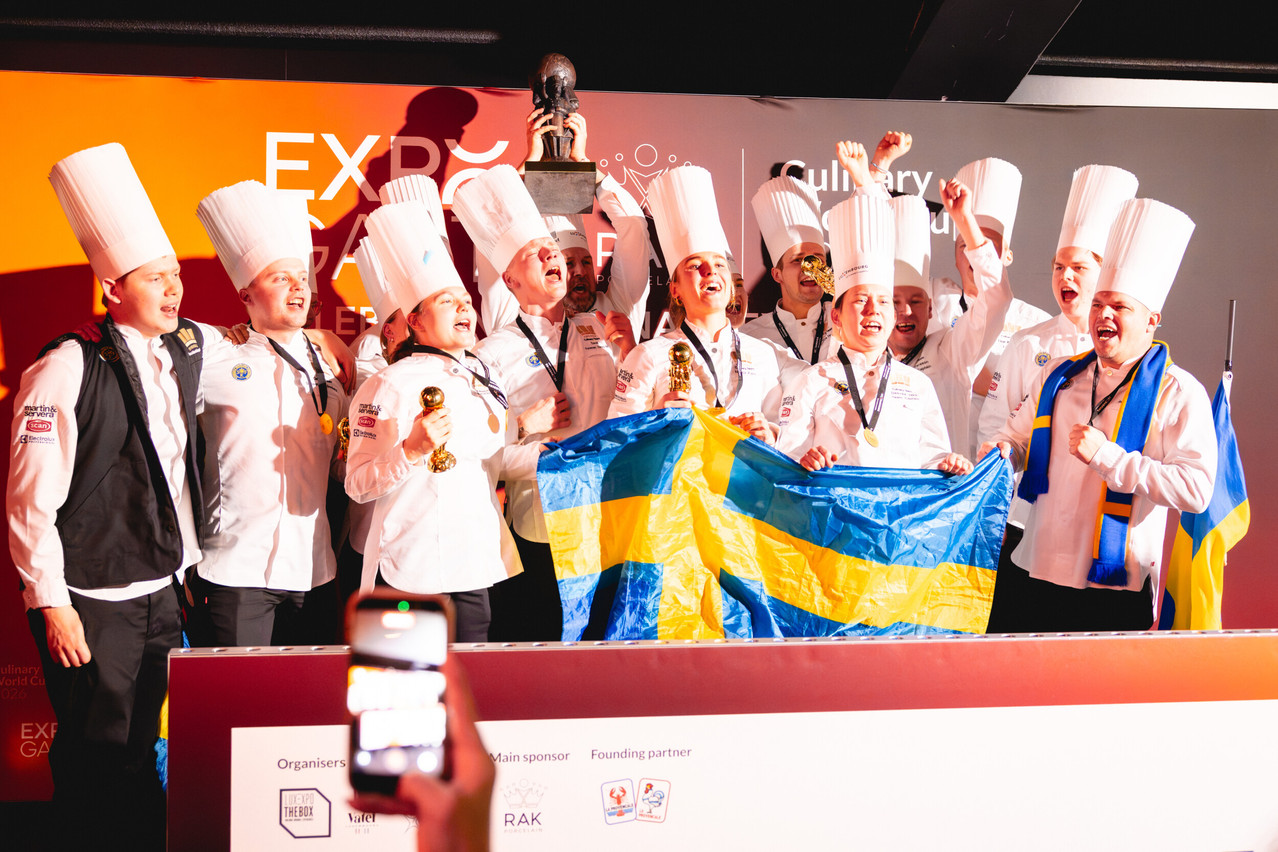
It took a score down to one thousandth of a point to separate the top two. With 94.378 points, the Swedish national team finished ahead of Norway (94.154) and Singapore (93.724) in the overall national team standings, the competition’s premier category. The results were announced on Thursday 26 November during the closing ceremony at Luxexpo the Box.
Sweden owes its victory to the “Hot Kitchen”, the menu served at the Restaurant of Nations, where it achieved the highest score in the category (95.8). Singapore, which came first in the other event, the “Chef’s Table”, lost the title after finishing only fourth in the hot cuisine category.
Behind the top three, Iceland, Denmark and Finland round off the top of the rankings, meaning five Nordic countries feature in the top seven. This dominance is reminiscent of the influence Scandinavian cuisine has gained since the “New Nordic Cuisine” manifesto was signed in Copenhagen in 2004.
Silver for Luxembourg; Ampoet.lu on the podium
The only Luxembourgish team competing in the top categories, the “Gastronomic Catering” national team finished 6th out of 15 with 84.595 points, securing the silver medal. She finished ahead of South Korea, who competed on the same day, but remained just behind Greece (84.833). Norway won the team event (92.548), ahead of the Swiss Armed Forces team and Poland.
At the Culinary World Cup, medals are awarded not for a ranking, but for a level of achievement. Each team is marked out of 100 and, according to the results, gold is awarded for 90 points or more, and silver for 80 points or more. Several teams can, therefore, walk away with the same medal: the top seven national teams all won gold.
Luxembourg’s best result came in the new “Food Truck & Street Food” category. With 92.5 points, Ampoet.lu took second place and a gold medal, behind the Malaysian team PCS Culinary C (93.25) and ahead of the Polish Street Food Team. The other two Luxembourg food trucks in the rankings, ItalyLux Culinary Team and Smoked Burger & Co, finished 12th and 13th in bronze.
35,500 admissions
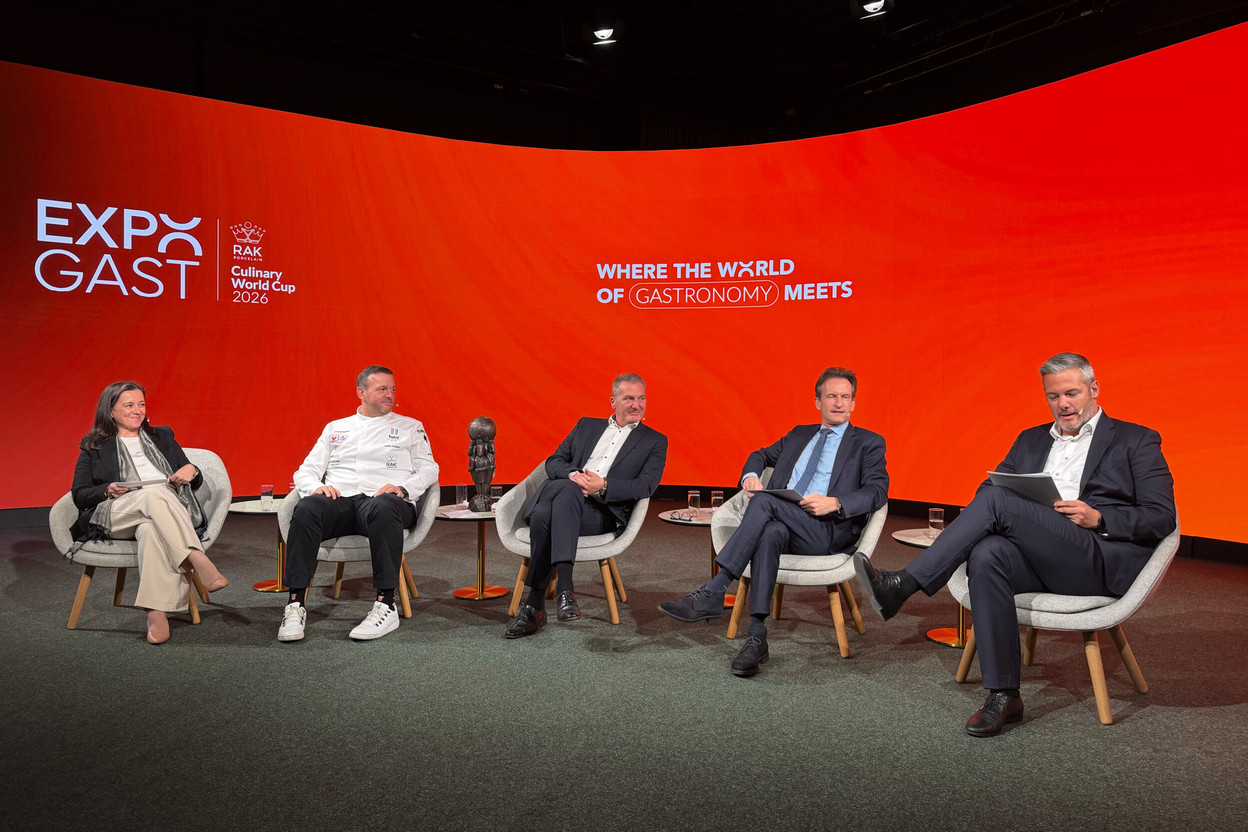
The organisers report 35,500 attendees over the five days, compared with the 30,000 or so visitors expected before the event opened. However, this figure encompasses a very diverse audience, comprising 17,900 trade visitors, 15,800 members of the general public and 1,800 exhibitors from 64 countries.
Behind the scenes, the competition relied heavily on the Luxembourg School of Hospitality and Tourism (EHTL), whose 430 students served in the dining rooms and supervised the challenges, alongside 170 members of staff and 60 volunteers. “Organising an international competition of this scale is an extraordinary challenge, requiring several months, or even several years, of preparation,” says Alain Hostert, vice-president of Vatel Luxembourg and competition coordinator.
True to its four-year cycle, Expogast is already looking forward to the 2030 event.