Luxembourg has some room for manoeuvre when it comes to “net-zero technologies,” technologies designed to achieve a target of zero net greenhouse gas emissions. To date, according to the State of the Energy Union report published by the European Commission on 11 September 2024, the country “lacks manufacturing capacity for clean technologies.” The main reason given for this is Luxembourg’s historical dependence on imports.
For both gas and electricity, the grand duchy remains heavily dependent on its neighbours, particularly Belgium and Germany. As a result, since 1 January, only 26.56% of the country’s electricity consumption has been covered by domestic production. Most of the rest is imported from Germany (55.13%) and Belgium (16.32%). As for gas, the country is also heavily dependent on imports, and has no storage facilities. Since the start of the year, 100% of the gas consumed has been imported from Belgium.
Despite this “shortcoming” highlighted by the European Commission’s report, the country has managed to reduce its greenhouse gas emissions by 30% between 2005 and 2020. But with 12 tonnes of CO2 equivalent per inhabitant, Luxembourg is still above the EU average. The largest emitter of greenhouse gases remains the transport sector (4MT CO2 in 2022), followed by industry (2MT CO2). But emissions in both these sectors are on a downward trend.
According to the government, the targets set in the national climate and energy plan (PNEC) are achievable. The goal is to achieve zero net emissions by 2050 at the latest. By 2030, these emissions will already have to be reduced by 55%, a target that exceeds “the binding contribution requested of Luxembourg by Europe, which sets a reduction target of 50%.”
€9m worth of net-zero energy technologies
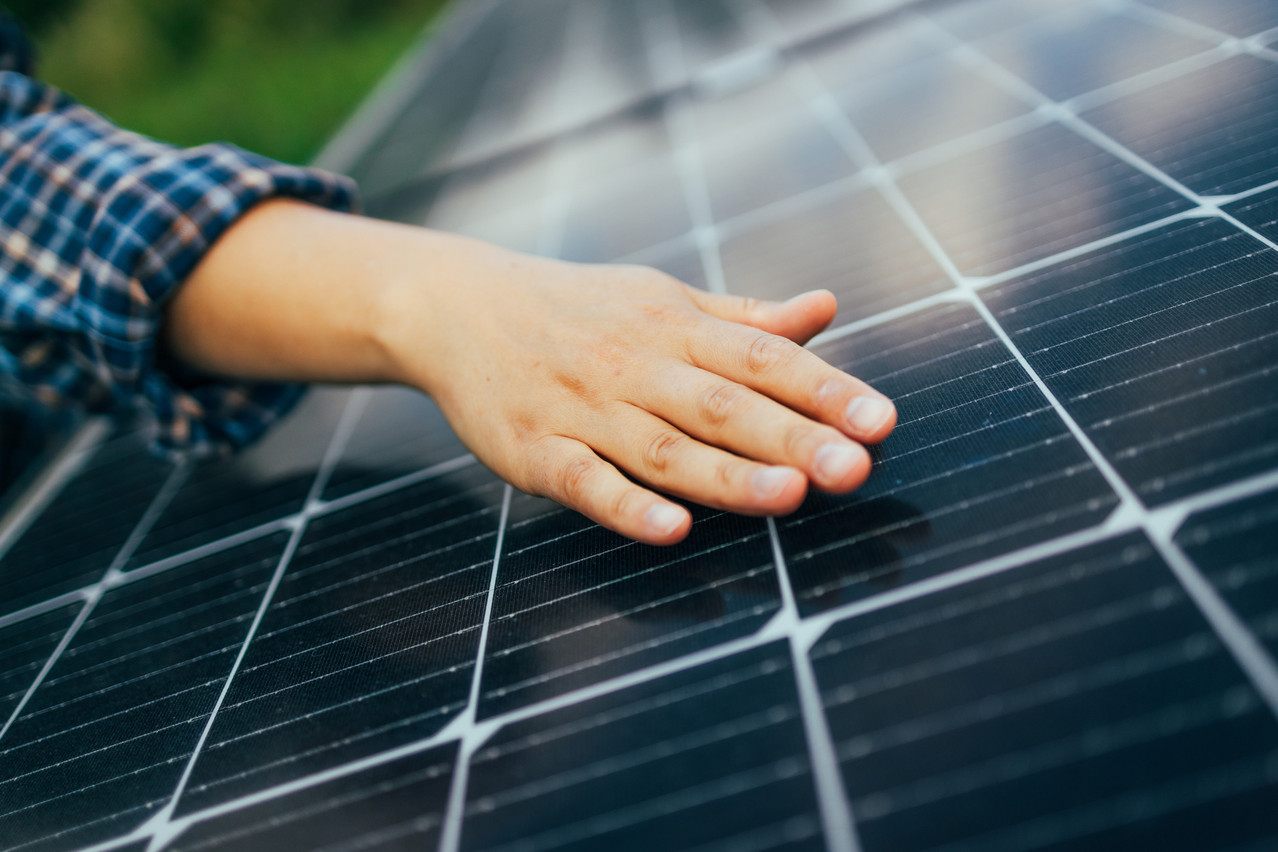
It should be noted that today, the electricity mix is largely dominated by renewable energy, at 91.6%, well above the European level (38.6%). But in terms of the overall energy mix, fossil fuels still account for 86.7% (higher than the European figure of 69%). The current wind farm has a total capacity of 207.94 MW and should reach 453 MW by 2030. Solar energy is also undergoing significant expansion, with additional capacity of 58.22 MW since the start of the year, bringing total capacity to 452.22 MW. The target stands at 1,236 MW by 2030.
The commission’s report also refers to “promising initiatives” that have been launched recently, particularly in the photovoltaic and battery sectors. A solar panel manufacturing plant came on stream at the end of 2023. Full capacity should be reached by 2026, but production levels should remain below 100,000 panels per year until then. The government plans to continue with calls for tender, adding market premiums and investment aid. Calls for tenders focusing on the practice of agrovoltaics (installation of panels on farmland) are also planned. Under the coalition agreement, the government plans to assess the potential of carbon capture technologies and create a framework to support their deployment for specific infrastructures, such as the cement industry. “Where necessary, an appropriate CO2 transport infrastructure will be developed,” it states.
Read also
In 2023, €9m were invested in startups and scale-ups developing net-zero energy technologies, the report states.
Another lever that will help to reduce greenhouse gases, or at least to absorb them, is land use, particularly in forest areas. On this point, the PNEC sets a target for 2030 of “increasing net absorption by -27KT CO2eq compared with the average net absorption for the years 2016, 2017 and 2018, which, for information purposes and on the basis of the data declared in the inventory presented in 2020, would lead to a total net absorption of -403KT CO2eq in 2030. For the period 2026-2029, an absorption volume to be respected will be established in 2025 on the basis of a linear trajectory starting in 2022 at the average of the net absorptions for the years 2021, 2022 and 2023 and leading to the 2030 objective.” But we still have to deal with forests that are deteriorating. According to Statec data published in 2023, 85% of the country’s trees were damaged in 2022.
This article was originally published in French.