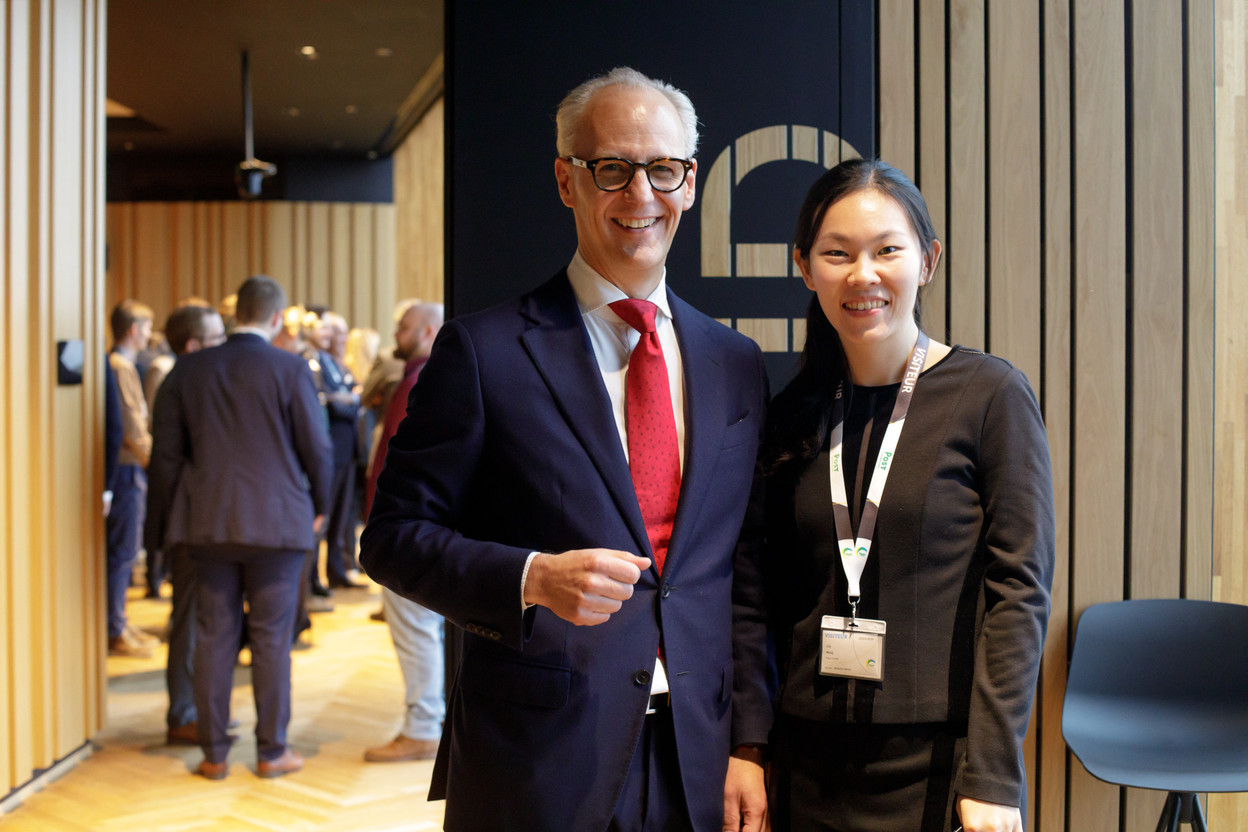
With climate change causing large-scale natural disasters, fresh water resources becoming scarcer and the growing need to reduce pollution to ensure a safe environment, climate tech companies focused on addressing “real problems” are becoming more and more important.
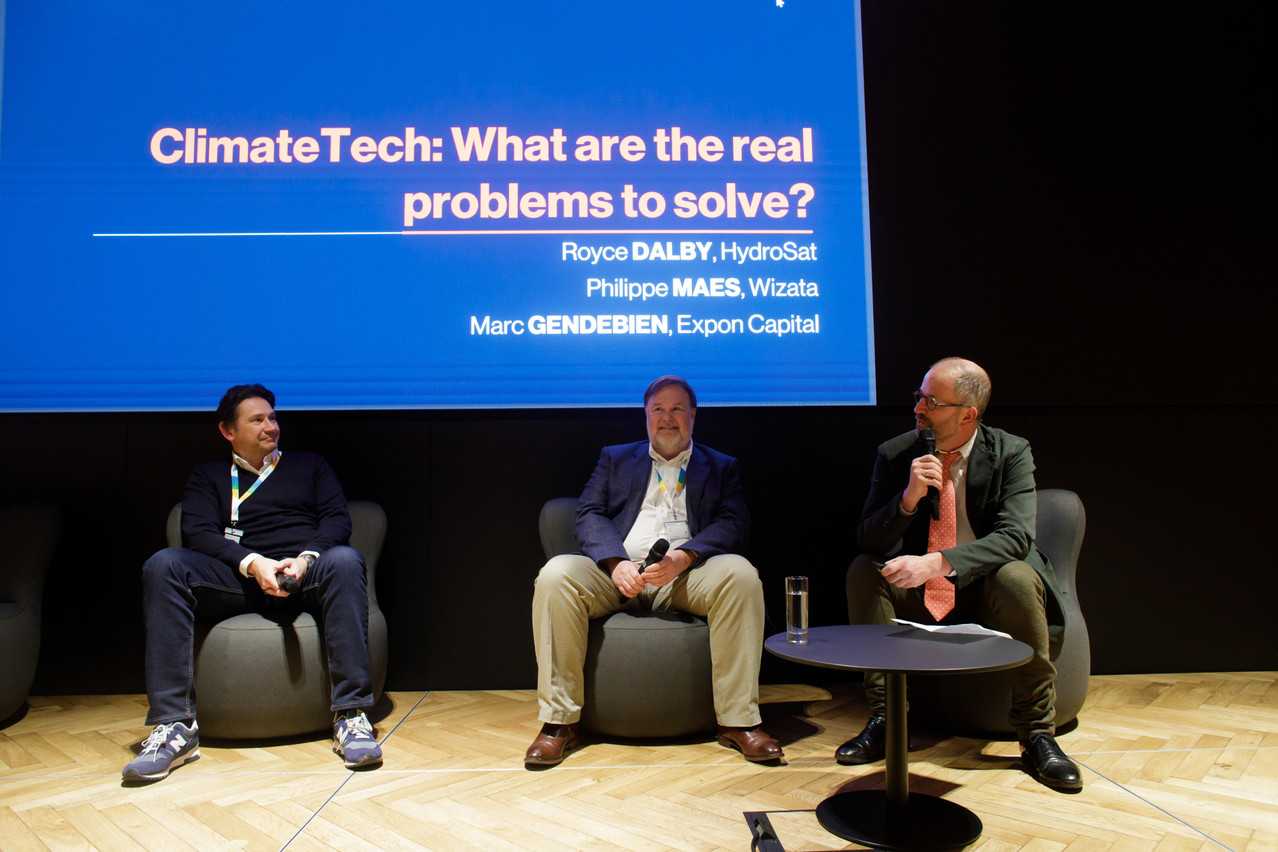
Two tech firms tackling climate-related challenges--Hydrosat and Wizata, both of which are portfolio companies supported by Luxembourg-based venture capital firm Expon Capital--discussed the maturity of the climate tech market and the challenges they’re facing during the VC firm’s second annual Digital Tech Fund event on 25 January.
Concrete solutions for the climate crisis
Founded in 2014, Wizata provides a software-as-a-service (Saas) platform that uses artificial intelligence to optimise the production processes of heavy industry, enabling companies to improve efficiency and reduce their energy consumption, as CEO and co-founder Philippe Maes explained during a panel moderated by Expon’s managing partner Marc Gendebien.
Carmeuse, a Belgian mining company that produces lime and and limestone, for example, uses lignite to run giant ovens. To help the firm decarbonise, Wizata built a model--one that outperforms human operators--to pilot these ovens and reduce their energy consumption. This, said Maes, has saved around 30,000 tonnes of lignite per year and contributed to decreasing Carmeuse’s energy consumption by 1.5% to 5%.
Read also
Hydrosat, a data analytics company which raised a $20m round of funding in April 2023, uses thermal satellites to turn agricultural fields into data that then can help farmers to boost crop production. The planet now has 8bn people--a number that’s growing every day--and we need to feed those people, said Royce Dalby, co-founder and president of Hydrosat.
“By 2050, we are going to need to double the amount of food available to people. And at the same time, we’re going to have to do this with less water and on less land.” With its thermal imagery satellites, Hydrosat is a solution that addresses all these problems, argued Dalby. “We have been able to increase production on almost every farm [using the tech] by 50%, and that doesn’t matter whether you’re growing wheat, tomatoes or soybeans--in every case, we have increased production significantly. And in every single case, we’ve reduced the amount of water that is used.”
What’s the state of the market?
Hydrosat’s solution is used in 38 different countries and covers 1m hectares, noted Dalby, “and where we are having the fastest traction is in the places where there’s the greatest pain. And mostly, that comes down to water use.” Examples of countries covered by Hydrosat include Saudi Arabia, Uzbekistan and Kazakhstan, while in Europe, they’re seeing traction in Spain, Portugal and Greece.
For Wizata, 50% of its revenue comes from Latin America and 50% comes from Europe, said Maes. “What we see is a huge discrepancy in adoption and priorities.” In Europe, “you have a lot of legacy, you have a lot of conservatism,” he added. “We have a lot of compliance and constraints as well,” which can “push and force companies to become more sustainable and decarbonise.”
But in Latin America, the priorities are “completely different.” Instead of aiming to reduce energy consumption as in Europe, companies in Latin America often want to produce more, or faster, with existing equipment. “We can really see a difference of markets there,” said Maes. “Different markets, different priorities, different regulations, different opportunities.”
Shifts due to age, different priorities
In the agricultural industry, “farmers tend to be very conservative folks. Many of them have been farming for generations and do things one way--and they don’t change the way they do things,” said Dalby. What helps Hydrosat is its larger, more established partners who work with farmers on a daily basis, he added, but “the ones that adopt us the quickest are the younger ones--the ones that recognise the need to make changes.” The customers that are the “most accepting” of their products are the “younger ones” that understand the threat that is hitting the environment.
Read also
For Maes, the changing market is less because of age and more due to a shift in priority. A few years ago, for instance, companies would not have many of the roles that have become common today. “Now, you have somebody who looks at new solutions to digitalise, and he works very closely with the person responsible for decarbonisation,” he offered as an example. “I don’t know whether it’s a question of age, but I really think it’s a question of priority and a new way to work.”
Market is “maturing tremendously”
Beyond their crop production tools, Hydrosat has other products, such as wildfire prediction or water management tools, said Dalby. The company plans to launch its first two satellites--one in June and the other in October--which will provide higher-resolution, more frequent data that will allow for product improvement. “That’s our biggest excitement, but of course, as it is when you’re talking about space launches, things don’t always go well--so it’s got me very nervous. And until our launch is successful, my fingers are crossed.”
As markets evolve, “I think there’s a lot of discrepancy between the speed of the industry where my customers are and what they need to put in place. So there’s a gap there,” concluded Maes. “But I feel that they’re starting to move and we need to follow that. The market [has been] maturing tremendously over the last few years. Adoption is improving and we have to modify what we are providing to them, and to be able to follow what they need to implement.”
Industrial companies, for example, now understand that “they need to use data, they need to use AI to optimise their processes,” said Maes. “What we need to do now is deliver a solution that allows them to replicate and scale this across their different plants.”
This article was published for the Delano Finance newsletter, the weekly source for financial news in Luxembourg. Subscribe using this link.