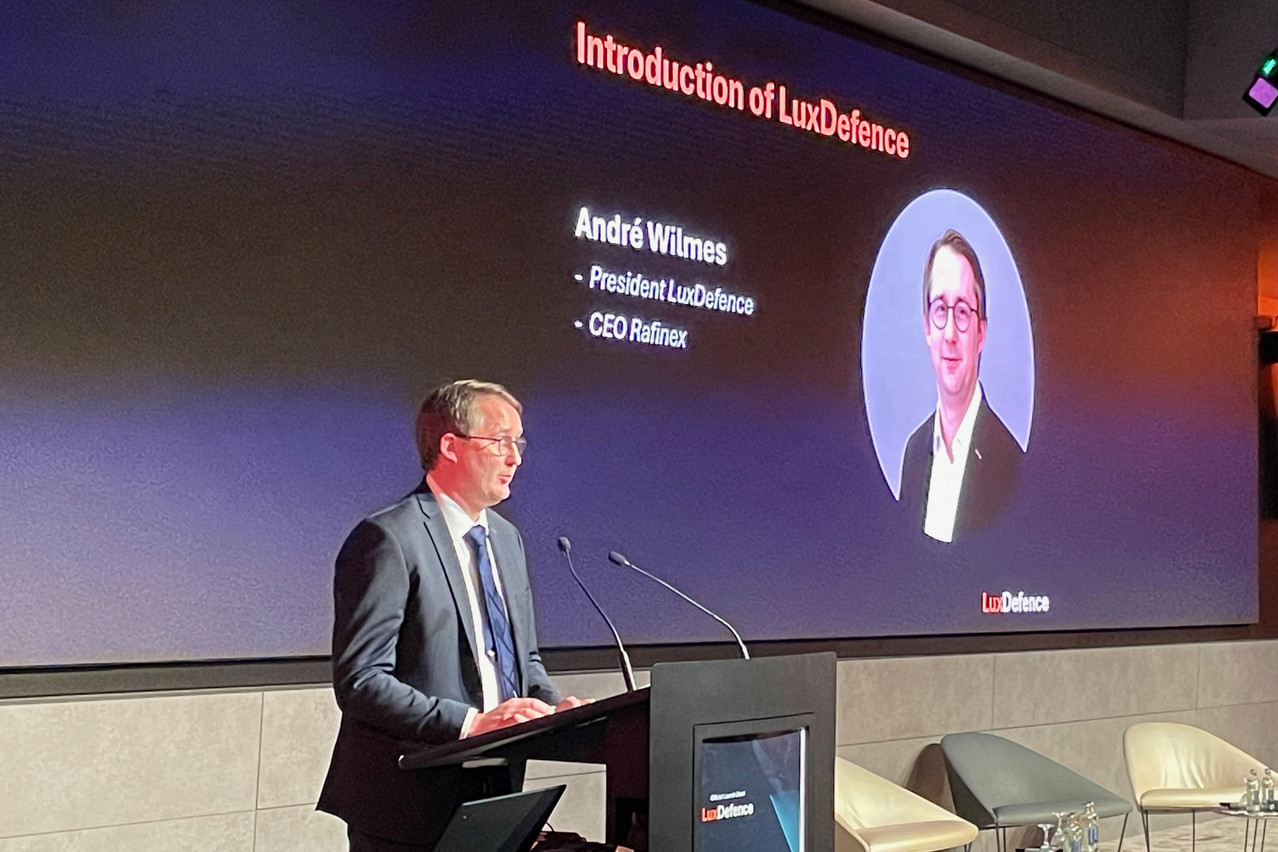
“We are here to build, not to theorise or strategise. The time for talking is over,” declared Andre Wilmes, president of Luxdefence, at the association’s official launch on 24 November at the Chamber of Commerce. He noted that the launch of Luxdefence marks a geopolitical milestone in Luxembourg's efforts to assume its role in defence alongside its allies, both domestically and abroad, leveraging its industrial base.
In it for the long haul
Wilmes stressed that the association is designed as a long-term initiative dedicated to enhancing innovation, capability, and capacities for the security of Luxembourg, its European partners, and Nato allies worldwide.
Luxdefence did not "arise out of thin air,” said Wilmes. It is a continuation of the “Lux for Defence strategic report,” which provided ten recommendations. The association was identified as a key strategic need to structure the ecosystem and represented a commitment made by industrial actors in the summer of 2024.
The existence of Luxdefence matters because it aligns with the European project’s longstanding commitment to collective and collaborative security. Luxdefence is dedicated to being an ecosystem where “true, equitable and collaborative defence industry integration takes place, will take place and yields tangible defence capabilities,” stated Wilmes.
Why defence matters now
“Artillery fire from the Donbas echoes in Brussels, Berlin and Luxembourg,” said Wilmes. It is experienced “through cyber-attacks, disinformation campaigns, pressure on energy supplies, sabotage attacks and attacks on utility infrastructure”. Defence is therefore a core European duty requiring mobilisation at every level, including industrial, technological, financial, digital, diplomatic, and personal levels.
From the state to the private sector
Luxembourg followed the movement initiated by the United States through Nato by increasing its defence investment, with a projected budget of €1.2bn in 2026. These investments must strengthen domestic capabilities, generate innovation, support European sovereignty, and create economic value. “These investments must not remain externalised.”
[Luxdefence seeks to] federate and represent the sector, ensuring the defence industry has a unified voice nationally and abroad
Luxembourg stands on strong legacies, possessing a world-leading space and satellite ecosystem (including companies like SES), high-value manufacturers, a strong cybersecurity infrastructure, a strategic central location with logistic capabilities, a renowned financial centre, and European-reaching research platforms.
A threefold mission for Luxdefence
Firstly, the association “federates and represents the sector, ensuring the defence industry has a unified voice nationally and abroad” (Brussels, Nato and European Defence Agency (EDA)). Wilmes noted that Luxdefence is already assuming “leading industry coordination roles” at the EDA.
Secondly, Luxdefence aims to drive innovation and strategic project development by supporting members in pursuing major European collaborative programmes. Finally, the association seeks to build a sustainable and competitive industrial defence industry base “where Luxembourg can deliver value and scale.”
Wilmes noted that Luxdefence’s community base has grown to "more than 80 companies as of last Friday". This speed and readiness to act have been noticed internationally. Luxdefence is hosted within the Luxembourg Chamber of Commerce, giving it “a strategic position at the crossroads of policy, industry, and innovation.”
Luxdefence aims to be more than just a participant; its objective is to ensure Luxembourg is “a partner in an ecosystem of choice in Europe and with Nato allies worldwide.” Ultimately, “Luxdefence is not an association. It's a commitment to national interest, European sovereignty, Nato allies, and future generations.”