Editor’s note: This article went to press before the start of the Nato summit in The Hague from 24 to 26 June. This summit is where the revaluation of defence efforts of the 32 member countries of the alliance--and its timetable--are set to be negotiated.
Regarding defence, the government’s roadmap is clear: promote a Defence Union, modernise the army--an army whose main activity will be ground reconnaissance--and make the defence sector a full-fledged economic sector, notably by creating synergies with other sectors by prioritising projects with positive societal and economic spinoffs in Luxembourg.
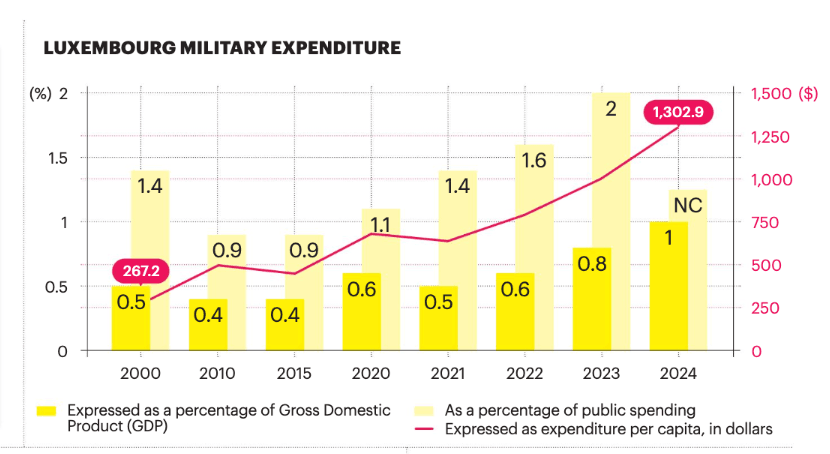
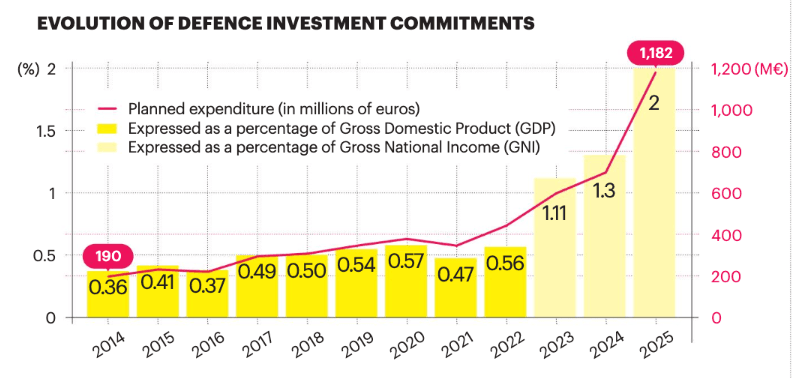
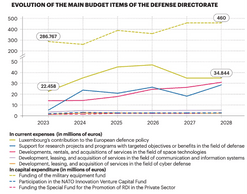
Proactively, the prime minister decided to increase the country’s defence spending to 2% of gross national income not by 2028, but as early as this year. This announcement was made during the State of the Nation address on 13 May 2025. Consequently, that means an additional €402m compared to the €780m voted in the 2025 budget.
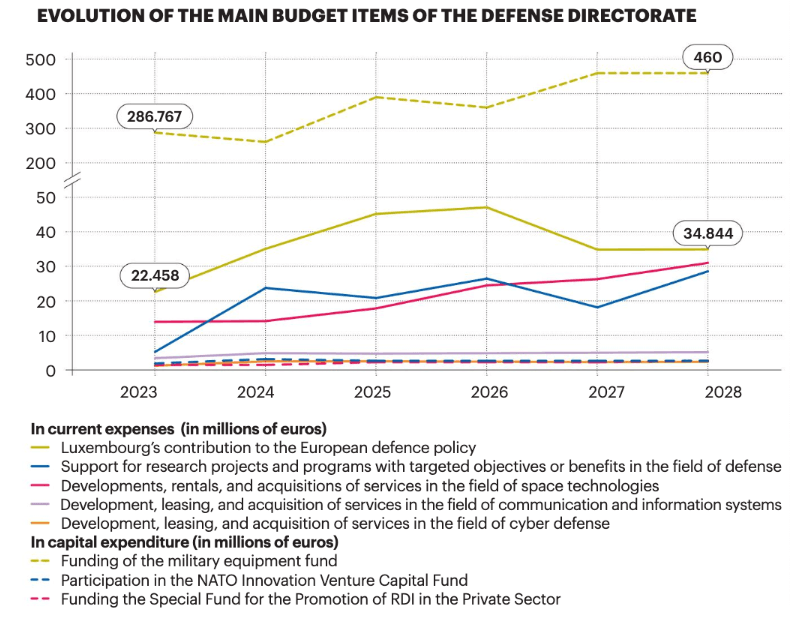
Among the new expenditures were €105m for a new Govsat-2 satellite, €46m for research and development projects and an additional €30m for aid to Ukraine, bringing the total to €120m, and €115m, an amount that includes expenses from other ministries contributing to security and defence. Funding this effort did not pose any particular problem.
New objectives
But that was “yesterday.” On 5 June, the Trump administration demanded that its European Nato allies aim to bring their defence spending targets up to 5% of GDP. When? “Now.” This demand was diversely appreciated by Europeans and raises questions about its feasibility from a budgetary and operational point of view. According to defence minister 
But is that still the case? With a 5% target, it would no longer be €1.182bn that would need to be spent, but €2.955bn per year--and this, for an indefinite period. Of this 5%, 3.5% should be allocated to military expenditures in the strict sense of the term, and the remaining 1.5% should be allocated to investments in infrastructure intended to increase countries’ resilience. These could include, for example, bridges and roads, infrastructure likely to facilitate the logistical needs of armies.
The deadline of the summit in The Hague
The 32 Nato members will decide on the future defence effort objective at The Hague Summit, which will be held from June 24 to 26, 2025. What will Luxembourg’s position be? To this question, the ministry replied that “what we need are military capabilities, not an abstract percentage.” In May, the minister of defence presented the national plan to reach 2% from 2025, which corresponds to approximately €1.18bn. “Given the current threats to European security and defence, and given the urgency for Europe to close capability gaps and sustainably strengthen its defence industry, we will probably have to invest beyond 2%. However, we must ensure that the debate does not focus solely on a higher investment target. We must focus on both the effectiveness of military forces and capabilities, as well as the most efficient use of our limited resources,” said the ministry. Prime minister 
Funding avenues
Regarding the limitation of resources, the financing of this additional effort is under consideration. And the most probable avenue is that of a defence bond. Frieden mentioned this avenue during the State of the Nation address, and finance minister 
Meanwhile, at the meeting of Nato defence ministers on 5 June, the capability objective packages for each ally--within the framework of the Nato Defence Planning Process (NDPP)--were adopted. The grand duchy was asked to invest in the areas of air and missile defence, reconnaissance and combat drones, deployable fuel supply stations, a rear air base and host nation and/or transit support, as well as the Belgian-Luxembourg advanced military hospital. Other objectives were added, particularly in the space and cyber domains, including ongoing or developing Luxembourg programmes and projects, as well as the Belgian-Luxembourg binational medium-type combat reconnaissance battalion.
A strategic sector in structuring
Should military spending be considered as sunk costs? It’s a legitimate question that raises concerns among the opposition, where--whilst not questioning the need to adapt to a geopolitical situation that takes us back to the period before the fall of the Berlin Wall--there is a fear that security efforts will come at the expense of social welfare. The objective of ensuring a 60% return on invested sums de facto becomes a marker of the success of the government’s defence policy.
These spinoffs are of particular interest to entrepreneurs. The Chamber of Commerce wants to contribute to structuring defence as a “strategic sector.” After presenting its Lux4Defence report on 29 April 29--a report containing 10 recommendations for developing a strengthened industrial and technological base in the grand duchy--the Chamber of Commerce and companies in the defence sector created LuxDefence ASBL, the national association of defence companies. And they took advantage of the Paris Air Show to announce it. LuxDefence will be chaired by André Wilmes.
Read also
Constituted as a non-profit organisation (ASBL), this new structure aims to become a key player at national and European levels. Its mission? To influence government choices with the goal of stimulating innovation and generating that famous economic return of 60% on sums invested as part of the defence effort. It’s an ambitious and achievable objective, says the Chamber of Commerce, for which the existing ecosystem can, if it focuses on the niches in which it excels--space, cybersecurity, materials and certain equipment--respond to national and international calls for tenders. This would allow for the creation of 2,000 new jobs.
In its latest Luxembourg Industry and Research Capabilities for Security and Defence catagloue, the national innovation agency Luxinnovation lists 100 companies and research centres located in in the grand duchy. The weight of this ecosystem in the economy remains to be defined. Traditionally, the statistical nomenclature of economic activities in the European Community (NACE), in other words, the classification of economic activities in the European Union (EU), recognises two defence-related activities: the manufacture of weapons and ammunition (category 25.400) and public prerogative services, i.e., the army (category 84.220). The measurement of the impact of activities that provide goods and services to both defence and other activities--the dual-use model that the country wants to promote--could theoretically be measured, says the national statistics institute Statec, “provided there is sufficient granularity. But we do not have an input-output table with such detail.”
Say “security!”
This is a semantic slippage. Though he frequently used the term “defence” in his statements or in interviews, Frieden now prefers the term “security.” Why? “I voluntarily use the term security, because it is broader than conventional military defence. It notably includes cybersecurity, telecommunications, Earth and space observation, or even data protection. All these domains must guide our investments. We wish to obtain an economic return on at least part of these investments. This is why the government has decided to explore all the possibilities of developing a security economy. We are not going to build planes or tanks, but we can contribute to certain components, just as we already do in the automotive sector. We obviously have assets in the space domain, with satellites, for example.”
Internal security, the other front
Even if the news has focused on defence in recent weeks, the government has introduced several reforms under the supervision of the minister for home affairs, 
Read also
Since the police cannot be everywhere, the minister wanted to simplify the procedures for installing video surveillance cameras, in the face of a procedure that was deemed too cumbersome. The minister proposed simplifying the installation procedure in public parks and interchange hubs and establishing an accelerated procedure for renewing authorisations for deploying these cameras in unchanged areas. The simplification of procedures now only concerns the installation of cameras in interchange hubs, specifically “large train stations and points where multimodal transport hubs are located.”
More consensual is the introduction of a local police force. The experiment began in June 2024 in Luxembourg City and Esch-sur-Alzette and was convincing enough for a bill to be submitted. This was done last March. On the ground, the experiment has been extended to Differdange as well as to the Museldall police station.
The government’s roadmap
This roadmap should be assessed along three axes.
In terms of defence in the broad sense, the government on 21 February 2024 approved a bill intended to transpose Directive (EU) 2022/2555 of 14 December 2022 concerning the strengthening of cybersecurity in Europe, a text known as Nis2. Tabled in the Chamber of Deputies on 13 March 2024, bill 8364 is currently under review in committee.
On 31 May 2024, the government tabled bill 8389 authorising it to finance the acquisition and logistical support of rolling stock for the needs of the Luxembourg army. This package of €2.616bn--excluding VAT--was validated by deputies on 14 November 2024. On 19 June, the government validated the Luxembourg contribution for a helicopter intended for joint operations coordinated by the European Border and Coast Guard Agency in 2025. On 13 December 2024, the government approved a bill amending the law of 18 December 2015, authorising the government to acquire satellite communication capabilities for the benefit of Nato’s “Alliance Ground Surveillance” (AGS) programme. The text extends the duration of the 2015 law until 31 December 2029, without exceeding the initially authorised budget of €120m. Tabled on 24 January 2025, bill 8485 is under review in committee.
Regarding security, on 25 July, the government filed bill 8426 reforming the “Platzverweis” (an expulsion order) in order to more effectively combat aggressive begging. It also tabled bill 8418, a related bill aimed at modernising the penal code, as well as introducing a new offence of aggressive begging. Both texts are currently under review by deputies.
On 7 March 2025, the cabinet approved the bill amending article 43bis of the amended law of 18 July 2018. Bill 8512, tabled on 18 March 2025, aims to streamline the authorisation procedure for police video surveillance. The text is currently under review.
On 18 March, bill 8513 creating the local police unit was also filed. The purpose of this bill is to introduce the local police unit, as well as the concept of proximity, into the amended law of 18 July 2018 on the grand-ducal police. The text is currently before the committee on home affairs.
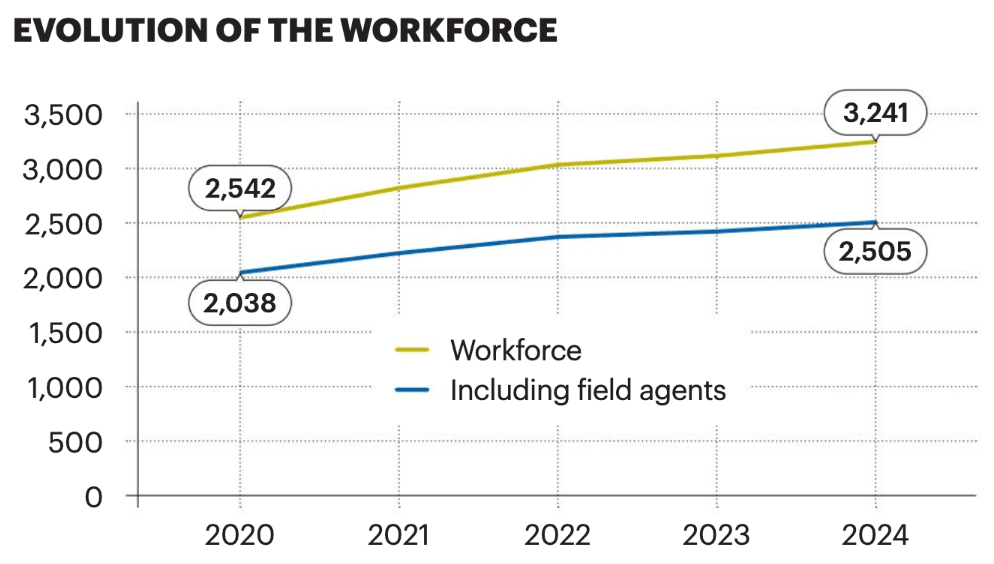
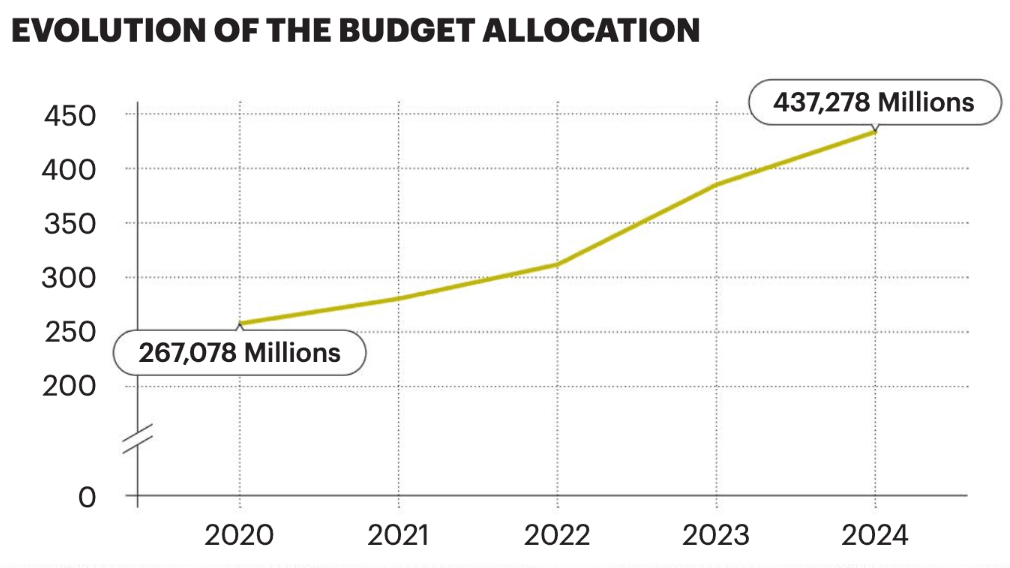
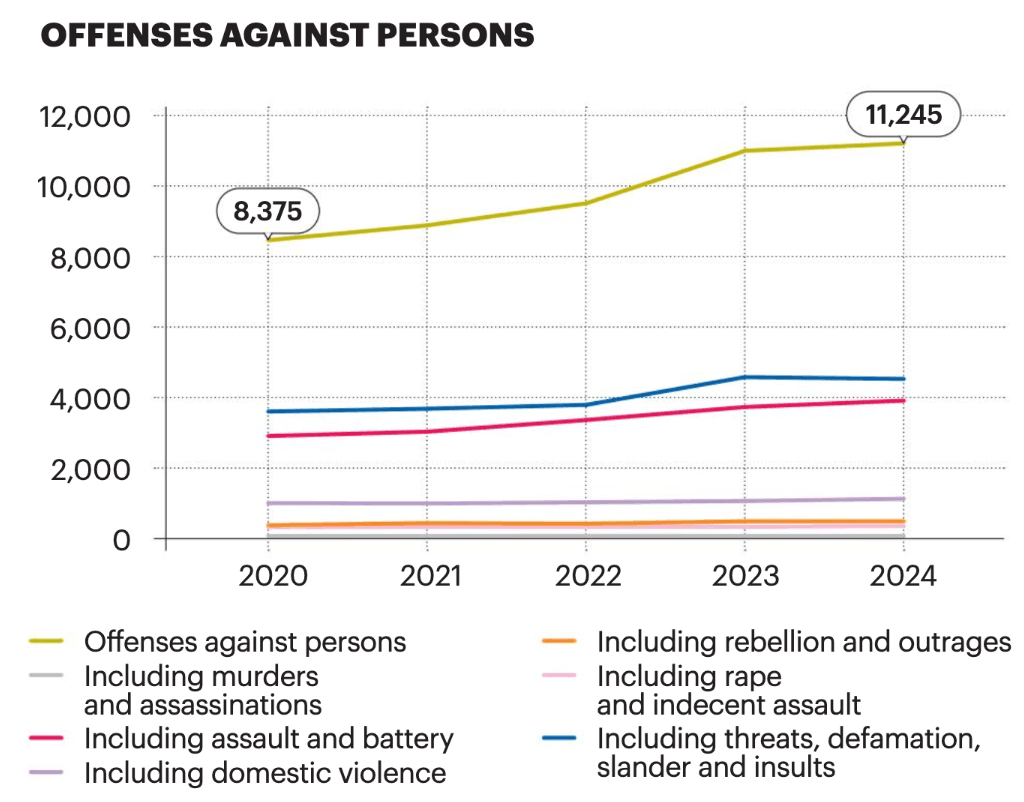
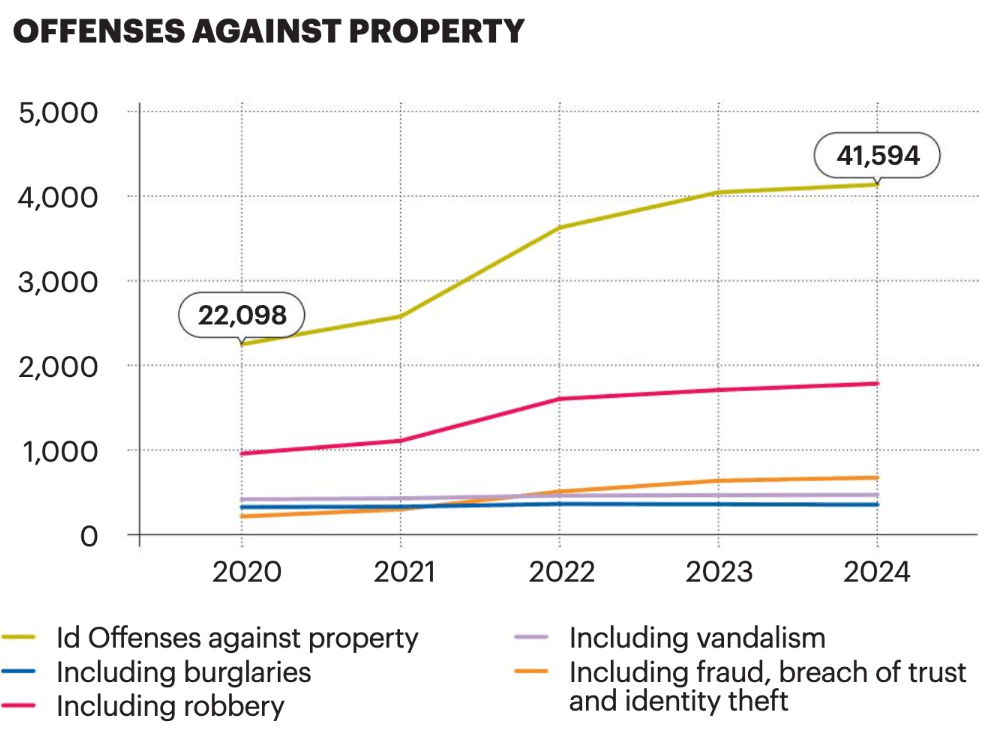
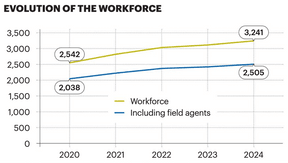
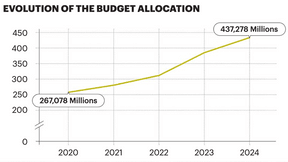
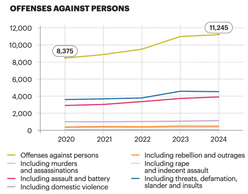
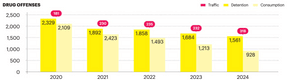
In terms of justice, on 29 March 2024, the government tabled bill 8368, the purpose of which is to finalise the transposition of Directive (EU) 2017/541 of 15 March 2017, on combating terrorism. This technical bill, which amends the penal code and the law on judicial organisation, was voted on by deputies on 23 January 2025.
On 2 August 2024, the government tabled bill 8431, which reforms the code of criminal procedure with the aim of implementing enhanced cooperation concerning the creation of the European Public Prosecutor's Office. On 30 January 2025, the government tabled bill 8489, transposing Directives (EU) 2023/977 and (EU) 2023/2123, which establish rules to enable national law enforcement services to exchange information more easily and quickly to combat crime more effectively. Both texts are currently under review in committee.
On 19 March 2025, the government tabled bill 8515 amending Article 88-2, paragraph 2, of the Code of Criminal Procedure. The goal is to adapt the legal framework related to special surveillance measures to provide judicial authorities with adequate means to effectively combat serious crime. The text is currently under review in committee in the Chamber of Deputies.
This article was written for the August/September 2025 issue of Paperjam magazine (Expat Guide), published on 10 July. The content is produced exclusively for the magazine. It is published on the site to contribute to the full Paperjam archive. Click this link to subscribe to the magazine.
Is your company a member of Paperjam Club? You can request a subscription in your name. Let us know via club@paperjam.lu