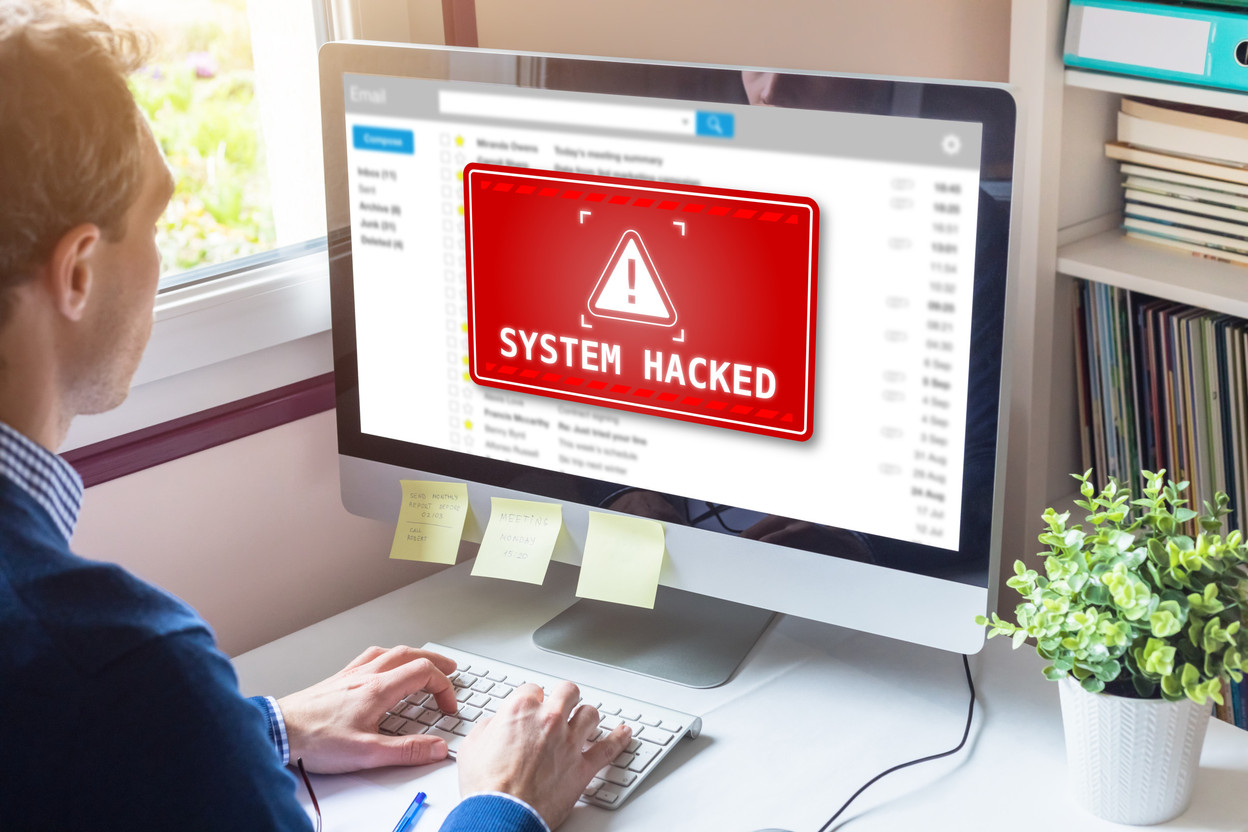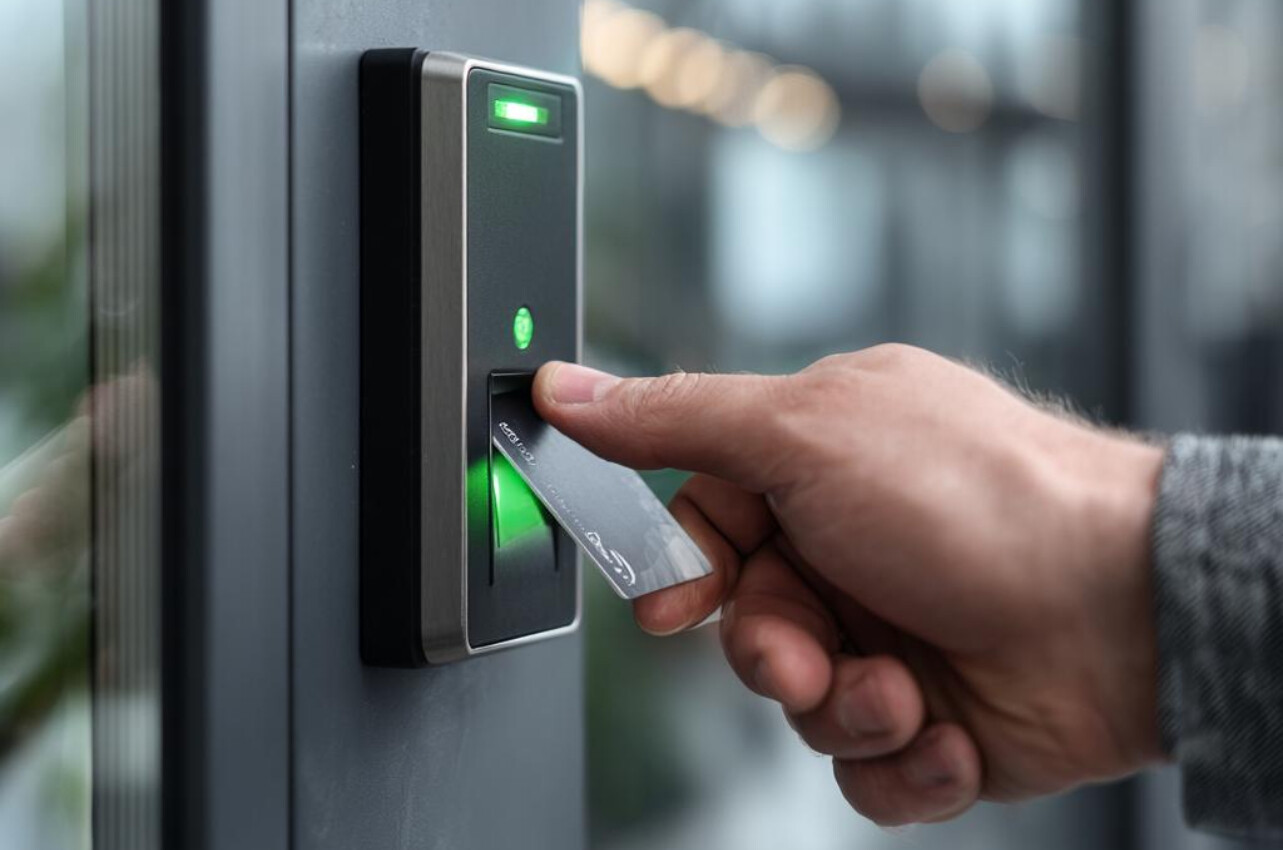
A door may recognise the correct access badge but remain vulnerable. All it takes is for the reader and its controller to communicate without effective encryption for an attacker to attempt to intercept, replay or alter the information exchanged. It is this less obvious weakness in physical security systems that Incert and IDmachines aim to address.
The economic interest group set up by the Luxembourg government and the US company has announced a new phase in their partnership. Their solution is designed to manage the cryptographic keys and certificates used by badge readers, door access control systems, cameras and, in the long term, other connected devices.
The issue is therefore not limited to a reader’s ability to recognise a badge, a face or a fingerprint. Biometrics verifies a person’s identity. Cryptography, on the other hand, must enable each device to prove its identity, secure its communications and protect the data it transmits or stores.
The digital lock behind the physical lock
In a network, a cryptographic key performs a function similar to that of a physical key. A digital certificate links this key to a device’s identity. This enables the controller to verify that it is communicating with the reader actually fitted to the door, and not with a device attempting to impersonate it.
Security is compromised if several devices share the same key, if a self-signed certificate is not verified, if a key remains in place after a device has been replaced, or if a certificate expires without being renewed. A device may then appear to be trustworthy, even though its digital identity is no longer properly verified.
This is a well-known issue within the sector. The legacy Wiegand protocol, still in use in many installations, transmits credentials without encryption. Its successor, OSDP, provides for a secure channel, but researchers at Bishop Fox demonstrated in 2023 that encryption could be absent, optional or disabled due to misconfiguration. They also documented attacks that could force unencrypted communication or retrieve keys when a reader is replaced. This research does not allow us to conclude that all systems are vulnerable. However, it does show that installing a recent reader or using a protocol advertised as secure does not guarantee that its cryptographic protections are actually enabled and properly managed.
The same distinction applies to biometric data. The UK’s National Cyber Security Centre identifies, in addition to fake faces or fingerprints presented to the sensor, attacks targeting the sensor’s output, data transmission, data storage or the reference database. In other words, an attacker may seek to bypass the entire chain without directly deceiving the recognition algorithm.
Over 100 million devices
The joint offering divides the work between the two partners. IDmachines’ Eidola platform must first analyse the equipment at a site, compile a list of its keys and certificates, and then flag those that are shared, self-signed, have expired or are about to expire.
Incert then provides the cryptographic infrastructure. Its QORI public-key infrastructure platform is responsible for issuing the certificates linking each device to the organisation that owns it. Keys&More manages their lifecycle: deployment, validation, renewal and revocation when a device is decommissioned or compromised. The system can be operated as a service, installed on-premises at the customer’s site, or run according to a hybrid model. It must also allow the customer to retain their own certification authority, to entrust this function to IDmachines, or to work with a third party.
The first roll-out is aimed at Mercury MP controllers, as part of the Mercury Embedded Application Programme. The partners then plan to extend the offering to cameras, other controllers and connected devices that are already installed.
IDmachines and Incert estimate that there are more than 100 million pieces of physical security equipment in North America that either do not use any cryptography at all or use it incorrectly. They put the global total at over one billion.
Luxembourg public-sector technology for the export market
The partnership also provides Incert with a commercial outlet outside Luxembourg. Established in 2012, the GIE works with national public services in the fields of identity management and cryptography. It now offers tools based on this expertise to governments and businesses.
The two organisations say they have been working together for over ten years, particularly on the validation of X.509 certificates, digital signatures for electronic passports and key management for security equipment. In June 2026, they formalised an agreement enabling IDmachines to distribute several of Incert’s solutions, including QORI and Keys&More, in North and Latin America.
“Physical security equipment deserves the same level of trust as the systems used to protect every citizen’s identity,” says Clément Gorlt, PKI Director at Incert. The challenge lies in applying this cryptographic discipline to a network of doors and cameras that are often installed for many years. The robustness of an access control system no longer depends solely on what it recognises. It also depends on the ability of each of its devices to prove its identity.