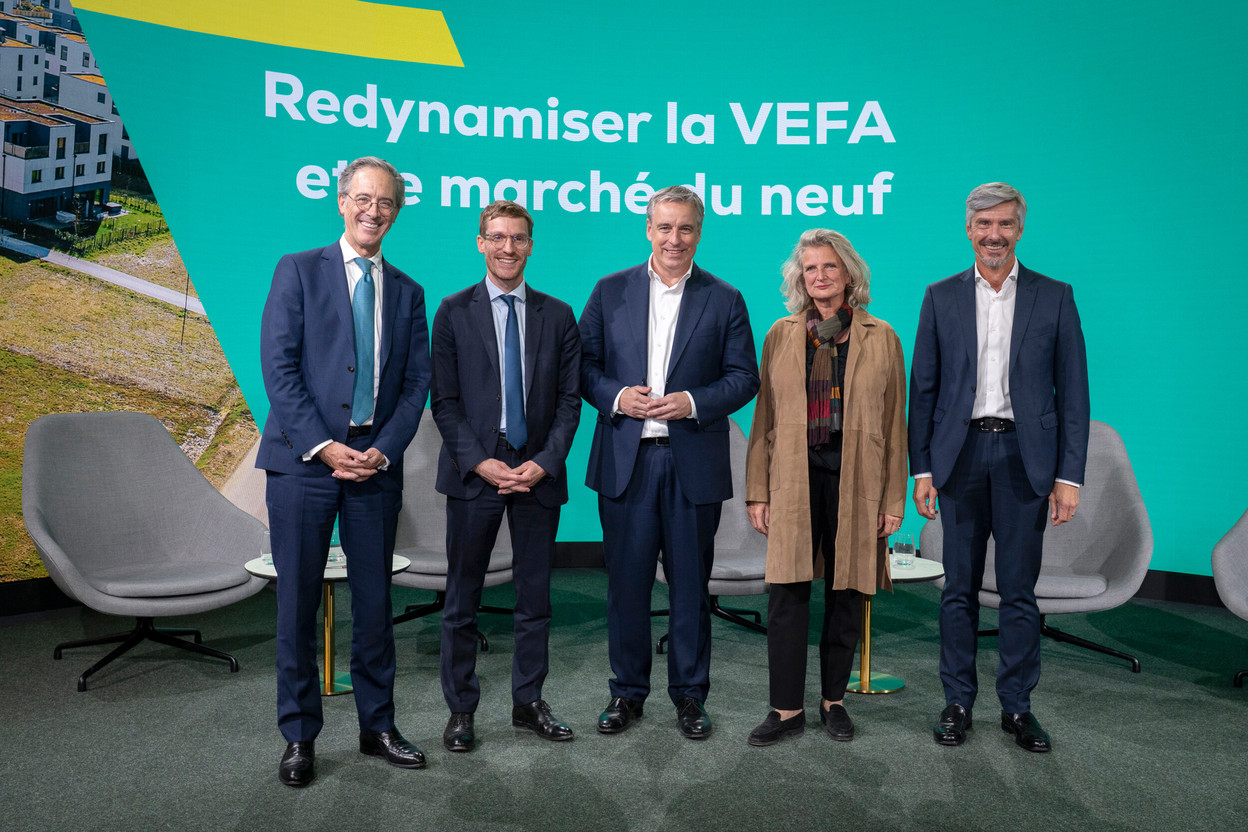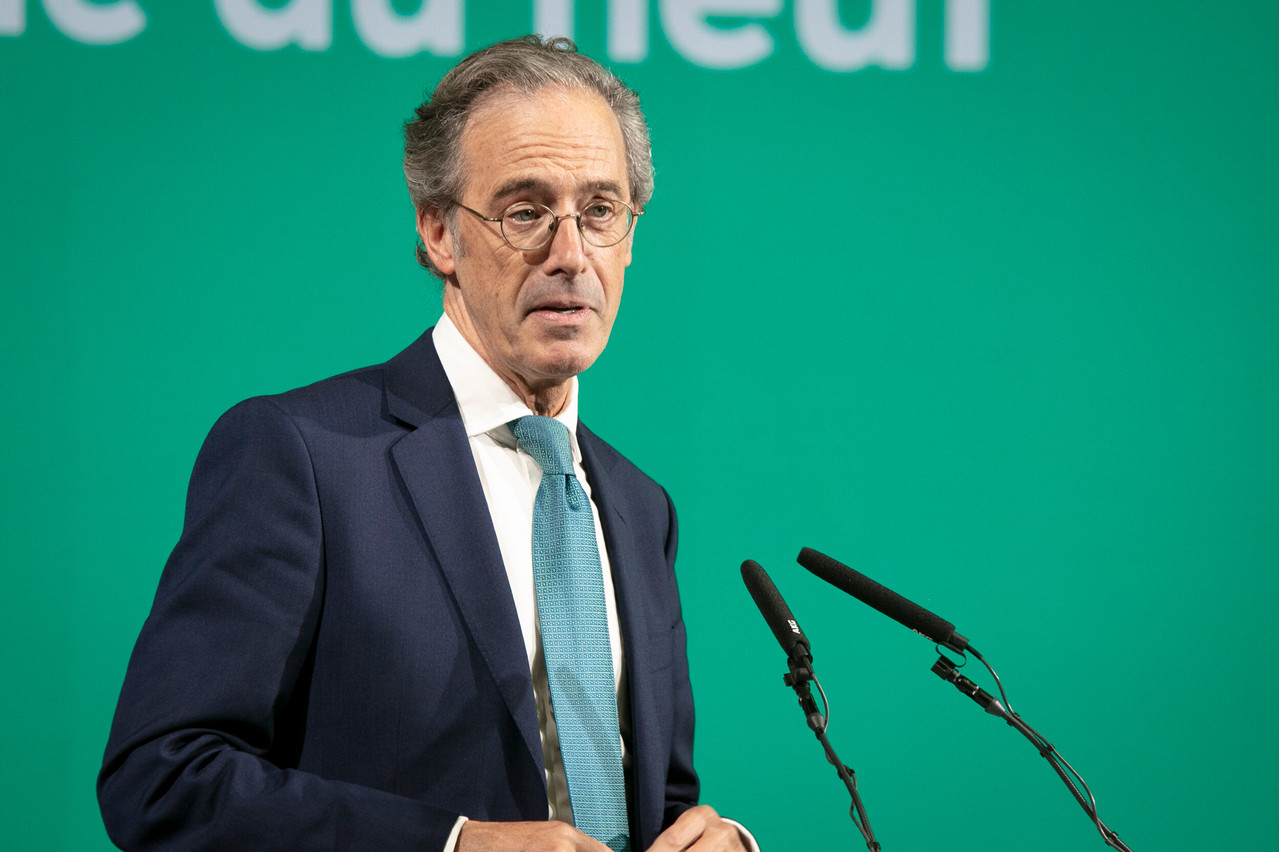
“More, faster and better.” It was with this phrase that François Trausch summarised the three priorities, which, in his view, should guide the revival of the housing sector in Luxembourg. Invited to deliver the keynote address at National Housing Week, the head of Pimco Prime Real Estate – who oversees a global property portfolio worth around €80bn – did not hesitate to challenge certain conventions in the domestic market. A native of Luxembourg but based abroad since his student days, François Trausch has built his career in several major international cities, notably Paris, London, New York, Berlin and Tokyo.
He drew on this experience to compare the challenges facing the Grand Duchy with solutions that had been tried and tested elsewhere. His assessment is, first and foremost, a global one. Germany is said to need 400,000 additional homes per year, but is reportedly building only around 175,000. In the United States, the cumulative shortfall is said to stand at 3.8 million homes. In the United Kingdom, new-build construction is said to have fallen sharply since 2021. These figures were cited by the leader to illustrate a crisis that extends far beyond Luxembourg’s borders. In his view, demand remains buoyed by two structural trends: urbanisation and the growth in the number of households.
Even in countries facing a declining population, major cities continue to attract new residents. In Japan, where Pimco Prime Real Estate owns around 15,000 homes, the concentration of the population in Tokyo and the rise in the number of households are thus sustaining demand for smaller properties. At the same time, construction costs are reported to have risen by 30 to 45% since 2020, according to the estimates he presented. This situation is helping to curb housing production in many countries.
Increasing density around transport hubs
For François Trausch, the first solution is to increase supply by making better use of land that has already been developed. This is a sensitive issue in Luxembourg, where densification regularly meets with resistance. He specifically cited Auckland, in New Zealand, where, according to figures presented during his talk, the relaxation of planning regulations is said to have enabled the creation of 100,000 additional homes over ten years, helping to keep rent rises in check. In Vancouver, densification has been encouraged along public transport routes.
A strategy he considers particularly relevant for Luxembourg, given the investment made in the tram network. The executive also cited the example of Paris’s Haussmann-era neighbourhoods, where high density is combined with a mix of uses, with shops on the ground floor and residential accommodation on the upper floors. In Luxembourg, he therefore suggests allowing more development around existing infrastructure, permitting certain building height increases and envisaging new, denser neighbourhoods, without necessarily sacrificing quality of life.
To build up a substantial institutional rental portfolio
The second proposed change concerns the very structure of the property market. François Trausch believes that Luxembourg lacks a rental stock owned by institutional investors. Unlike several other Western European countries, where insurers and pension funds own residential properties held for several decades, the Luxembourg market remains largely dominated by home ownership and private investors. Yet the residential sector offers numerous advantages for insurance companies.
Rental income provides a steady stream of revenue, potentially linked to inflation, whilst having multiple tenants helps to spread the risk. Above all, properties can be held for periods of 30 to 50 years, which aligns with insurers’ long-term commitments. But this theoretical appeal is not enough to trigger investment. When asked about the conditions needed to attract institutional capital back into the sector, François Trausch cited a current net yield of around 5% and a target internal rate of return of close to 8%, taking into account leverage and any potential capital gain on resale.
In addition to these financial criteria, there is the stability of the rental regulations and the scale of the developments. International investors are looking for projects that are large enough to justify their analysis and management costs. For Luxembourg, the challenge therefore lies in developing larger-scale residential developments and creating an environment that is predictable enough to attract long-term capital.
Developers need to change their business model
François Trausch also addressed a message to Luxembourg’s property developers. According to the figures he cited, they are believed to own around 10% of the country’s land, amounting to nearly 400 hectares. This position confers upon them a significant responsibility in the construction of new homes. But rather than sticking exclusively to a build-to-sell model, he encourages them to consider moving towards owning and managing residential property portfolios.
He pointed out that several major European property companies had historically grown out of property development firms. By becoming property owners and then property managers, these companies have developed recurring income streams that enable them to weather market cycles more effectively. Such a model could be developed in Luxembourg with the support of institutional investors, notably insurance companies and pension funds.
The executive also encouraged property developers to focus more on housing rather than on new office projects, a sector he considers to be subject to structural changes in demand. But this transformation also requires a reassessment of prices. François Trausch believes that the model of housing priced at €12,000 per square metre has reached its limits. He believes that a fall in prices – however painful for those who have acquired land at high valuations – is necessary to restore a balance between the cost of projects and households’ purchasing power.
Adapting housing to purchasing power
To illustrate this need, François Trausch drew on two examples from abroad. The first is Singapore, where a large proportion of the population lives in homes built as part of a public programme and let on long-term leases. The aim is to provide homes whose cost is in line with households’ financial means, rather than maintaining building standards that are out of step with their incomes.
The second example is Vienna, where the historical development of a substantial stock of social housing has made it possible to provide a sustainable supply of rental accommodation and to promote a degree of social diversity. As for Luxembourg, the director does not propose replicating these models in their entirety, but rather adopting their underlying principle: to provide housing tailored to residents’ actual needs and financial means. In particular, he questioned certain building standards deemed too high. By way of example, he cited a housing scheme in Denmark offering 98m² flats with three bedrooms and a single bathroom, at a purchase price of around €5,500 per square metre.
In his view, the issue is not about compromising on quality, but about distinguishing between features that are genuinely essential and those that unnecessarily drive up the cost of projects.
Converting offices into housing
Another approach advocated by François Trausch is the conversion of existing buildings. In several major cities, Pimco Prime Real Estate is already working on converting office buildings for other uses. Converting offices into housing can prove complex, as many office blocks were designed without natural light reaching all floors. Nevertheless, property owners should explore this possibility, as it is a strategy that allows new housing to be created without always having to start from scratch with a new build.
The executive cited the incentive schemes introduced or being considered in Germany, particularly to speed up planning permission and facilitate changes of use. He also referred to the more restrictive measures in place in Paris, where certain alterations may be imposed when applications for administrative authorisations are submitted. But François Trausch went a step further by suggesting that attention should be paid to flats currently occupied by members of the liberal professions.
Banks that are too cautious and a licensing process that is too slow
Apart from supply and prices, François Trausch has identified two other major obstacles: financing and administrative delays. On the first point, he believes that banks have become excessively cautious when it comes to financing residential property. He attributes part of this trend to the regulatory constraints placed on credit institutions. Insurance companies and pension funds, he explained, are now playing an increasingly significant role in property financing. Pimco Prime Real Estate is therefore expected to provide around €3bn in financing across Europe by 2026 (according to the figures provided).
During the round-table discussion that followed, 
In particular, he noted that many stakeholders have the power to block administrative processes, whilst it is much more difficult to secure a decision that would enable a project to move forward quickly. To illustrate how the process could be speeded up, he cited the exceptional procedures adopted in France for the reconstruction of Notre-Dame de Paris and the construction of the olympic village. He also referred to European initiatives aimed at shortening authorisation times in the defence sector. His question is simple: why not accord housing a comparable degree of urgency?
Making Luxembourg a European model
In conclusion, François Trausch linked the housing crisis to the structural difficulties facing the European Union: fragmentation, excessive regulation and a lack of growth. In his view, these obstacles are not insurmountable. Luxembourg even has a particular advantage: its long-standing ability to draw inspiration from solutions developed elsewhere and adapt them to its own constraints.
Densification, the development of institutional rental housing, the regeneration of existing housing stock, the revision of building standards and administrative simplification are all measures that could be combined. The director does not believe in a one-size-fits-all solution. However, he believes that, by deploying these various measures simultaneously, the Grand Duchy could become a European model for overcoming the housing crisis.
This ambition requires going beyond mere short-term support measures to bring about a more profound transformation of Luxembourg’s property sector.