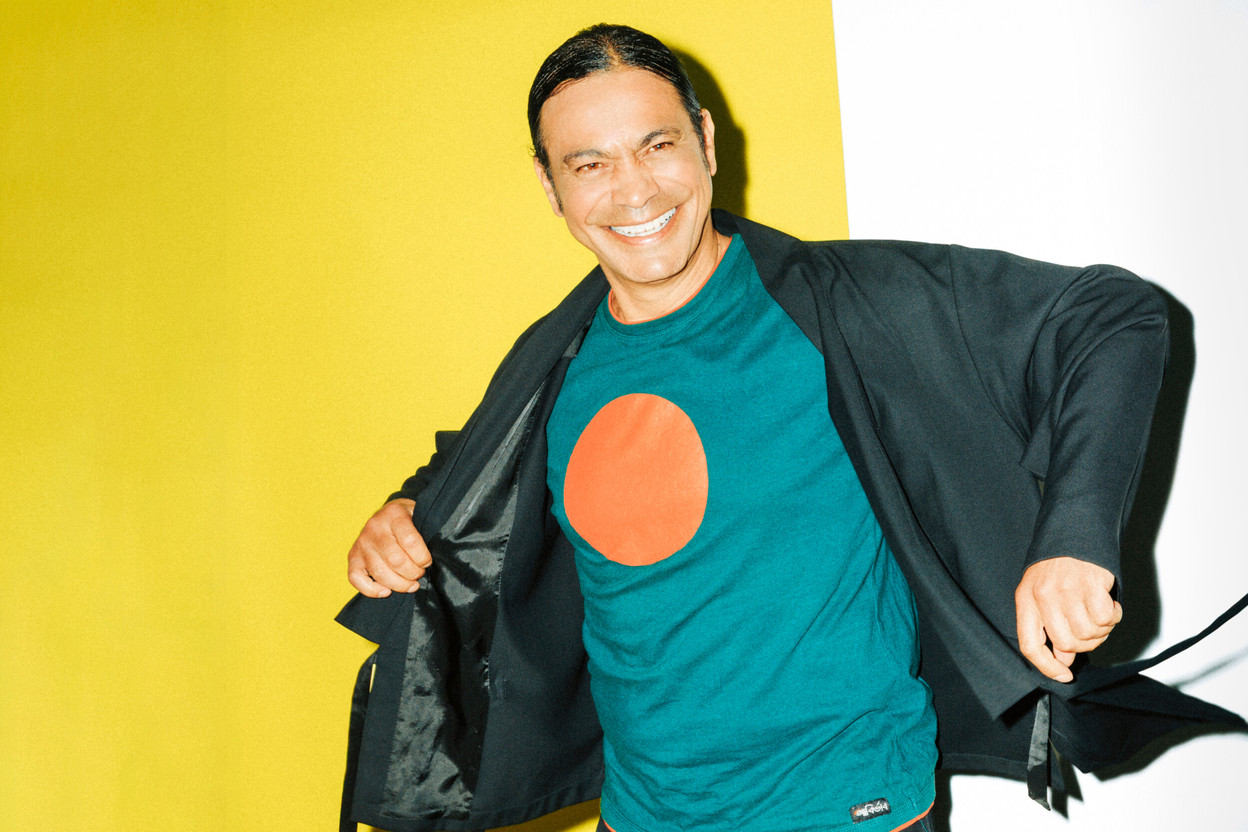
You say that your current job is, in fact, a childhood dream come true. Which one?
Eulecia Monteiro Gomes. – “When I was four, I used to say: ‘When I grow up, I’ll make people look beautiful!’ Back then, of course, I didn’t know that the job of image consultant even existed. I used to draw a lot, especially figures and clothes. I was fascinated by fashion and I simply knew that I wanted to work in that world.
So you naturally chose to study fashion design?
“Yes. I had to persuade my parents, because their main priority was for me to get my A-levels before embarking on a career in the arts. I then went to study at a fashion design school in Paris. It was the realisation of something I’d had in mind for a very long time.
But you don’t become an image consultant straight away, do you?
“No, not at all. For about fifteen years, I explored a whole host of things. I organised exhibitions of fashion drawings and sketches, designed costumes and outfits for beauty contests and dance performances, and organised fashion shows featuring my own designs. I also worked for several years as an event photographer. I’ve always felt the need to create and launch projects. Looking back, I realise that all these experiences have prepared me for what I do today.
You organised a large-scale event in 2017 – what did you learn from it?
“Yes, the Cape Verdean Awards at Casino 2000. Nearly 2,000 people were there. There was a red carpet, twelve categories, concerts, guests… It was a huge project. But what I loved most of all was the chance to shine a spotlight on people who were achieving exceptional and inspiring things. It’s something I find in my work today: revealing someone’s true self rather than trying to change them.
My role is not to say, ‘You must become someone else.’ It’s exactly the opposite.

What prompted you to get into image consultancy?
“In 2019, an artistic director asked me to work with a woman who wanted to go into politics. I didn’t really know what an image consultant did at the time, but whilst working on that project, it all clicked into place. I realised that there was a profession that brought together everything I loved: clothes, colours, aesthetics, but above all, supporting people. It turned out to be the job I’d always been looking for without realising it even had a name.
Was that when you decided to train?
“Yes. I undertook a one-year training course at Myriam Hoffmann’s Swiss academy before officially launching my business in 2022. I wanted to have a proper method and genuine expertise underpinning what I was offering.
How does your business operate these days?
“I work on my own and see my clients at my practice in the centre of Luxembourg City. At the same time, I continue to work part-time at ArcelorMittal, where I have been employed for over 20 years. This arrangement allows me to gradually build up my image consultancy business without having to compromise on the quality of the support I provide.
Does image consultancy still suffer from certain stereotypes?
‘Yes, because you might think it’s simply a matter of choosing clothes or telling someone which colours suit them. It’s much deeper than that. Image is directly linked to self-confidence. Some people no longer really look at themselves, or only see their flaws. Sometimes clients are very moved when they see themselves in a different light in the mirror.
My role isn’t to tell them, ‘You need to become someone else.’ It’s exactly the opposite. I want to help them understand what makes them unique and to bring that out.
So your approach is more about revealing than transforming?
“Exactly. I don’t want to project a certain image or create a persona. What we show on the outside must reflect who we are on the inside. This is particularly important in the professional world. Your image conveys a message even before you start speaking. But it must remain authentic.
Are you looking to expand your B2B business further?
“I’d like to visit secondary schools to help teenagers appreciate their uniqueness. At that age, other people’s opinions matter a great deal. Social media further fuels comparisons and the pressure to conform to certain standards. I’d like to get this message across to them at a very early stage: their differences aren’t something they need to hide. They can become a source of strength.
An image conveys a message even before we start speaking. But it must remain authentic.

You’d also like to use your professional skills to help people in vulnerable circumstances.
“This is a project I’ve been thinking about for several years. I’m particularly moved by the plight of people experiencing homelessness. In February 2025, I visited the exhibition ‘Street Dreams Are Made of This’, organised by Inter-Actions at Neumünster Abbey. Part of the project involved giving people living on the streets a makeover and allowing them to experience, for one day, the life they longed for. This was exactly the sort of thing I’d been dreaming of doing. I’ve been in touch with Inter-Actions ever since and would love to develop a project with them.
What difference can a change of image make in such a difficult situation?
“Of course, a makeover doesn’t solve social problems. But regaining a more positive self-image can be a small first step. Seeing oneself in a different light, and regaining dignity and confidence, can help someone look to the future again.
I would also like to work with women in vulnerable situations, for example by putting together capsule wardrobes from second-hand clothes. This could help them during a job interview or simply enable them to regain their self-confidence.
How do you envisage the next stage of your entrepreneurial journey?
“First and foremost, I want to continue developing my business, particularly with companies. To be able to carry out all these projects, I obviously need to build a financially sound business. But I now have a much clearer idea of where I want to go. I want to work with businesses, engage with young people and, in the long term, also use my skills to help people who would not normally have access to this sort of support.
Ultimately, the underlying theme has never really changed. When I was four, I wanted to make people look beautiful. Today, I realise above all that my job is to help them see for themselves what is beautiful about them.”
This article was written for the October 2026 issue of Paperjam magazine, published on 16 September. The content is produced exclusively for the magazine. It is published on the site to contribute to Paperjam’s comprehensive archive. Click on this link to subscribe to the magazine.
Is your company a member of the Paperjam Club? You can apply for a subscription in your name. Please let us know via club@paperjam.lu.