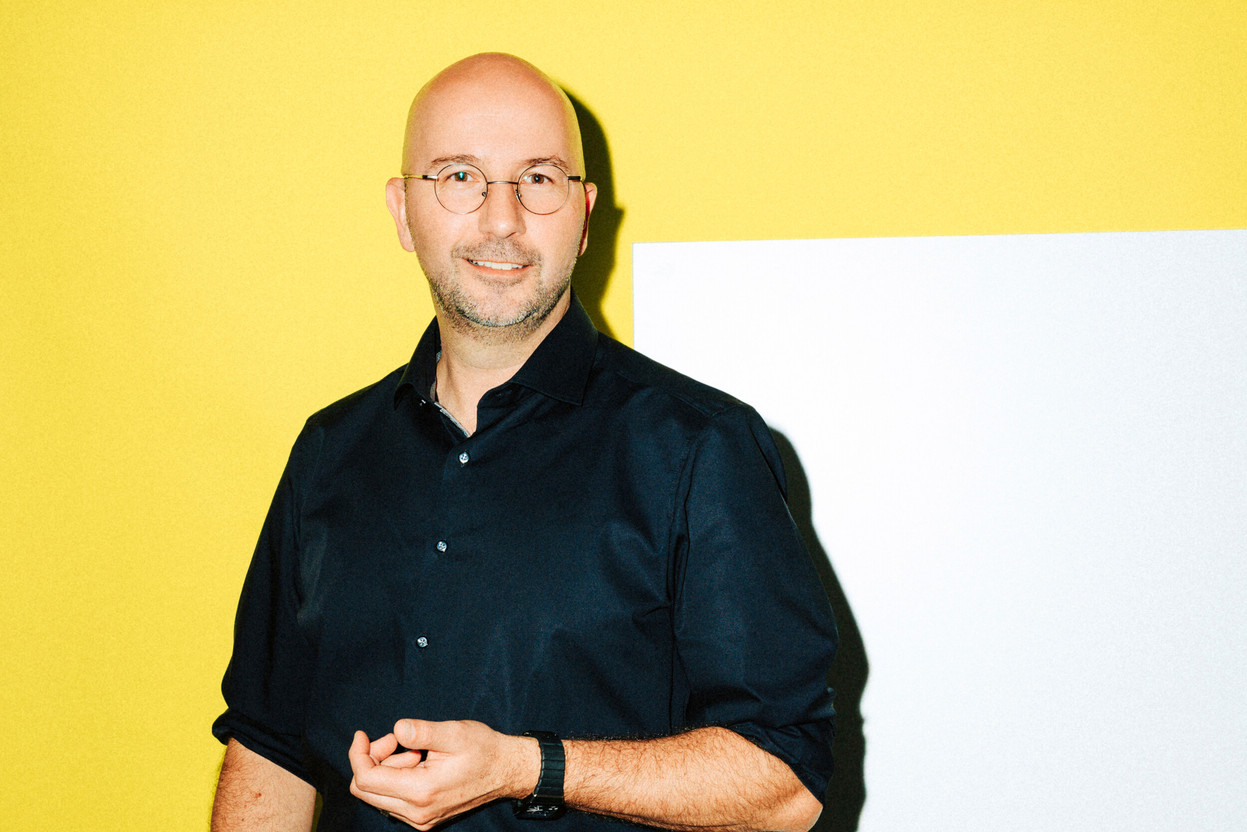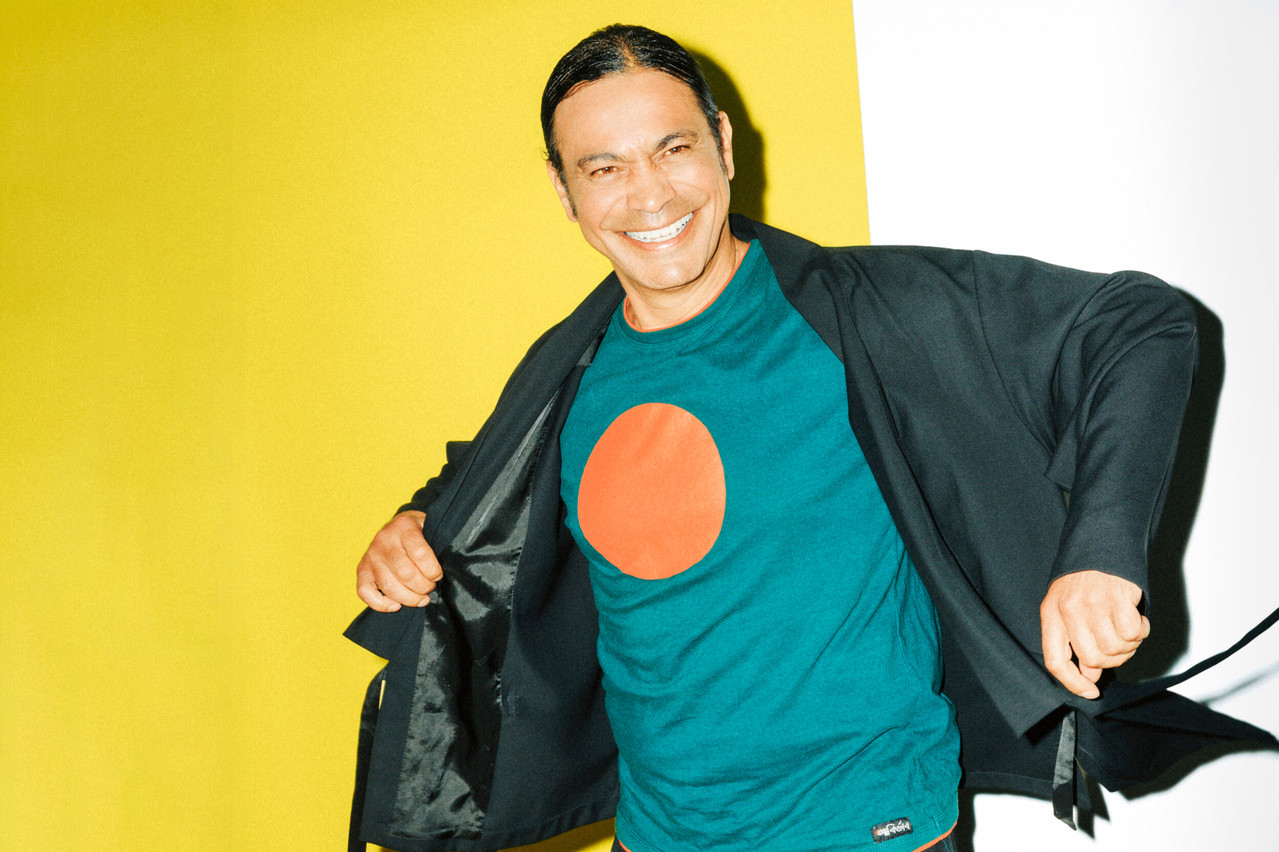
You trained as a philosopher. How did you become an anthropologist?
Abdu Gnaba. – “I began by studying philosophy in France, then in Germany, notably in Munich. I then turned to anthropology. Looking back, this choice is quite consistent with my personal history. I come from a family with mixed heritage, with roots in both Tunisia and India. So I grew up surrounded by several cultures and several ways of looking at the world.
Anthropology has enabled me to turn this curiosity into a method. It seeks to understand individuals, their behaviour, their beliefs, their perceptions and the way in which they construct their relationship with the world.
What brought you to Luxembourg?
“I arrived in Luxembourg in 2010. I wanted to break out of the French bubble and develop in a more international environment. Here, I discovered something quite fascinating: a very small country that brings together a huge variety of cultures, nationalities and life experiences.
Luxembourg is, after all, a wonderful laboratory for an anthropologist. It provides an opportunity to observe, on a relatively small scale, phenomena that are found elsewhere in Europe: mobility, issues of identity, cultural differences and changes in the world of work.
Was it in this context that you developed Sociolab?
“Sociolab was established in Luxembourg in the early 2010s. The idea was to apply anthropological methods to address very practical issues faced by businesses and organisations.
A company is also a human community, with its own codes, customs, beliefs and power dynamics.

Anthropology is often still associated with the academic world or with the study of distant societies. Yet it can be extremely useful for understanding a business, an organisation or a market. A business is also a human community, with its own codes, customs, beliefs and power dynamics.
How exactly is anthropology applied in a business context?
“We start by observing and listening. We tend to think that economic decisions are essentially rational. But behind every decision, there is always a story, a culture and a set of perceptions.
Take attitudes towards money, for example. These can vary enormously between individuals, families, generations and cultures. The same applies to risk, authority, succession and change. The aim, therefore, is to uncover what the figures do not necessarily reveal.
You have, in particular, worked extensively with the financial sector. Why is that?
“Luxembourg naturally led me into finance. It is an international financial centre, and the sector provides an extremely interesting setting in which to observe behaviour. We have worked on topics such as attitudes to money, the handover of family businesses and generational differences.
When a business is handed down, for example, the issues are never purely financial or legal. There is also a family history, expectations, values and, at times, very different visions of what the business should become. This is where the anthropological approach offers a different perspective.
Does your own multicultural background influence the way you work?
“Of course. When you grow up amidst several cultural worlds, you realise quite quickly that what seems obvious in one environment isn’t necessarily so in another. It also teaches you to step outside your own perspective. In anthropology, this is essential: you have to be able to look at a situation from a different perspective, and not regard your own frame of reference as universal. This ability to move from one cultural context to another has become an important part of my work.
My role often involves building bridges.
You describe yourself, in fact, as a “facilitator”. What do you mean by that?
“I think I’ve always straddled several worlds. First of all, between different cultures, then between philosophy and anthropology, between research and business, between theory and practice. My role often involves building bridges between these worlds. Research can contribute enormously to businesses, provided we know how to translate its findings into something practical. So I identify quite strongly with this idea of being a bridge builder.
What was the main challenge in turning this expertise into a business venture?
“Helping people understand the value of time spent observing and understanding. The business world often operates under pressure. We want an answer, a solution, results – and we want them quickly. Yet understanding an organisation or a culture sometimes requires us to slow down. We need to listen, observe and take a step back. It may seem paradoxical, but taking this time at the outset often enables us to make better decisions later on.
Does your business now extend far beyond the financial sector?
“Yes. Finance has been a key area, particularly thanks to Luxembourg, but anthropological issues exist everywhere. I’m interested in industry, new technologies, space exploration and all the transformations that are profoundly changing the way we work and live. Sectors evolve, but ultimately the question remains much the same: how do human beings adapt to the changes around them?
Does artificial intelligence play an even greater role in this issue?
“The more technology advances, the more important the human aspect becomes. We have an ever-increasing amount of data and tools capable of analysing it. But data does not necessarily explain why a person acts in a certain way. The challenge, therefore, is not to pit technology against human understanding. On the contrary, we must find a way to bring the two together.
Behind every business, transformation or economic decision, there are always people.
After all these years, does Luxembourg still remain a prime place to observe developments?
“Yes, because the country continues to change very rapidly. It attracts people from all over the world and brings together extremely strong international dynamics within a small area.”
It is also a country that forces one to question many preconceived notions. From the outside, it is easy to reduce Luxembourg to its status as a financial centre or to its size. When you live there and really observe it, you discover a much more complex society. For an anthropologist, this complexity is a constant source of reflection.
So, what is the common thread running through your work with Sociolab?
“Understand before acting. Behind every business, transformation or economic decision, there are always human beings. If we gain a better understanding of their behaviour, their perceptions and their cultures, we also gain a much better understanding of the organisations they build.”
This article was written for the October 2026 issue of Paperjam magazine, published on 16 September. The content is produced exclusively for the magazine. It is published on the site to contribute to Paperjam’s comprehensive archive. Click on this link to subscribe to the magazine.
Is your company a member of the Paperjam Club? You can request a subscription in your name. Please let us know via club@paperjam.lu.