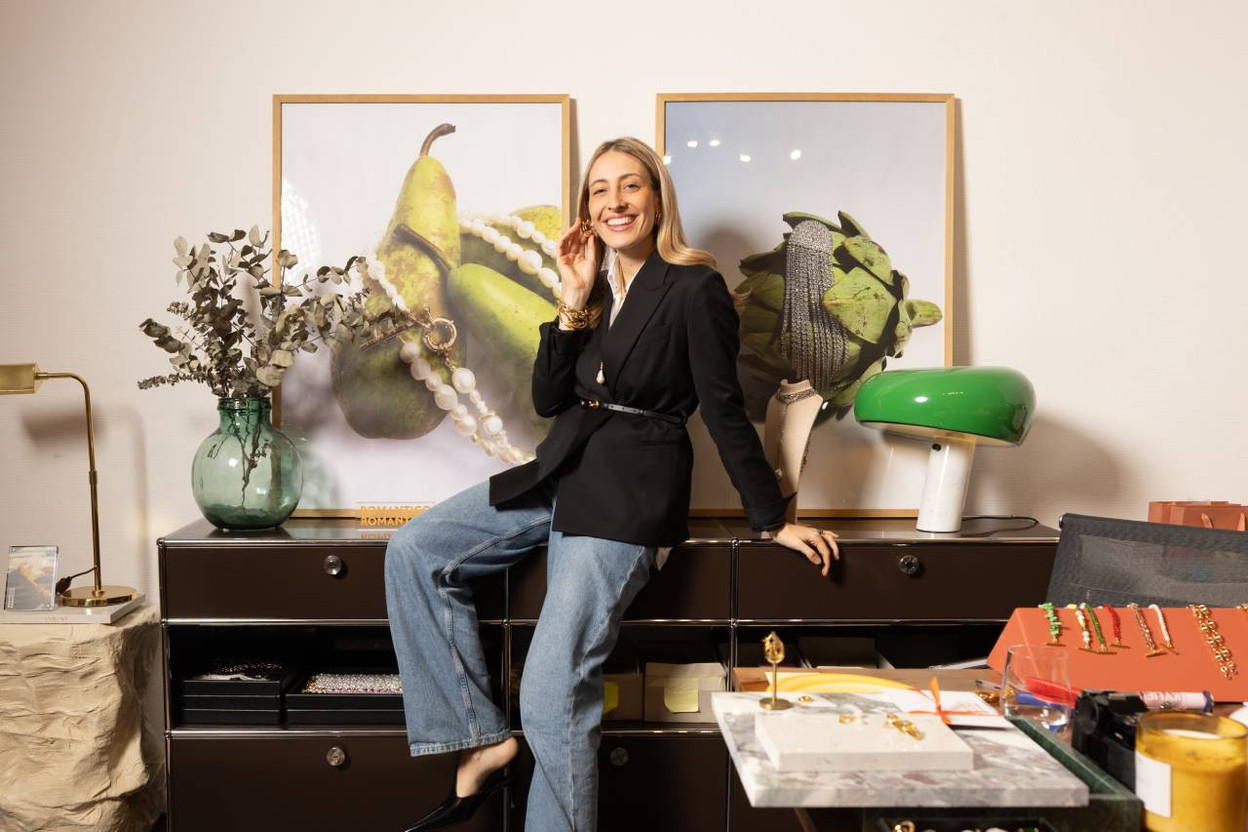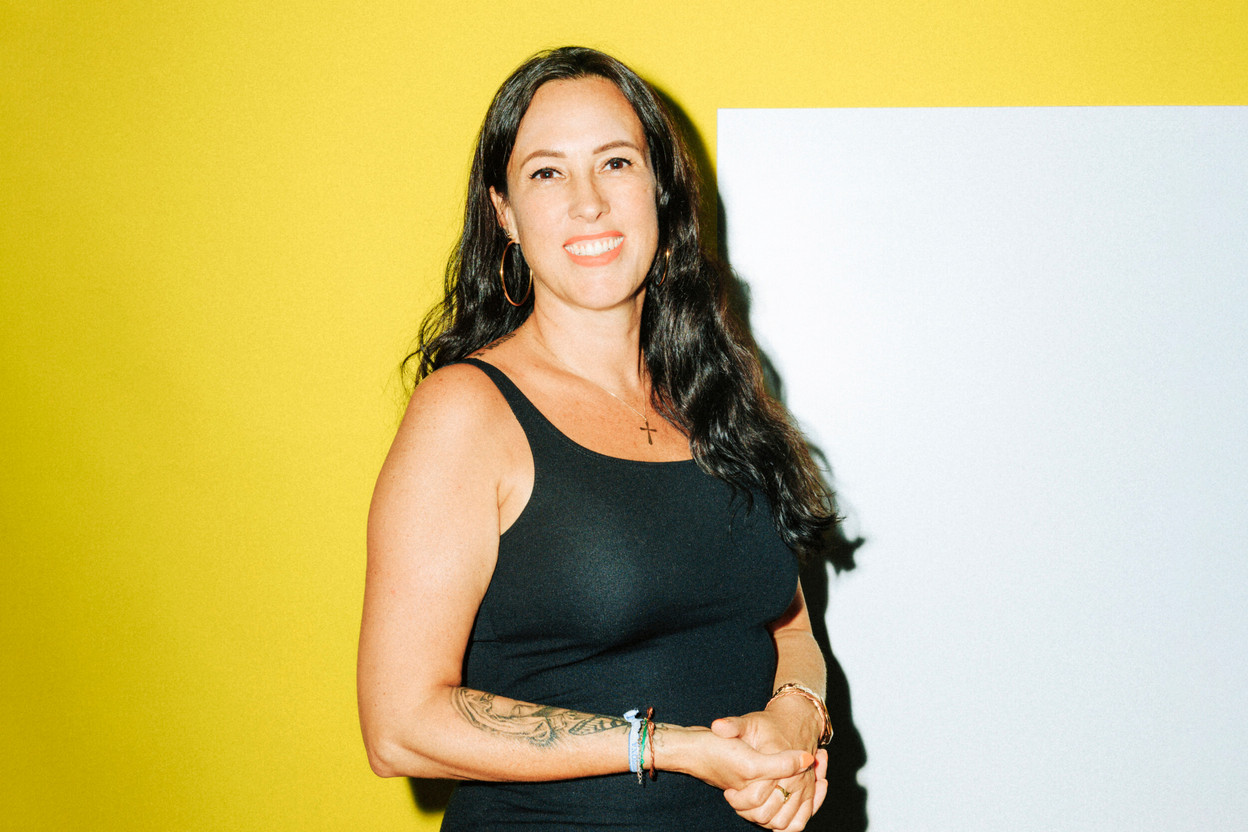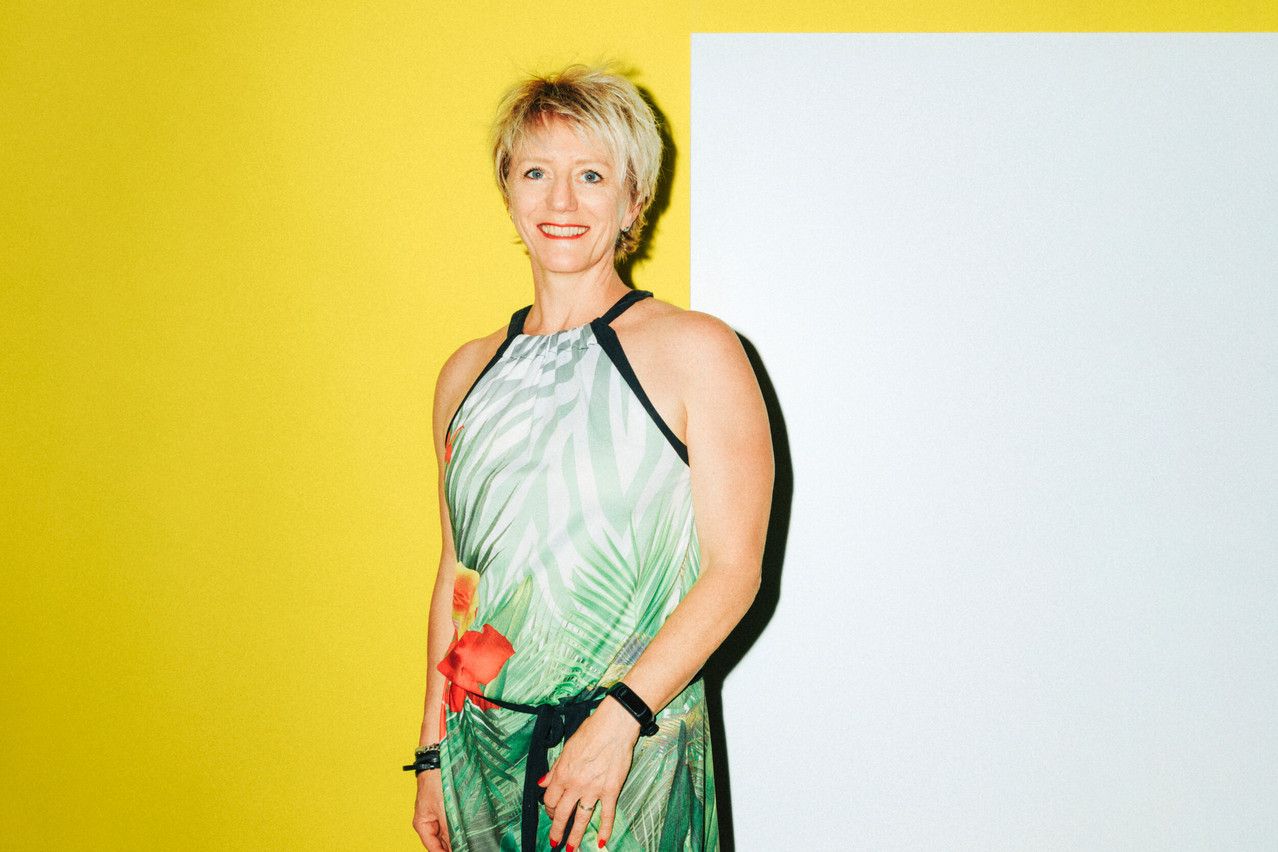
“By chance.” That is how Virginie Ducommun sums up her first steps into entrepreneurship. When developers of air-quality technologies approached her with a proposal to roll out these solutions in Luxembourg, this marketing specialist discovered a world she knew very little about. Her curiosity did the rest: she learnt on the job, relied on engineers for the technical aspects, and founded Indoor Forest in 2021.
Five years on, the company has a team of four and specialises in indoor air quality and smart buildings, working mainly with businesses, local authorities and other commercial clients. Virginie Ducommun is also developing Bévakasha, a brand aimed at private individuals. She explains how she is learning to master a technical sector, how the company’s small size is shaping her approach to entrepreneurship, and why she prefers to empower her clients rather than make them dependent.
How did you make the transition from marketing to setting up Indoor Forest?
Virginie Ducommun. – “I’ve worked in marketing for over 25 years, always in industries that tend to be male-dominated. After that, I worked in property, and that’s when I first became interested in buildings. I met people who were developing innovative technologies for air quality, to measure conditions inside buildings. They said to me: ‘We’d love to come to Luxembourg, and we’d love for you to take charge of it.’ And that’s how I became an entrepreneur.
How did Indoor Forest subsequently become an impact company?
“Indoor Forest came about rather by chance. I met some people working on impact-driven businesses and went to talk to them, saying: ‘I have an environmental impact – what can I do with that?’ And they replied: ‘Why don’t you set up an impact-driven business?’ So Indoor Forest was founded in 2021. It’s a model I liked because it’s very socially conscious. You have to justify your impact and your mission. Every year, we have to produce a report and our accreditation is reassessed.
What exactly does Indoor Forest do these days?
“I started with air quality. Then, as I needed to measure and understand how the building works and assess the effectiveness of what we were doing, I got into smart buildings and sensors – in other words, technologies for measuring what’s happening inside the building. You can implement smart irrigation, anti-theft systems, optimise the building’s energy consumption… There are thousands of things to measure. All of this forms an ecosystem designed to ensure people are more comfortable inside buildings and pay less to stay that way.
Yet you had no technical training. How did you acquire these skills?
“It was the people who developed these technologies who showed me the ropes. And as I’m a curious person, I became interested in the subject. Once you’re in it, you learn a huge amount on the job. You learn something new at every meeting. Every time I ring my engineers about the technical side of things, I learn something new. So, from one project to the next, you grow.
I hate presenting something I don’t fully understand. I can’t work on something I don’t have at least a basic grasp of. That said, I’m not an expert in anything at all. I’m very versatile. That’s both an advantage and a disadvantage.
Success, I think, is getting up in the morning and feeling happy to go and do what I have to do.

Why did you set up Bévakasha alongside Indoor Forest?
“Indoor Forest is aimed at companies, buildings and local authorities. But, as time went on, I met lots of people who wanted to use air-quality technologies in their own homes. This caused some confusion in people’s minds: ‘Do you work for private individuals? Do you work for large organisations? What do you actually do?’ So I decided to separate the two. Indoor Forest remains the commercial company, and we’ve created a small brand for private individuals.
What can you achieve with a team of four people?
“Agility. It’s brilliant because, for example, if you want to launch a brand, it’s up to you. You can bounce back. You can change your business model. You can observe and adapt the way you do things. When it grows, you can adapt in one way. As soon as it slows down, you’re small, so your costs are also, in principle, proportional. You manage to stay flexible and adapt.
And what becomes more difficult when you stay small?
“Because you’re small, you’re often on your own; you have to carry the load by yourself. There are people who say, “You’re too small; we can’t work with you.” So that can sometimes be a hindrance. I’m lucky enough to have a great network of people, and whenever I’ve got a question, they answer it. But sometimes, you still feel a bit on your own.
What qualities are essential for running a small business?
“Two things. Draw up a business plan. It sounds like a joke, but there are loads of people who set up companies without having the faintest idea of how they’re going to make money, where the money they earn will go, what they’ll have left, or who their target audience is.
And it takes courage. There are loads of things that are going to go wrong. You really need to be brave and resilient. You mustn’t take things personally. Courage is found in everyday life. It’s not necessarily the courage to say, ‘I’m going to start a business.’ Courage is holding on when, for example, there’s Covid and you can’t do anything for six months.
How do you build relationships with your customers?
“I prefer to build customer loyalty and help them grow so that they can stand on their own two feet. It’s like a child: you don’t bring them up just so you can tie their shoelaces for them every morning. You bring them up so that they can tie their own shoelaces and go off for a run without you.
It’s a bit the same with a client. When you introduce them to a new technology, you have to give them a lot of support at the start. And then, it’s brilliant to see them come back and ask, ‘What’ve you got for my garden?’ because they’ve already sorted out everything else. To me, that’s commercial success. I know it’s counterproductive and that it’s not how I’m going to rake in millions. But is that really the point? I don’t know. It gives me a great deal of satisfaction.
Would you like to help Indoor Forest grow?
“I’ve got nothing against growing. For now, the plan is to stay as I am and see how Bévakasha goes. After that, I’ve got a few smart building projects in the pipeline. If all that comes to fruition, I’ll have to expand. Is the aim to stay small? No. Is the aim to become big? No, not that either.
I love that closeness. I don’t want to sever that connection. As I grow older, I want to keep the option of sitting down with people, popping in and saying, ‘Can I spend a day with you, please?’, so that I can stay in touch with what’s happening on the ground.
What does success mean to you?
“Success, I think, is getting up in the morning happy to go and do what I have to do, telling myself that I’m doing it well and that I haven’t stepped on anyone to get here. That, to me, is true success.”
This article was written for the October 2026 issue of Paperjam magazine, published on 16 September. The content is produced exclusively for the magazine. It is published on the site to contribute to Paperjam’s comprehensive archive. Click on this link to subscribe to the magazine.
Is your company a member of the Paperjam Club? You can apply for a subscription in your name. Please let us know via club@paperjam.lu.