Designing energy-efficient buildings is one thing. Taking into account the energy consumed by offices and the distance travelled to reach building sites is another – and a significant one at that.
In their sustainability report, the five firms Beng Architectes Associés, Schumacher Schmiz Architectes, Papaya Urban Planners and Landscape Architects, Studio e (an energy consultancy and engineering firm) and Grandbe (an IT and office services company) have decided to take a hard look at their own practices.
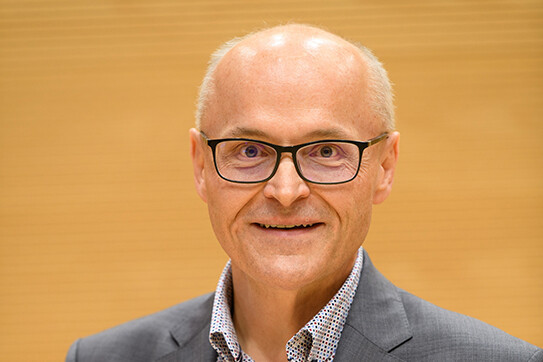
“We wanted to go beyond the label and take the investigation further,” explains the architect 
“It involved collecting a huge amount of data and involving a great many people,” he emphasises. And indeed, the report provides a comprehensive overview of all five companies, with a single aim: to lay the foundations for guiding future decisions. “This isn’t an end in itself; it’s a starting point.”
A carbon footprint largely linked to travel
The carbon footprint provides an initial indication of where efforts should be focused. In 2025, emissions from office operations totalled 747 tonnes of CO2, or around seven tonnes per employee. But bear in mind the scope: “This is the carbon footprint of our office operations. It is not the carbon footprint of all the projects we have carried out,” explains Denis Rosolen. “With 663 projects underway during the year, measuring the footprint of all the construction work as well would have been a task on a completely different scale.”
We really must continue to make an effort to reduce travel-related emissions.

As the architect further points out, in day-to-day operations, travel accounts for the largest share of emissions. Travelling to the office, meeting a client at a designated location, monitoring progress on a building site: architecture is practised far beyond the drawing board. The conclusion is therefore clear: “We really must continue to make an effort to reduce emissions linked to travel,” observes Denis Rosolen.
In this respect, around half of the fleet is already electrified. The aim is to continue this trend, even though companies do not have the same influence over their employees’ personal journeys. “We can’t force them to have electric cars,” he points out.
The environment: a two-way issue
Beyond the day-to-day running of offices, the report examines the links between projects and their environment. This is the principle of ‘double materiality’ – a technical term for a very practical line of thinking: how does our activity affect the planet, and how do changes to the planet affect our activity?
It is not just a question of considering our impact on the outside world, but also the impact the outside world has on us.

“It’s not just about considering our impact on the outside world, but also the impact of the outside world on us,” summarises Denis Rosolen. Energy issues and the risks of overheating therefore have a direct influence on how buildings are designed.
Reducing consumption, using sustainable materials, promoting reuse or managing waste more effectively: these approaches apply to both projects and internal practices. To drive this initiative forward, a working group has been set up comprising members of senior management, staff and their representatives. “This is genuinely a team effort, taken seriously by senior management.”
Building sustainably and ensuring longevity
That leaves the thorny issue of costs. For Denis Rosolen, focusing solely on the initial price is like looking only at the tip of the iceberg. Beneath the surface lie energy costs, maintenance and future replacements.
“When people say that sustainable or circular products are more expensive, they’re only seeing the tip of the iceberg,” he explains. The ability to repair, replace certain parts or reuse them changes the long-term cost calculation. “The concept of cost is very relative. It’s not straightforward to say that we’ll be 5 per cent cheaper.”
The report therefore does not promise an immediate and across-the-board reduction in costs. Its aim is to provide a better understanding of the situation and to monitor improvements. “This enables us to identify what can be improved and how to go about it,” the architect adds.
The document is available on all the websites of the group’s companies (Beng, Papaya, Schumacher Schmiz). For the companies involved, it marks the start of a new phase of work: having gathered the figures, the next step is to put them into practice. The report is finalised; the work continues.