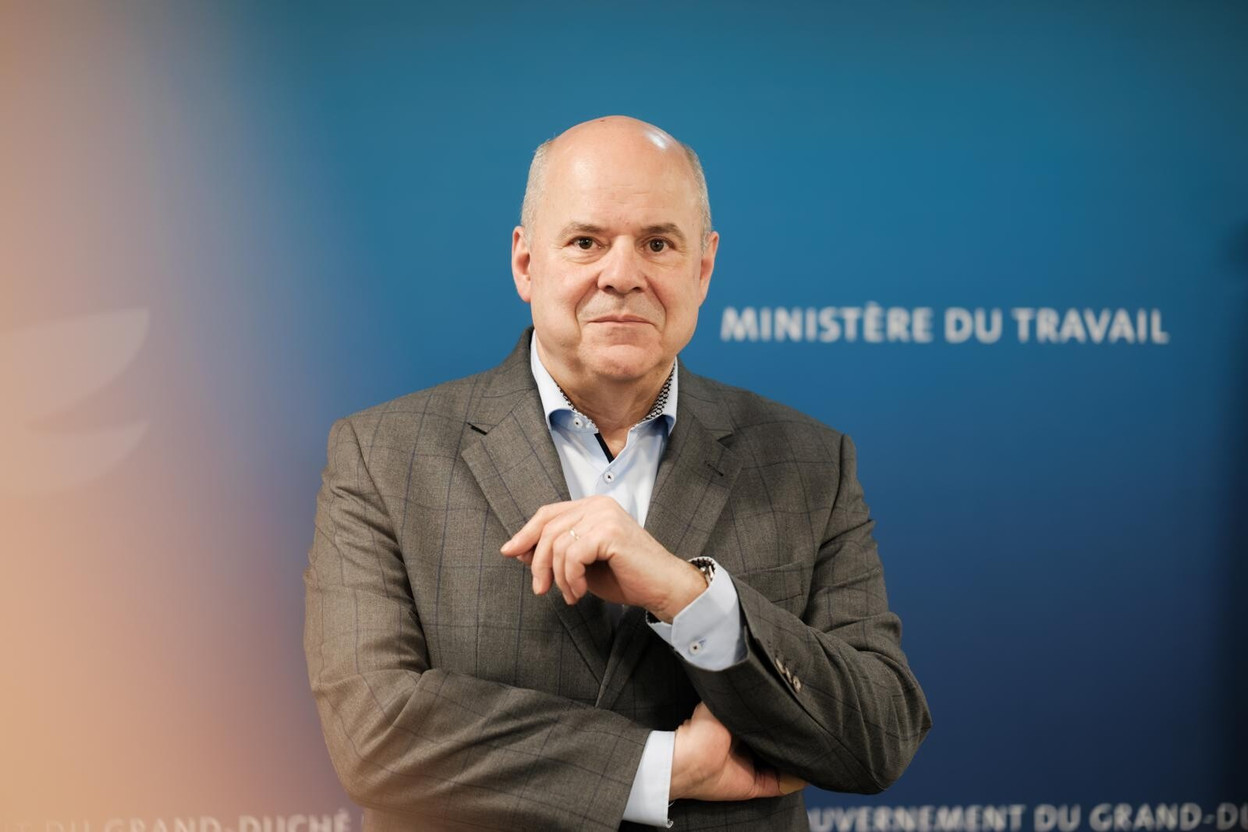
The organisation of working time is one of the issues on which the government is under close scrutiny. Tasked with this sensitive project, the minister for labour, 
Ten-hour working days are already permitted under labour law, subject to certain conditions, in particular compliance with the general weekly limit of 48 hours and the applicable average working time. The proposed model would therefore retain the 40-hour working week, spreading the hours over four days.
The political issue centres primarily on the chosen framework: these further relaxations are to be negotiated within collective agreements. This is a concession made to the trade unions, following the tensions that had characterised the term of office of Georges Mischo – Marc Spautz’s predecessor – concerning their role in collective bargaining and the organisation of working time.
This approach follows on from the agreement reached this summer at the CPTE. According to the OGBL, that agreement had already reserved any potential additional flexibility for the framework of collective agreements. Wednesday’s meeting serves to set out the specific details. The proposals must now be examined by the respective governing bodies of the trade unions and employers’ organisations. The discussions will need to clarify, in particular, whether employees’ participation is voluntary, the safeguards surrounding the new working hours, and the compensation for a reduced weekly rest period.
Kill two birds with one stone
This approach offers another benefit for the government: encouraging more companies to enter into a collective agreement. Last July, speaking before members of the Labour Committee, Marc Spautz presented the national action plan to promote collective bargaining, drawn up in collaboration with the social partners. This plan fulfils the obligations arising from the European Directive on adequate minimum wages. This directive requires Member States where the collective bargaining coverage rate is below 80 per cent to draw up a plan to raise it gradually. This threshold triggers the obligation to take action, without requiring the 80 per cent rate to be reached.
In Luxembourg, the explanatory memorandum to Bill 8437, which deals with the transposition of this directive, referred to a coverage rate of just over 50%. It was based on a rate of 55 per cent in 2014, presented as the latest official figure available at the time of drafting. This outdated reference highlights the importance of measuring collective agreement coverage more accurately. The plan therefore provides for the creation of an anonymised national database, information and awareness-raising initiatives targeting businesses – particularly multinationals – as well as a study into incentives in public procurement. It also envisages adapting the legislative framework to strengthen the legal certainty of collective agreements and provide greater scope for negotiation on the organisation of working time.
Flexibility thus becomes an incentive to negotiate. Employers could be granted greater leeway in organising their operations, provided they reach an agreement with the trade unions on the safeguards offered to employees.