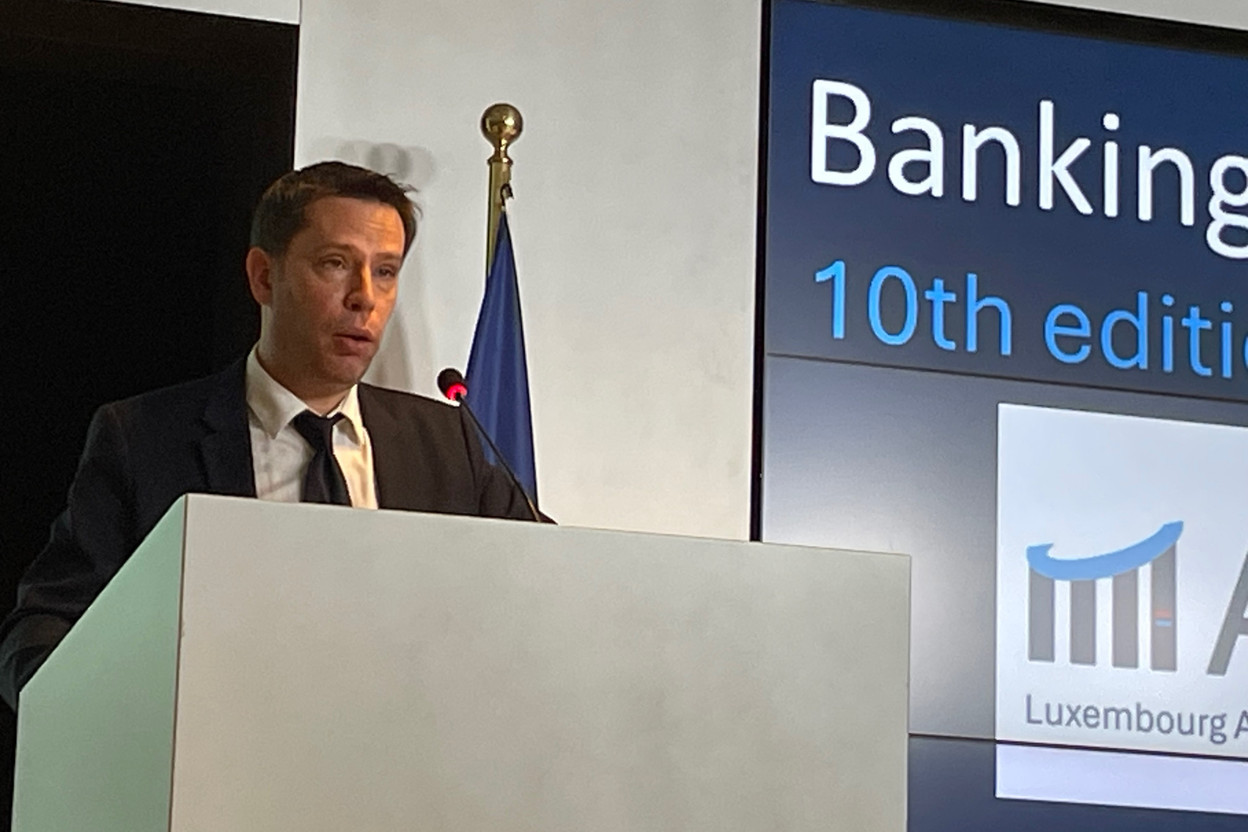
Expert panellists at the ALRiM–GARP Banking Risks Conference agreed that banks and supervisors are broadly aligned in their understanding of material risks, even as differences persist in how those risks are assessed and managed in practice.
The panel discussion, “Emerging risks and market outlook: building a resilient medium-term regulatory & supervisory framework,” held on 20 January, explored the evolving relationship between financial institutions and supervisors against a backdrop of heightened geopolitical, cyber, and digital risks.
Addressing emerging risks
Olga Slabari, chief risk officer at PayPal, noted that for technology-driven businesses, such risks often materialise in near real time, with immediate implications for payment volumes, fraud rates, and strategic decisions such as market entry.
However, Slabari highlighted a divergence in perspective regarding the “lens” through which these risks are viewed. While supervisors focus on financial stability and tail risks in line with their mandates, banks tend to prioritise day-to-day risk management and the shorter-term materialisation of less severe risks.
You also need the time and energy to take impactful action, rather than focusing solely on producing incredibly detailed reports
Yves Nosbush, chief sustainability officer and chief economist at BGL BNP Paribas, emphasised that although there is broad consensus on “known unknowns” such as cyber security, differences often emerge in the granular, day-to-day management of these risks. He advocated for a “co-pilot” approach, in which risk functions provide pragmatic solutions and mitigation strategies rather than acting solely as a veto power. “If you do this intelligently and with respect for each other,” he said, “it’s incredibly powerful.”
The impact of regulatory complexity
The panel also debated whether increasing regulatory complexity supports or hinders effective risk identification. Nosbush argued that structured regulatory requirements can be beneficial in certain areas, such as compelling institutions to assess environmental risks more systematically.
At the same time, he warned that excessive regulatory demands risk diverting resources toward data collection and reporting at the expense of meaningful action and a deeper understanding of underlying risks. He cited the Corporate Sustainability Reporting Directive (CSRD) as an example where the initial scope threatened to overwhelm organisations with data requirements. “You also need the time and energy to take impactful action, rather than focusing solely on producing incredibly detailed reports,” he said.
Nosbush further observed that while growing business complexity naturally leads to more complex regulation, simpler models are often more effective than highly intricate ones. Overly complex regulatory frameworks or modelling approaches, he argued, can obscure the fundamental drivers of risk.
Internal models and supervisory reliance
The discussion also addressed the extent to which supervisors should rely on banks’ internal risk management frameworks. Frédéric Lardo, deputy head of division for strategic risk and analytics at the European Central Bank (ECB), explained that although banks and supervisors use the same “raw material,” their incentives differ.
“Banks’ risk management functions need to understand, capture, identify, and assess the consequences of emerging risks on their business models, strategies, financials, and prudential ratios,” Lardo said. Supervisors, by contrast, use internal assessments as a starting point to benchmark outcomes and inform their own independent judgement on sector-wide financial stability.
Slabari added that internal models are particularly valuable because they are risk-sensitive and dynamic, especially when addressing emerging risks for which limited historical data is available. “We may not know where the risk is going or how it will materialise,” she said. However, she stressed that such models require common standards and strong internal governance to ensure that outcomes are comparable and reliable.
Simplification and proportionality
Reflecting on the origins of today’s regulatory framework, Lardo acknowledged that much of the existing complexity is a legacy of the global financial crisis and remains necessary to protect citizens and reduce fiscal risks. Nevertheless, he confirmed that both the European Banking Authority (EBA) and the ECB are actively working to simplify the regulatory and supervisory framework.
These efforts include making supervision more proportionate for smaller, non-complex institutions and reorganising the Single Supervisory Mechanism (SSM) to focus more clearly on material risks. Taking a humble path, the ECB has also introduced a second line of defence aimed at assessing and mitigating supervisory risk — namely, the risk that supervisory outcomes could lead to inconsistent results across the system.
In addition, a new multi-year assessment cycle has been implemented, allowing supervisors to stagger reviews over a three-year period rather than assessing every risk annually.
Strengthening communication and trust
Lardo concluded by calling for a shift in mindset, urging stakeholders to move away from “complaining about the regulatory agenda” and toward more open dialogue about what matters most to chief executives. Building mutual trust between banks, supervisors, and other stakeholders, he argued, will be essential to navigating an increasingly complex risk and regulatory environment.